THE ADVENTURE COLLECTIVE® · Independent discovery and booking for outdoor travel

A full-day excursion from Siem Reap into Battambang’s countryside—ride the iconic bamboo train, climb to the Angkor-era Wat Banan, and watch millions of fruit bats exit a mountain cave at sunset. Practical transport, local guides, and cultural context make this an efficient way to see northwest Cambodia in one day.
A full-day excursion from Siem Reap into Battambang’s countryside—ride the iconic bamboo train, climb to the Angkor-era Wat Banan, and watch millions of fruit bats exit a mountain cave at sunset. Practical transport, local guides, and cultural context make this an efficient way to see northwest Cambodia in one day.
You step into the low, humid air as the van leaves Siem Reap and the rice plains open into long swaths of green—villages clustered around single-track rails and weathered temple stones poking through the trees.
Verified experiences and guided adventures in the surrounding area.
Operated by Angkor Focus Travel · Battambang, Battambang Province
You step into the low, humid air as the van leaves Siem Reap and the rice plains open into long swaths of green—villages clustered around single-track rails and weathered temple stones poking through the trees.
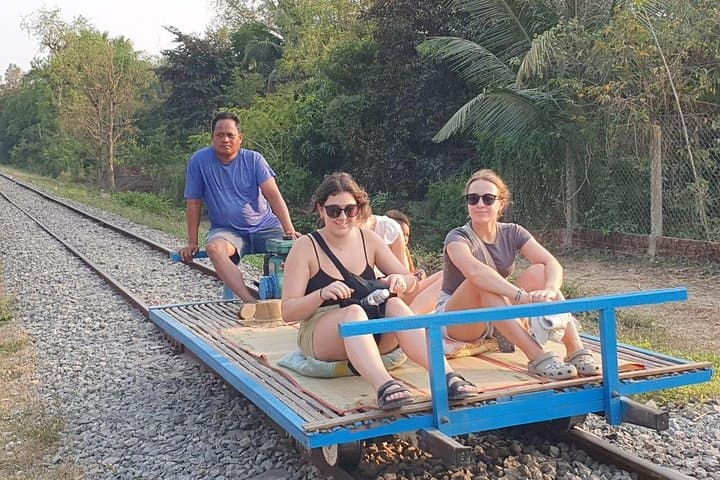
Battambang grew around Angkor-era settlements in the 11th century; on this full-day tour visitors cross both human and geological layers: low limestone outcrops crowned with small brick shrines, scattered karst cliffs that direct bat colonies, and flat alluvial plains that feed local rice economies. The bamboo train ride is a direct line to rural life—simple platforms glide over rails past farmers and wooden stilt houses, a practical relic turned scenic shortcut.
Phnom Sampeau (the “bat cave” site) combines natural spectacle with difficult history: caves that shelter millions of fruit bats sit above memorials that recall the Khmer Rouge era—visitors are urged to observe respectfully. Wat Banan’s 365 steps climb through scrub and fig trees to reveal temple ruins with clear views back across the valley.
Practical guide: expect a long day with 2–3 hours driving each way, bouts of sun and sudden showers in the monsoon months, and some stair climbing at Wat Banan. Wear closed shoes for uneven stone and dirt, carry a reusable water bottle (filters or bottled water provided on tour), and plan on being outdoors at dusk for the bat emergence. Local guides handle logistics and entry fees—bring small notes for entrance donations or local purchases. The trip balances cultural context, rural scenery, and a natural evening display—an accessible, full-day immersion into northwest Cambodia’s landscape and memory.
Expect roughly 2.5–3.5 hours each way depending on traffic and stops; the tour is a full-day commitment.
Operators run short, guided runs for tourists; platforms are basic—follow staff instructions and avoid standing while in motion.
The site is emotionally heavy and includes memorials; use discretion for young children and supervise closely around cliff edges.
Bat activity is seasonal and weather-dependent—most evenings have a visible emergence, but numbers fluctuate with season and disturbances.
Angkor Focus Travel operates guided outdoor trips and adventures with an emphasis on safety, stewardship, and memorable experiences.



You step into the low, humid air as the van leaves Siem Reap and the rice plains open into long swaths of green—villages clustered around single-track rails and weathered temple stones poking through the trees.
You step into the low, humid air as the van leaves Siem Reap and the rice plains open into long swaths of green—villages clustered around single-track rails and weathered temple stones poking through the trees.
Battambang grew around Angkor-era settlements in the 11th century; on this full-day tour visitors cross both human and geological layers: low limestone outcrops crowned with small brick shrines, scattered karst cliffs that direct bat colonies, and flat alluvial plains that feed local rice economies. The bamboo train ride is a direct line to rural life—simple platforms glide over rails past farmers and wooden stilt houses, a practical relic turned scenic shortcut.
Phnom Sampeau (the “bat cave” site) combines natural spectacle with difficult history: caves that shelter millions of fruit bats sit above memorials that recall the Khmer Rouge era—visitors are urged to observe respectfully. Wat Banan’s 365 steps climb through scrub and fig trees to reveal temple ruins with clear views back across the valley.
Practical guide: expect a long day with 2–3 hours driving each way, bouts of sun and sudden showers in the monsoon months, and some stair climbing at Wat Banan. Wear closed shoes for uneven stone and dirt, carry a reusable water bottle (filters or bottled water provided on tour), and plan on being outdoors at dusk for the bat emergence. Local guides handle logistics and entry fees—bring small notes for entrance donations or local purchases. The trip balances cultural context, rural scenery, and a natural evening display—an accessible, full-day immersion into northwest Cambodia’s landscape and memory.