THE ADVENTURE COLLECTIVE® · Independent discovery and booking for outdoor travel

Escape the Angkor crowds for a full-day journey from Siem Reap to Beng Mealea and the short-lived Khmer capital Koh Ker. Explore overgrown galleries, brick pyramids, and royal road relics with a local guide—expect uneven walking, big photo opportunities, and a long day back to town.
Escape the Angkor crowds for a full-day journey from Siem Reap to Beng Mealea and the short-lived Khmer capital Koh Ker. Explore overgrown galleries, brick pyramids, and royal road relics with a local guide—expect uneven walking, big photo opportunities, and a long day back to town.
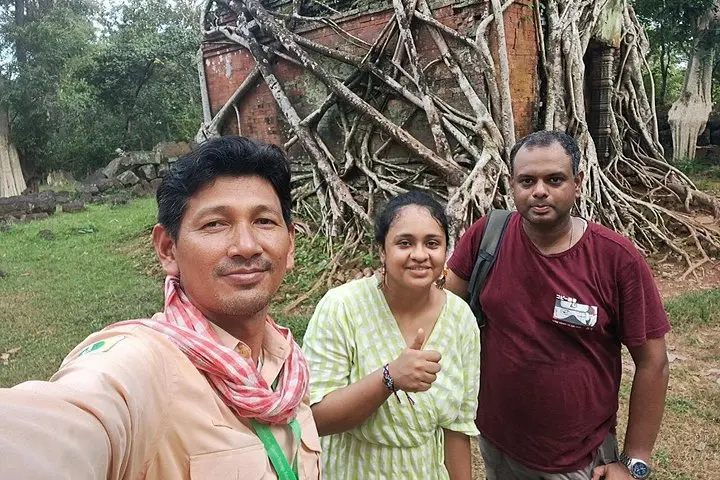
A humid dawn lifts off the rice plains as the van eases out of Siem Reap, the road narrowing and palms pressing close. By midmorning the soundscape changes from scooters to bird calls and the first stone lintels appear through the trees—Beng Mealea’s hulking blocks and root-strangled galleries daring you to move closer.
Verified experiences and guided adventures in the surrounding area.
Operated by Angkor Elephant Tour · Siem Reap, Siem Reap Province
A humid dawn lifts off the rice plains as the van eases out of Siem Reap, the road narrowing and palms pressing close. By midmorning the soundscape changes from scooters to bird calls and the first stone lintels appear through the trees—Beng Mealea’s hulking blocks and root-strangled galleries daring you to move closer.
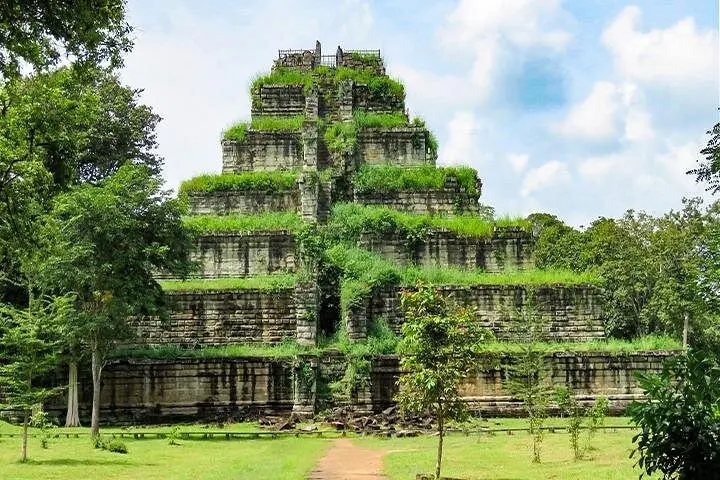
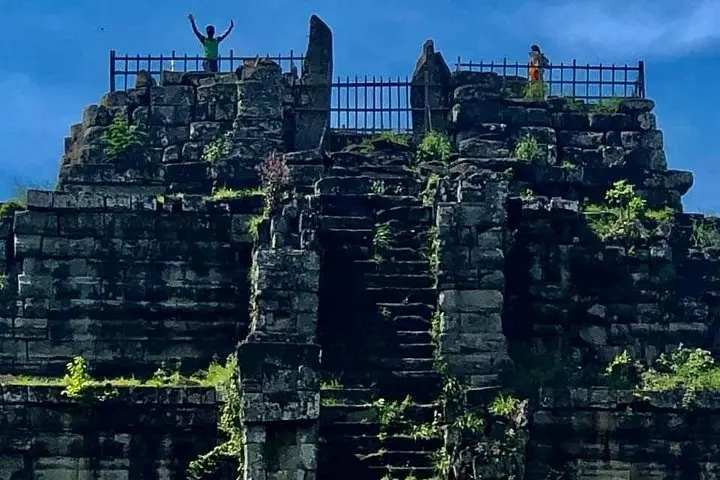
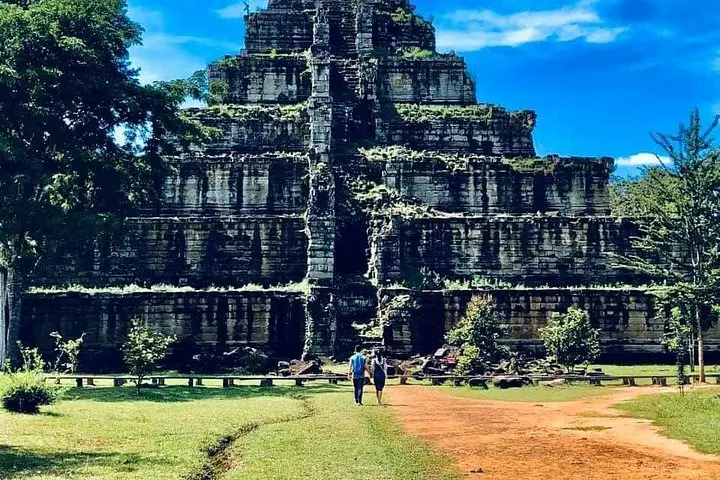
Beng Mealea was raised in the 12th century under Suryavarman II and later altered by Jayavarman VII; its plan follows the Angkorian model but with corridors collapsed and sandstone scattered like a deliberately weathered ruin. Hours later the trip reaches Koh Ker, briefly the Khmer capital in the 10th century under Jayavarman IV, where brick towers and the famous Linga pyramid recall a short-lived imperial experiment far from the Angkor core. Geologically, sandstone and laterite dominate the monuments; centuries of tropical growth and seasonal runoff have shifted blocks and softened edges.
Local guides often point out remnants of the Royal Road and small bridge spans—quiet hints of the ancient logistics that tied these sites to Angkor. Culturally, both places are working landscapes: farmers, forest birds, and occasional monks move through the same terrain that once served kings.
Practical edge: this is a long, full-day outing—expect about 10–11 hours door-to-door with several short, uneven walks. Wear sturdy shoes, bring sun and rain protection, cash for entrance fees or local purchases, and insect repellent. Mornings offer the softest light for photography and cooler walking; afternoons grow hot and can be dusty. Respect fragile carvings, follow guide instructions, and leave no trace—the ruins are fragile and the jungle is eager to reclaim what remains.
This tour lists admissions as not included—confirm with the operator and bring cash (USD is widely accepted) to pay on-site if required.
Expect several short walks at each temple site totaling roughly 2–3 km; most time is spent traveling between sites by vehicle.
Transport may be wheelchair accessible, but temple grounds are uneven, stepped, and not suitable for wheelchairs or standard strollers.
Dry season (November–April) offers firmer ground and clearer skies; early morning departures avoid midday heat and improve lighting for photos.
Angkor Elephant Tour operates guided outdoor trips and adventures with an emphasis on safety, stewardship, and memorable experiences.
A humid dawn lifts off the rice plains as the van eases out of Siem Reap, the road narrowing and palms pressing close. By midmorning the soundscape changes from scooters to bird calls and the first stone lintels appear through the trees—Beng Mealea’s hulking blocks and root-strangled galleries daring you to move closer.
A humid dawn lifts off the rice plains as the van eases out of Siem Reap, the road narrowing and palms pressing close. By midmorning the soundscape changes from scooters to bird calls and the first stone lintels appear through the trees—Beng Mealea’s hulking blocks and root-strangled galleries daring you to move closer.
Beng Mealea was raised in the 12th century under Suryavarman II and later altered by Jayavarman VII; its plan follows the Angkorian model but with corridors collapsed and sandstone scattered like a deliberately weathered ruin. Hours later the trip reaches Koh Ker, briefly the Khmer capital in the 10th century under Jayavarman IV, where brick towers and the famous Linga pyramid recall a short-lived imperial experiment far from the Angkor core. Geologically, sandstone and laterite dominate the monuments; centuries of tropical growth and seasonal runoff have shifted blocks and softened edges.
Local guides often point out remnants of the Royal Road and small bridge spans—quiet hints of the ancient logistics that tied these sites to Angkor. Culturally, both places are working landscapes: farmers, forest birds, and occasional monks move through the same terrain that once served kings.
Practical edge: this is a long, full-day outing—expect about 10–11 hours door-to-door with several short, uneven walks. Wear sturdy shoes, bring sun and rain protection, cash for entrance fees or local purchases, and insect repellent. Mornings offer the softest light for photography and cooler walking; afternoons grow hot and can be dusty. Respect fragile carvings, follow guide instructions, and leave no trace—the ruins are fragile and the jungle is eager to reclaim what remains.