THE ADVENTURE COLLECTIVE® · Independent discovery and booking for outdoor travel

In one long day from Kandy you can move from painted Hindu shrines to cool cave sanctuaries and climb the cliff-top ruins of Sigiriya. This private tour stitches geology and history into a compact, practical cultural adventure—perfect for travelers with limited time.
In one long day from Kandy you can move from painted Hindu shrines to cool cave sanctuaries and climb the cliff-top ruins of Sigiriya. This private tour stitches geology and history into a compact, practical cultural adventure—perfect for travelers with limited time.
You leave Kandy before the heat builds: a small private van eases out of the city, tea terraces folding away into low hills that seem to breathe. The itinerary moves like a short story in chapters — a riotous Hindu temple that flashes color against green, a compact stone relic that claims to be Sri Lanka’s center, the cool darkness of gilded caverns, and finally the blunt, ancient face of Sigiriya rising from flat plains like a ruined crown.
Verified experiences and guided adventures in the surrounding area.
Operated by Mount Lanka Tours · Sigiriya, Central Province
You leave Kandy before the heat builds: a small private van eases out of the city, tea terraces folding away into low hills that seem to breathe. The itinerary moves like a short story in chapters — a riotous Hindu temple that flashes color against green, a compact stone relic that claims to be Sri Lanka’s center, the cool darkness of gilded caverns, and finally the blunt, ancient face of Sigiriya rising from flat plains like a ruined crown.
Matale’s Hindu temple announces itself with painted columns and a chorus of bells; it’s an unapologetic show of devotion and craftsmanship that hints at the island’s layered faiths. A little further, Nalanda Gedige sits low and square — a fascinating hybrid of South Indian and Sri Lankan stone work dating to roughly the 9th–10th centuries: a reminder that the island has long been a crossroads of cultures and empires.
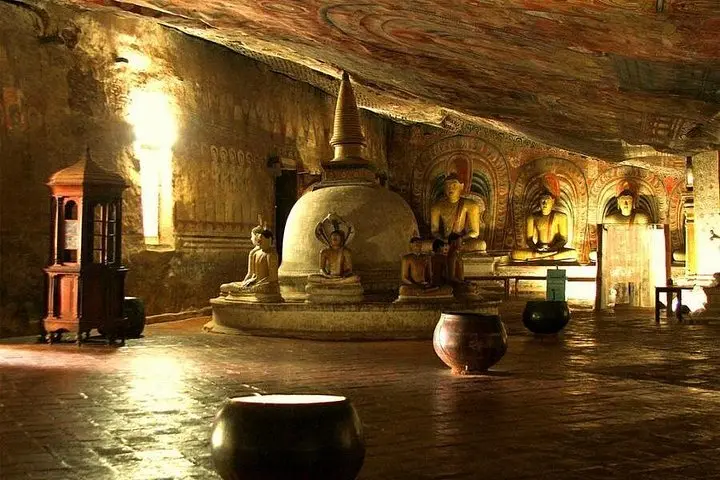
Dambulla’s cave temple is the trip’s atmospheric core. You duck into cool shadows to find rows of reclining and seated Buddhas, ochre murals that curve with the cave’s ribs, and a hush that feels curated by centuries. Light filters in, sliding across ancient plaster and gilded stone; it’s easy to imagine pilgrims arriving here long before modern roads existed.
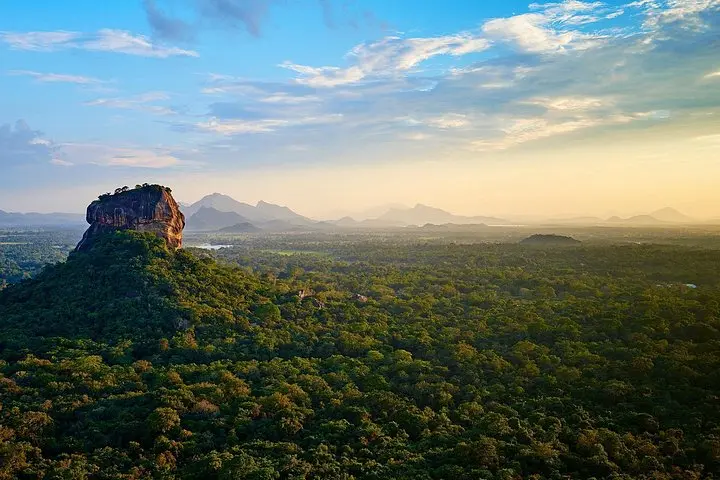
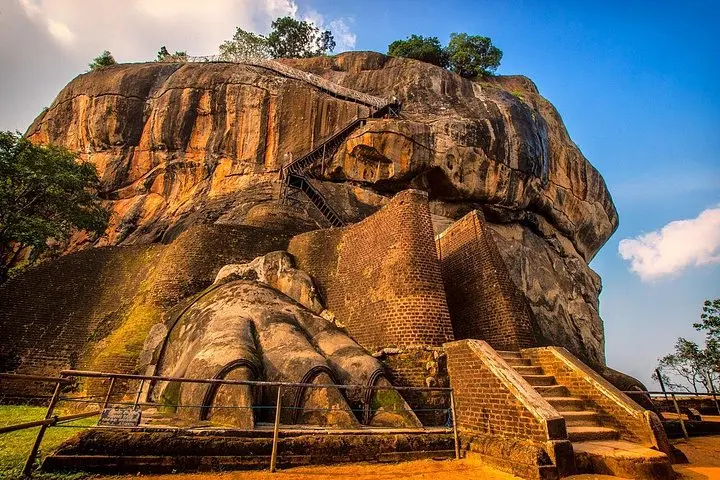
Sigiriya, the day’s crescendo, is a geological and historical punch: a 200-meter-plus granite outcrop — the hardened heart of an ancient volcanic plug — crowned with the ruins of King Kassapa’s 5th-century fortress and landscaped gardens below. The climb is part stair, part iron-lattice ascend; narrow galleries, fragmented frescoes and the famous Mirror Wall give way to panoramic plains dotted with water gardens. At the summit, the ruined terraces and battered foundations feel human-sized against the scale of the sky.
Practicalities are straightforward: this private, roughly 5–6 hour tour from Kandy includes pickup and drop-off; plan on stairs at Sigiriya (roughly 1,000–1,200 steps cumulatively) and several hours on your feet. Bring cash for entrance fees and lunch, strong footwear, sun protection and water. Note health restrictions: not recommended for pregnant travelers or people with significant spinal or heart problems. Timing your visit early in the day reduces heat and crowds; late afternoon light is spectacular for photos but the climb can be hotter. Guides typically leave time for a relaxed lunch after Sigiriya before the return drive to Kandy.
This day trip is compact but rich: a single loop that threads geology, royal ambition and devotional spaces into a practical, easily managed day. For travelers based in Kandy wanting a concentrated look at central Sri Lanka’s best-known heritage, it’s a reliable, immersive day that rewards early starts and sensible planning.
Drive time to Sigiriya/Dambulla is about 2–2.5 hours each way depending on traffic; the full tour runs roughly 5–6 hours including site visits.
Entrance fees are not included—bring cash for Dambulla and Sigiriya ticketing.
The climb is steep in sections with metal stairways; it’s manageable for most people with moderate fitness but not recommended for those with serious mobility or spinal issues.
Older children who can climb many stairs will enjoy it; strollers are not feasible and supervision on narrow passages is required.
Yes—most itineraries include a lunch stop after Sigiriya before returning to Kandy; you can request local or restaurant options.
This private tour typically includes a driver-guide who provides commentary en route; specialist on-site guides can be arranged locally at an additional cost.
Mount Lanka Tours operates guided outdoor trips and adventures with an emphasis on safety, stewardship, and memorable experiences.
You leave Kandy before the heat builds: a small private van eases out of the city, tea terraces folding away into low hills that seem to breathe. The itinerary moves like a short story in chapters — a riotous Hindu temple that flashes color against green, a compact stone relic that claims to be Sri Lanka’s center, the cool darkness of gilded caverns, and finally the blunt, ancient face of Sigiriya rising from flat plains like a ruined crown.
You leave Kandy before the heat builds: a small private van eases out of the city, tea terraces folding away into low hills that seem to breathe. The itinerary moves like a short story in chapters — a riotous Hindu temple that flashes color against green, a compact stone relic that claims to be Sri Lanka’s center, the cool darkness of gilded caverns, and finally the blunt, ancient face of Sigiriya rising from flat plains like a ruined crown.
Matale’s Hindu temple announces itself with painted columns and a chorus of bells; it’s an unapologetic show of devotion and craftsmanship that hints at the island’s layered faiths. A little further, Nalanda Gedige sits low and square — a fascinating hybrid of South Indian and Sri Lankan stone work dating to roughly the 9th–10th centuries: a reminder that the island has long been a crossroads of cultures and empires.
Dambulla’s cave temple is the trip’s atmospheric core. You duck into cool shadows to find rows of reclining and seated Buddhas, ochre murals that curve with the cave’s ribs, and a hush that feels curated by centuries. Light filters in, sliding across ancient plaster and gilded stone; it’s easy to imagine pilgrims arriving here long before modern roads existed.
Sigiriya, the day’s crescendo, is a geological and historical punch: a 200-meter-plus granite outcrop — the hardened heart of an ancient volcanic plug — crowned with the ruins of King Kassapa’s 5th-century fortress and landscaped gardens below. The climb is part stair, part iron-lattice ascend; narrow galleries, fragmented frescoes and the famous Mirror Wall give way to panoramic plains dotted with water gardens. At the summit, the ruined terraces and battered foundations feel human-sized against the scale of the sky.
Practicalities are straightforward: this private, roughly 5–6 hour tour from Kandy includes pickup and drop-off; plan on stairs at Sigiriya (roughly 1,000–1,200 steps cumulatively) and several hours on your feet. Bring cash for entrance fees and lunch, strong footwear, sun protection and water. Note health restrictions: not recommended for pregnant travelers or people with significant spinal or heart problems. Timing your visit early in the day reduces heat and crowds; late afternoon light is spectacular for photos but the climb can be hotter. Guides typically leave time for a relaxed lunch after Sigiriya before the return drive to Kandy.
This day trip is compact but rich: a single loop that threads geology, royal ambition and devotional spaces into a practical, easily managed day. For travelers based in Kandy wanting a concentrated look at central Sri Lanka’s best-known heritage, it’s a reliable, immersive day that rewards early starts and sensible planning.