THE ADVENTURE COLLECTIVE® · Independent discovery and booking for outdoor travel

A full‑day circuit from Negombo that pairs Sigiriya’s 200‑meter Lion Rock climb with the painted caverns of Dambulla. Expect long drives, steep steps, and unforgettable ancient art—plan early starts and steady shoes.
A full‑day circuit from Negombo that pairs Sigiriya’s 200‑meter Lion Rock climb with the painted caverns of Dambulla. Expect long drives, steep steps, and unforgettable ancient art—plan early starts and steady shoes.
You step into the vehicle in Negombo before sunrise, and the coastline gives way to a slow green rhythm—paddy fields, tamarind trees, small shrines watched over by painted gods. Hours later the land ends its polite flatness and Lion Rock—Sigiriya—rises like a quarried watchtower: a blunt, 200‑meter column of rock that has held human ambition against the weather for 1,500 years.
Verified experiences and guided adventures in the surrounding area.
Operated by Mirissa Cabs · Sigiriya, Central Province
You step into the vehicle in Negombo before sunrise, and the coastline gives way to a slow green rhythm—paddy fields, tamarind trees, small shrines watched over by painted gods. Hours later the land ends its polite flatness and Lion Rock—Sigiriya—rises like a quarried watchtower: a blunt, 200‑meter column of rock that has held human ambition against the weather for 1,500 years.
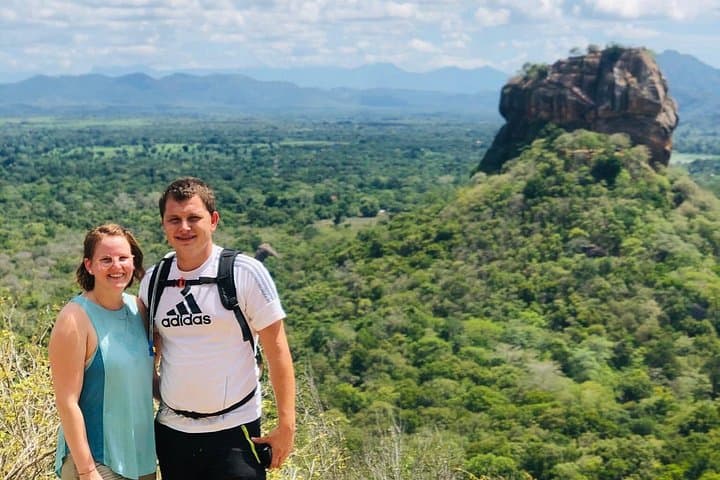
The climb is a cadence of stone steps and steel walkways. Midway the Mirror Wall catches your reflection and the faded frescoes peer down, their ochres and lapis protecting stories of a palace and gardens once perched above. At the summit, the flat plaza offers panoramic rice‑plain views and the remnants of King Kashyapa’s fortified palace; you can feel the human scale of history compressed into the abrupt geometry of the rock.
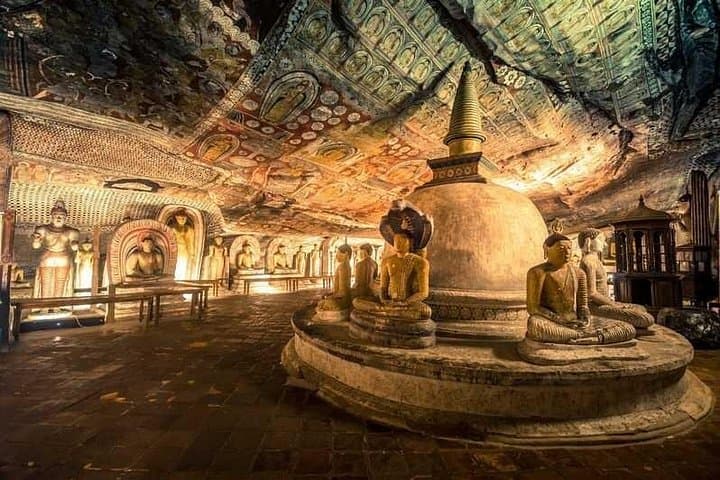
An hour south, Dambulla's cave temple sits 160 meters above the road, a hive of painted ceilings and carved Buddha figures. Five caves contain about 150 statues and layers of murals that began over two millennia ago—Buddhist devotion accreting like paint, each king leaving a brushstroke. Geologically the region is older than the tales: ancient igneous intrusions and heavily weathered soils that made Sigiriya stand tall while the softer rock around it eroded away.
The cultural mix is immediate: village life at the base of Sigiriya, farmers ferrying water buffalo, and temple caretakers maintaining incense and respectful distance. Local guides will point out the hydraulic gardens at Sigiriya and how ancient engineers channeled water across terraces—an early flirtation with landscape architecture that still gathers water after rain.
Practical guide: this is a long, full‑day excursion (expect 10–14 hours door‑to‑door). The itinerary typically includes private, air‑conditioned transport and bottled water, but entrance fees to the sites are generally not included, and lines for tickets can form during peak hours. Start early to beat midday heat and crowds at Sigiriya and save Dambulla for the cooler afternoon.
Wear sturdy shoes—the Sigiriya ascent includes roughly a thousand steps and exposed metal staircases—and bring 2–3 liters of water, sunscreen, and a light layer for temple visits (shoulders and knees should be covered). Cameras are welcome, but inside Dambulla, keep noise low and avoid flash photography to protect the murals.
Conservation note: both sites are UNESCO‑listed and fragile; avoid touching frescoes or climbing on ruins. Hiring a licensed local guide not only enriches the visit but also supports small businesses in the area. By mid‑evening you’ll return to Negombo with dust on your shoes, a clearer sense of Sri Lanka’s layered history, and two landscapes—cliff and cave—spooling through your memory.
Most operators do not include entrance fees for Sigiriya and Dambulla—bring local cash to purchase tickets at each site.
The ascent involves roughly a thousand to 1,200 steps and several metal staircases; the exact count varies by route but plan for a sustained climb.
Older children who can handle long days and stairs will manage fine; strollers are not practical for the climb.
Yes—this itinerary is designed as a full‑day trip from Negombo, but expect a long day and an early start to see both comfortably.
Bottled water is commonly provided, but meals are usually not included—your itinerary may stop for lunch at a local restaurant (check before booking).
Licensed local guides can be hired at both sites and add historical and cultural context; many tours include a guide or offer one as an add‑on.
Mirissa Cabs operates guided outdoor trips and adventures with an emphasis on safety, stewardship, and memorable experiences.
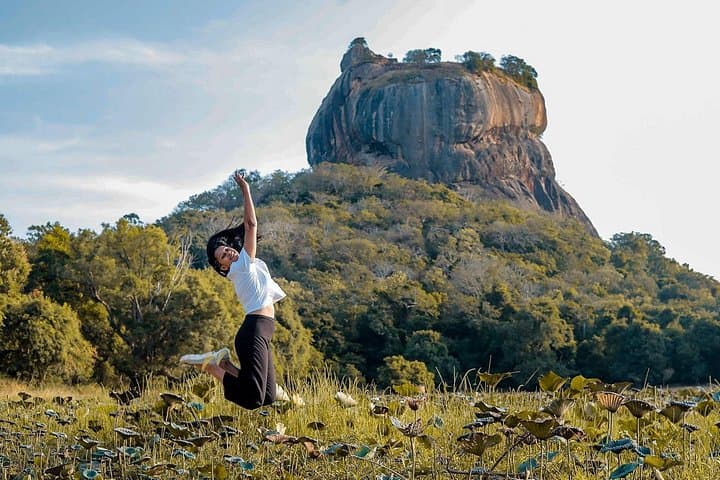

You step into the vehicle in Negombo before sunrise, and the coastline gives way to a slow green rhythm—paddy fields, tamarind trees, small shrines watched over by painted gods. Hours later the land ends its polite flatness and Lion Rock—Sigiriya—rises like a quarried watchtower: a blunt, 200‑meter column of rock that has held human ambition against the weather for 1,500 years.
You step into the vehicle in Negombo before sunrise, and the coastline gives way to a slow green rhythm—paddy fields, tamarind trees, small shrines watched over by painted gods. Hours later the land ends its polite flatness and Lion Rock—Sigiriya—rises like a quarried watchtower: a blunt, 200‑meter column of rock that has held human ambition against the weather for 1,500 years.
The climb is a cadence of stone steps and steel walkways. Midway the Mirror Wall catches your reflection and the faded frescoes peer down, their ochres and lapis protecting stories of a palace and gardens once perched above. At the summit, the flat plaza offers panoramic rice‑plain views and the remnants of King Kashyapa’s fortified palace; you can feel the human scale of history compressed into the abrupt geometry of the rock.
An hour south, Dambulla's cave temple sits 160 meters above the road, a hive of painted ceilings and carved Buddha figures. Five caves contain about 150 statues and layers of murals that began over two millennia ago—Buddhist devotion accreting like paint, each king leaving a brushstroke. Geologically the region is older than the tales: ancient igneous intrusions and heavily weathered soils that made Sigiriya stand tall while the softer rock around it eroded away.
The cultural mix is immediate: village life at the base of Sigiriya, farmers ferrying water buffalo, and temple caretakers maintaining incense and respectful distance. Local guides will point out the hydraulic gardens at Sigiriya and how ancient engineers channeled water across terraces—an early flirtation with landscape architecture that still gathers water after rain.
Practical guide: this is a long, full‑day excursion (expect 10–14 hours door‑to‑door). The itinerary typically includes private, air‑conditioned transport and bottled water, but entrance fees to the sites are generally not included, and lines for tickets can form during peak hours. Start early to beat midday heat and crowds at Sigiriya and save Dambulla for the cooler afternoon.
Wear sturdy shoes—the Sigiriya ascent includes roughly a thousand steps and exposed metal staircases—and bring 2–3 liters of water, sunscreen, and a light layer for temple visits (shoulders and knees should be covered). Cameras are welcome, but inside Dambulla, keep noise low and avoid flash photography to protect the murals.
Conservation note: both sites are UNESCO‑listed and fragile; avoid touching frescoes or climbing on ruins. Hiring a licensed local guide not only enriches the visit but also supports small businesses in the area. By mid‑evening you’ll return to Negombo with dust on your shoes, a clearer sense of Sri Lanka’s layered history, and two landscapes—cliff and cave—spooling through your memory.