THE ADVENTURE COLLECTIVE® · Independent discovery and booking for outdoor travel

Swap the coast for the Cultural Triangle on a private day trip from Trincomalee: climb the dramatic Sigiriya Lion Rock and explore the painted caverns of Dambulla with a local guide.
Swap the coast for the Cultural Triangle on a private day trip from Trincomalee: climb the dramatic Sigiriya Lion Rock and explore the painted caverns of Dambulla with a local guide.
You leave Trincomalee before dawn, the air thin with salt and the road opening into the dry plains of Sri Lanka’s Cultural Triangle. By midmorning the traffic thins and the profile of Sigiriya — a sheer column of ancient gneiss rising out of flat scrub — appears like a deliberate kingdom set on rock. Climbing it feels like entering a stadium carved by time: metal stairways thread ledges, frescoes peer from sheltered galleries, and the ruined palace at the summit throws open a 360-degree map of jungle, paddy, and distant tank reservoirs.
Verified experiences and guided adventures in the surrounding area.
Operated by Ceylon Travel Dream · Sigiriya, Central Province
You leave Trincomalee before dawn, the air thin with salt and the road opening into the dry plains of Sri Lanka’s Cultural Triangle. By midmorning the traffic thins and the profile of Sigiriya — a sheer column of ancient gneiss rising out of flat scrub — appears like a deliberate kingdom set on rock. Climbing it feels like entering a stadium carved by time: metal stairways thread ledges, frescoes peer from sheltered galleries, and the ruined palace at the summit throws open a 360-degree map of jungle, paddy, and distant tank reservoirs.
The day begins with Dambulla, five rock-cut temples painted and sculpted across centuries. The caves are cool and dim; Buddhas in varying poses preside over murals that record not just faith but the region’s chronological layers — pre-Brahmi inscriptions, medieval restorations, and 18th-century repainting. The guide’s measured commentary helps separate myth from material: Dambulla was a place of refuge and ritual, then a center for mural conservation in the late 20th century, earning UNESCO recognition in 1991.
Sigiriya’s story arrives with geology and politics — a 180-meter volcanic plug chosen by King Kashyapa (477–495 AD) for a capital. The fortress’s famous lion gateway, now only paws and foundations, hints at a program of power, hydraulics, and ornamental gardens below that transformed the landscape into a lived sculpture. The climb is part museum, part adventure: mirror wall graffiti from ancient pilgrims shares space with narrow staircases that demand attention.
Culturally, this corridor connects spice villages and Buddhist practice. The optional stop in Matale offers a sensory counterpoint — spice markets where cardamom and cinnamon are still traded by weight and memory.
Practical guidance: expect a full day (roughly 10–12 hours including travel). The Sigiriya ascent involves roughly 1,000–1,200 steps across uneven and metallic stairs; anyone with moderate fitness and a steady head for heights will do fine. Bring sun protection, a refillable water bottle (the operator provides mineral water), and slip-resistant shoes. Start early — heat builds by late morning, and crowds swell after 9:30–10:00. Entrance fees to both sites are separate; carry local currency and modest temple-appropriate clothing (knees and shoulders covered) for Dambulla.
Logistics are straightforward: private, air-conditioned pickup from Trincomalee or Nilaveli, an English-speaking guide, and hotel drop-off. The reward is a compressed cultural itinerary that trades a casual beach day for two of Sri Lanka’s most resonant monuments — a climb that asks for effort and returns space, history, and views that settle in the memory.
No — national park and monument entrance fees for Sigiriya and Dambulla are typically paid separately on-site; bring local currency.
It’s moderate: expect roughly 1,000–1,200 steps with some narrow metal staircases; take breaks if needed.
Yes — the English-speaking guide leads both sites and explains history, though temple rules require respectful silence in some areas.
Children with decent stamina can manage; travelers with serious mobility or cardiovascular issues should avoid the summit climb.
No meals are usually included, though operators sometimes stop at local restaurants; bring snacks for energy between stops.
This is a private tour and the operator can often adjust stops like adding a spice garden in Matale, subject to timing and availability.
Ceylon Travel Dream operates guided outdoor trips and adventures with an emphasis on safety, stewardship, and memorable experiences.

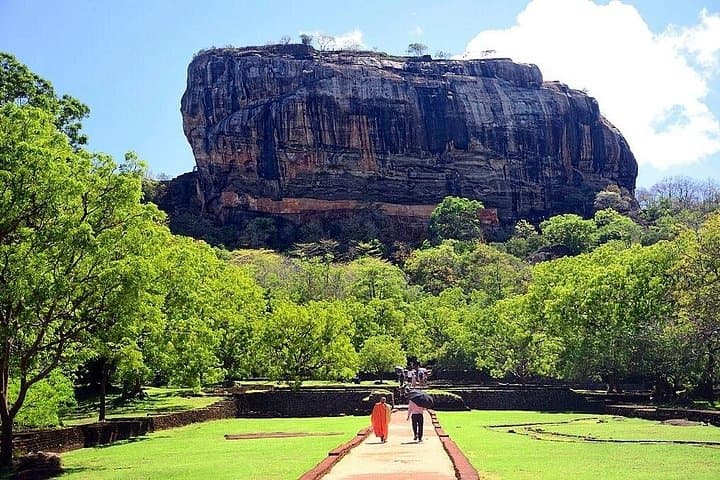


You leave Trincomalee before dawn, the air thin with salt and the road opening into the dry plains of Sri Lanka’s Cultural Triangle. By midmorning the traffic thins and the profile of Sigiriya — a sheer column of ancient gneiss rising out of flat scrub — appears like a deliberate kingdom set on rock. Climbing it feels like entering a stadium carved by time: metal stairways thread ledges, frescoes peer from sheltered galleries, and the ruined palace at the summit throws open a 360-degree map of jungle, paddy, and distant tank reservoirs.
You leave Trincomalee before dawn, the air thin with salt and the road opening into the dry plains of Sri Lanka’s Cultural Triangle. By midmorning the traffic thins and the profile of Sigiriya — a sheer column of ancient gneiss rising out of flat scrub — appears like a deliberate kingdom set on rock. Climbing it feels like entering a stadium carved by time: metal stairways thread ledges, frescoes peer from sheltered galleries, and the ruined palace at the summit throws open a 360-degree map of jungle, paddy, and distant tank reservoirs.
The day begins with Dambulla, five rock-cut temples painted and sculpted across centuries. The caves are cool and dim; Buddhas in varying poses preside over murals that record not just faith but the region’s chronological layers — pre-Brahmi inscriptions, medieval restorations, and 18th-century repainting. The guide’s measured commentary helps separate myth from material: Dambulla was a place of refuge and ritual, then a center for mural conservation in the late 20th century, earning UNESCO recognition in 1991.
Sigiriya’s story arrives with geology and politics — a 180-meter volcanic plug chosen by King Kashyapa (477–495 AD) for a capital. The fortress’s famous lion gateway, now only paws and foundations, hints at a program of power, hydraulics, and ornamental gardens below that transformed the landscape into a lived sculpture. The climb is part museum, part adventure: mirror wall graffiti from ancient pilgrims shares space with narrow staircases that demand attention.
Culturally, this corridor connects spice villages and Buddhist practice. The optional stop in Matale offers a sensory counterpoint — spice markets where cardamom and cinnamon are still traded by weight and memory.
Practical guidance: expect a full day (roughly 10–12 hours including travel). The Sigiriya ascent involves roughly 1,000–1,200 steps across uneven and metallic stairs; anyone with moderate fitness and a steady head for heights will do fine. Bring sun protection, a refillable water bottle (the operator provides mineral water), and slip-resistant shoes. Start early — heat builds by late morning, and crowds swell after 9:30–10:00. Entrance fees to both sites are separate; carry local currency and modest temple-appropriate clothing (knees and shoulders covered) for Dambulla.
Logistics are straightforward: private, air-conditioned pickup from Trincomalee or Nilaveli, an English-speaking guide, and hotel drop-off. The reward is a compressed cultural itinerary that trades a casual beach day for two of Sri Lanka’s most resonant monuments — a climb that asks for effort and returns space, history, and views that settle in the memory.