THE ADVENTURE COLLECTIVE® · Independent discovery and booking for outdoor travel

Spend a long, full day climbing an ancient rock palace, wandering painted cave temples, and watching elephants gather at an ancient reservoir. This private door-to-door trip from Colombo packs Sri Lanka’s history and wildlife into one unforgettable circuit.
Spend a long, full day climbing an ancient rock palace, wandering painted cave temples, and watching elephants gather at an ancient reservoir. This private door-to-door trip from Colombo packs Sri Lanka’s history and wildlife into one unforgettable circuit.
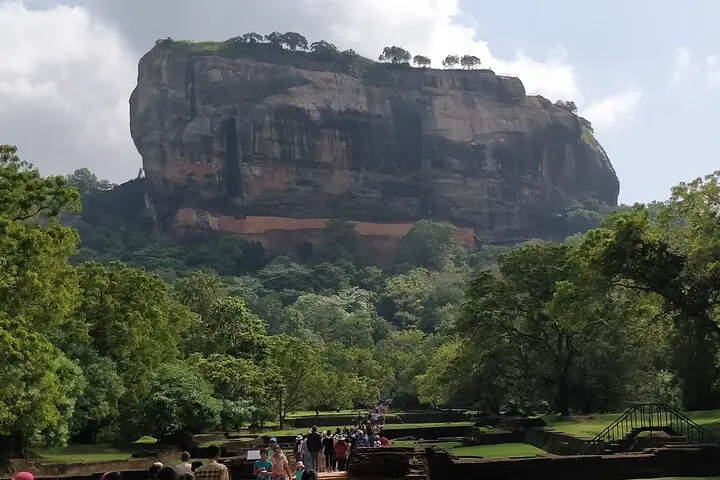
You step out of the air-conditioned vehicle before dawn and the plains open like a breath—paddy fields stretching to a lone granite island rising 200 meters into the sky. Sigiriya’s sheer face glows in the early light, a vertical puzzle of iron staircases and ancient masonry that seems to dare you to climb. The day that begins in the lowlands of central Sri Lanka moves fast: rock fortress, cave temples, and then a wide, wild savanna where elephants gather around a centuries-old reservoir.
Verified experiences and guided adventures in the surrounding area.
Operated by Rymgo · Sigiriya, Central Province
You step out of the air-conditioned vehicle before dawn and the plains open like a breath—paddy fields stretching to a lone granite island rising 200 meters into the sky. Sigiriya’s sheer face glows in the early light, a vertical puzzle of iron staircases and ancient masonry that seems to dare you to climb. The day that begins in the lowlands of central Sri Lanka moves fast: rock fortress, cave temples, and then a wide, wild savanna where elephants gather around a centuries-old reservoir.
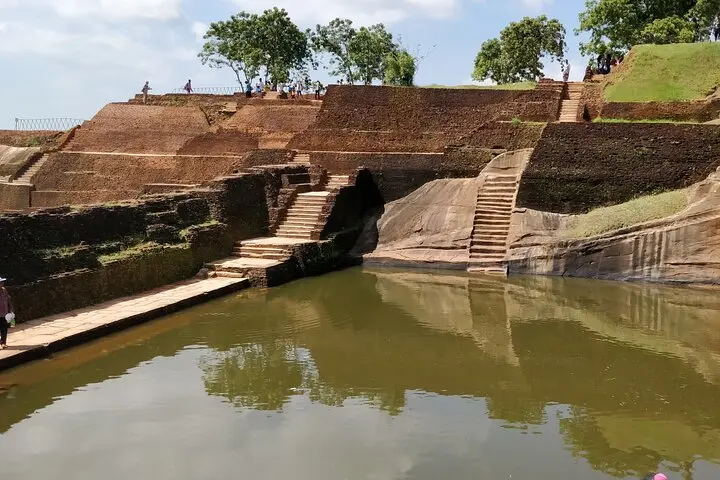
Sigiriya was raised by King Kashyapa in the 5th century AD as a fortified palace complex; engineers carved water gardens, moats and terraced stonework into the plain below, turning landscape into architecture. The rock’s midriff still holds the famous frescoes—painted figures that survived centuries of rain and conquest—while the Lions’ Paw gate hints at the grandeur of the summit. Not far away, the Dambulla Cave Temple occupies a granite outcrop whose five caverns conserve over 2,000 square meters of murals and 150 statues that chart Sri Lanka’s Buddhist artistic arc across millennia.
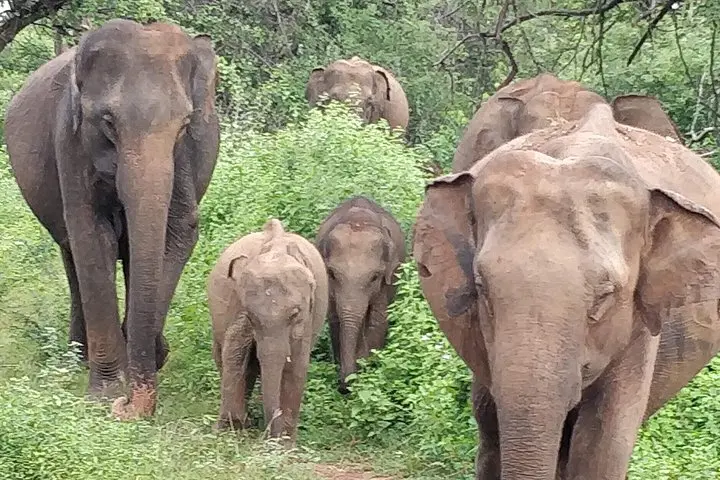
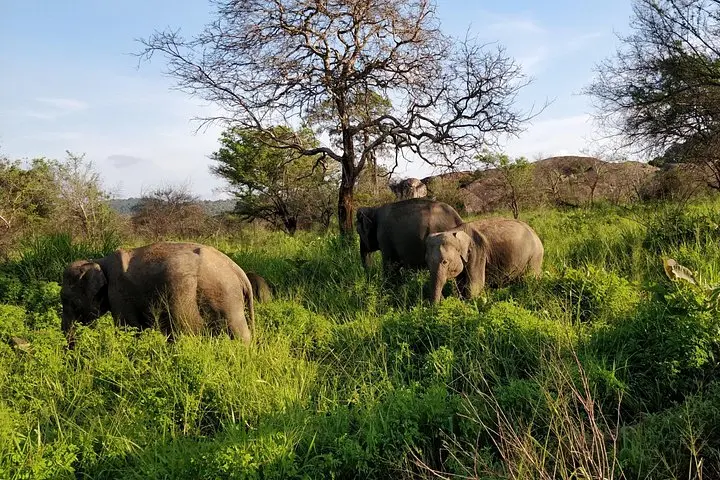
Geology here is blunt and old: laterite plains punctuated by isolated granite domes, the survivors of long-ago erosion. Minneriya National Park centers on an ancient tank—an engineered reservoir dating to the third century AD—that continues to dictate wildlife patterns. In the dry months the park stages one of nature’s great shows: “The Gathering,” when hundreds of Asian elephants converge for water and graze on the new grass pushed up by receding pools.
Culturally, this circuit stitches together different faces of Sri Lanka: monastic devotion in Dambulla, royal ambition at Sigiriya, and the pragmatic engineering of ancient irrigation systems that still sustain communities.
Practical guidance: start early—pickups from Colombo add an hour or more in transit, and the climb at Sigiriya is steep with narrow metal steps. Bring cash for entrance fees, a rain jacket in monsoon season, and a lightweight scarf for temple visits (shoulders and knees covered). On the safari, the terrain is flat and dusty; binoculars and a telephoto lens make the difference between a passing shape and a portrait of an elephant bull.
The day is long—expect 10–12 hours—but paced: 60–120 minutes at the monuments and around three hours for the park game drive. Hydrate often; sunscreen and sturdy shoes will keep the ascent and midday heat from wearing you down. Above all, let the landscape move at its own tempo—granite that won’t be rushed, water that commands the animals, and a history that still sits quietly in stone.
Typical door-to-door driving time is about 3–4 hours each way depending on traffic; expect a full 10–12 hour day including site visits.
Entrance fees are not included—bring cash for admission to Sigiriya, Dambulla and park entry as advised by your operator.
The ascent involves steep metal staircases and narrow passages; people with vertigo or limited mobility may find it difficult, though many stop at the mid-level platforms.
The park is famous for elephants, and you may also spot spotted deer, wild buffalo, toque macaques and numerous waterbirds.
Yes—families participate frequently; strollers won't work on the climb but the safari portion is accessible. Infant seats are available per the tour listing.
Tipping is customary in Sri Lanka; 500–1,000 LKR for the driver and a similar amount for guides is appropriate depending on service.
Rymgo operates guided outdoor trips and adventures with an emphasis on safety, stewardship, and memorable experiences.
You step out of the air-conditioned vehicle before dawn and the plains open like a breath—paddy fields stretching to a lone granite island rising 200 meters into the sky. Sigiriya’s sheer face glows in the early light, a vertical puzzle of iron staircases and ancient masonry that seems to dare you to climb. The day that begins in the lowlands of central Sri Lanka moves fast: rock fortress, cave temples, and then a wide, wild savanna where elephants gather around a centuries-old reservoir.
You step out of the air-conditioned vehicle before dawn and the plains open like a breath—paddy fields stretching to a lone granite island rising 200 meters into the sky. Sigiriya’s sheer face glows in the early light, a vertical puzzle of iron staircases and ancient masonry that seems to dare you to climb. The day that begins in the lowlands of central Sri Lanka moves fast: rock fortress, cave temples, and then a wide, wild savanna where elephants gather around a centuries-old reservoir.
Sigiriya was raised by King Kashyapa in the 5th century AD as a fortified palace complex; engineers carved water gardens, moats and terraced stonework into the plain below, turning landscape into architecture. The rock’s midriff still holds the famous frescoes—painted figures that survived centuries of rain and conquest—while the Lions’ Paw gate hints at the grandeur of the summit. Not far away, the Dambulla Cave Temple occupies a granite outcrop whose five caverns conserve over 2,000 square meters of murals and 150 statues that chart Sri Lanka’s Buddhist artistic arc across millennia.
Geology here is blunt and old: laterite plains punctuated by isolated granite domes, the survivors of long-ago erosion. Minneriya National Park centers on an ancient tank—an engineered reservoir dating to the third century AD—that continues to dictate wildlife patterns. In the dry months the park stages one of nature’s great shows: “The Gathering,” when hundreds of Asian elephants converge for water and graze on the new grass pushed up by receding pools.
Culturally, this circuit stitches together different faces of Sri Lanka: monastic devotion in Dambulla, royal ambition at Sigiriya, and the pragmatic engineering of ancient irrigation systems that still sustain communities.
Practical guidance: start early—pickups from Colombo add an hour or more in transit, and the climb at Sigiriya is steep with narrow metal steps. Bring cash for entrance fees, a rain jacket in monsoon season, and a lightweight scarf for temple visits (shoulders and knees covered). On the safari, the terrain is flat and dusty; binoculars and a telephoto lens make the difference between a passing shape and a portrait of an elephant bull.
The day is long—expect 10–12 hours—but paced: 60–120 minutes at the monuments and around three hours for the park game drive. Hydrate often; sunscreen and sturdy shoes will keep the ascent and midday heat from wearing you down. Above all, let the landscape move at its own tempo—granite that won’t be rushed, water that commands the animals, and a history that still sits quietly in stone.