THE ADVENTURE COLLECTIVE® · Independent discovery and booking for outdoor travel

Climb a 5th‑century rock fortress and step into centuries of cave worship on a private day tour from Sigiriya. This eight‑hour excursion pairs a heart‑pumping ascent with contemplative temple art, ideal for travelers who want history, views and practical guidance in one trip.
Climb a 5th‑century rock fortress and step into centuries of cave worship on a private day tour from Sigiriya. This eight‑hour excursion pairs a heart‑pumping ascent with contemplative temple art, ideal for travelers who want history, views and practical guidance in one trip.
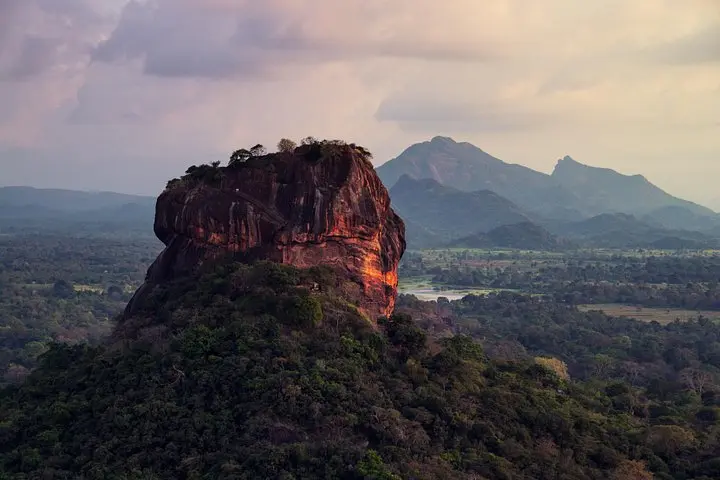
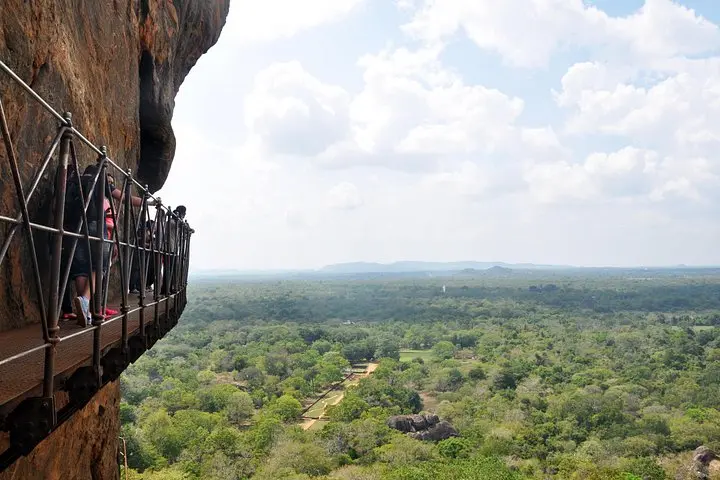
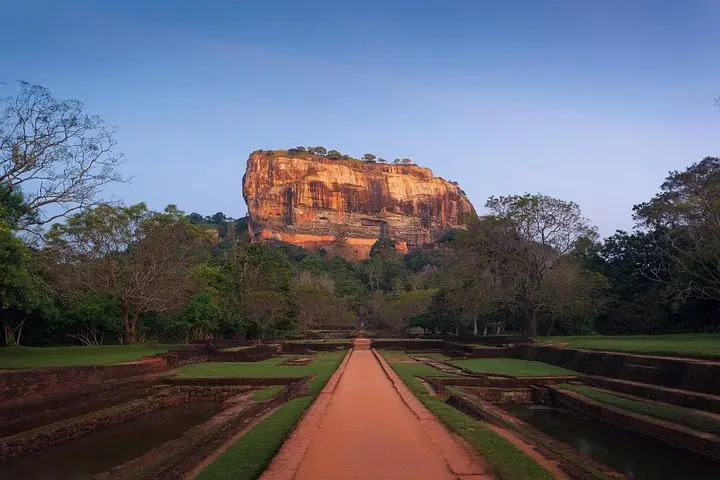
You arrive before the heat, the road bleaching into the paddy fields and palm groves. At the foot of Sigiriya the rock sits like an upthrust fortress—a sheer column of granite and laterite that demands attention. The first steps are shaded by banyans; by the time you start the iron staircases the plain below has already spread out into tanks and woodlands. The climb pulls you from scrub to frescoes, then to the scarred foundations of a once-grand palace where wind and termite and time now argue with human ambition.
Verified experiences and guided adventures in the surrounding area.
Operated by Lakpura LLC · Sigiriya, Central Province
You arrive before the heat, the road bleaching into the paddy fields and palm groves. At the foot of Sigiriya the rock sits like an upthrust fortress—a sheer column of granite and laterite that demands attention. The first steps are shaded by banyans; by the time you start the iron staircases the plain below has already spread out into tanks and woodlands. The climb pulls you from scrub to frescoes, then to the scarred foundations of a once-grand palace where wind and termite and time now argue with human ambition.
Sigiriya and Dambulla are linked not just by distance but by epochs. Sigiriya was transformed in the 5th century CE by King Kasyapa into an engineered stronghold, its terraces and water gardens an early demonstration of landscape design. Dambulla’s cave temples date back even further, with Buddhist paintings and sculptures layered over centuries from the 1st century BCE onward. Geologically the rock is a hardened magma plug that resisted erosion while the plains wore away, which is why the summit feels like an island in the sky.
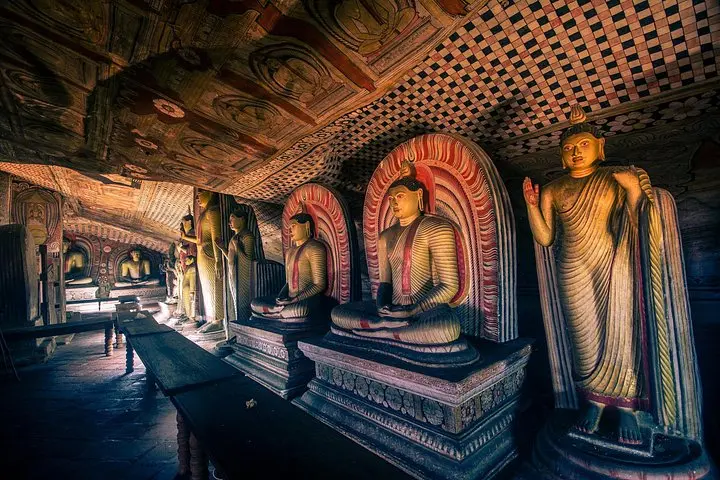
On this private day tour you move from the exposed, vertiginous ascent of Sigiriya to the cool, dim sanctity of Dambulla’s painted caves. The climb to Sigiriya’s summit involves roughly 200 m (650 ft) of vertical gain across a mix of stone terraces and metal stairways; the workout is punctuated by doorway guardians, mirror‑wall inscriptions, and the half-hidden fresco gallery. Dambulla’s complex requires a shorter, gentler ascent—stone steps leading to caverns lined with Buddha statues, ochre murals and a view that frames the agricultural mosaic below.
Practical edge: start at first light to beat both heat and crowds, wear closed, grippy shoes for the Sigiriya ascent, and carry at least 1 liter of water per person in addition to the two small bottles provided. Dambulla is an active religious site—cover shoulders and knees and be prepared to remove shoes. Expect an 8‑hour day with hotel pickup and a private guide who handles tickets and local context.
Local vendors and small tea shops cluster at both bases; use licensed guides and official parking to ensure revenues go back to the community. Be mindful on narrow stair sections—descending requires care, especially in wet weather. For photographers, sunrise from the summit slices the plain into gold, while the caves reward low‑light techniques and wide angles.
This is a day that combines exertion, archaeology and quiet ritual—two UNESCO sites that read together like chapters: one of imperial ambition, the other of devotional continuity.
The tour runs about 8 hours with hotel pickup and drop‑off included; actual time at each site varies by group pace.
Sections are exposed and narrow but well‑maintained; people with back problems, heart conditions or pregnancy are advised not to climb.
Admission is not included in the tour price—your guide will advise on ticket purchase at the sites.
Conservative clothing covering shoulders and knees is required; remove shoes and hats before entering the caves.
Older children who can handle stairs and moderate exertion will manage; younger children may find the ascent challenging.
Bottled water is provided (two 500 ml bottles per person); plan to buy snacks locally or bring your own for the full day.
Lakpura LLC operates guided outdoor trips and adventures with an emphasis on safety, stewardship, and memorable experiences.
You arrive before the heat, the road bleaching into the paddy fields and palm groves. At the foot of Sigiriya the rock sits like an upthrust fortress—a sheer column of granite and laterite that demands attention. The first steps are shaded by banyans; by the time you start the iron staircases the plain below has already spread out into tanks and woodlands. The climb pulls you from scrub to frescoes, then to the scarred foundations of a once-grand palace where wind and termite and time now argue with human ambition.
You arrive before the heat, the road bleaching into the paddy fields and palm groves. At the foot of Sigiriya the rock sits like an upthrust fortress—a sheer column of granite and laterite that demands attention. The first steps are shaded by banyans; by the time you start the iron staircases the plain below has already spread out into tanks and woodlands. The climb pulls you from scrub to frescoes, then to the scarred foundations of a once-grand palace where wind and termite and time now argue with human ambition.
Sigiriya and Dambulla are linked not just by distance but by epochs. Sigiriya was transformed in the 5th century CE by King Kasyapa into an engineered stronghold, its terraces and water gardens an early demonstration of landscape design. Dambulla’s cave temples date back even further, with Buddhist paintings and sculptures layered over centuries from the 1st century BCE onward. Geologically the rock is a hardened magma plug that resisted erosion while the plains wore away, which is why the summit feels like an island in the sky.
On this private day tour you move from the exposed, vertiginous ascent of Sigiriya to the cool, dim sanctity of Dambulla’s painted caves. The climb to Sigiriya’s summit involves roughly 200 m (650 ft) of vertical gain across a mix of stone terraces and metal stairways; the workout is punctuated by doorway guardians, mirror‑wall inscriptions, and the half-hidden fresco gallery. Dambulla’s complex requires a shorter, gentler ascent—stone steps leading to caverns lined with Buddha statues, ochre murals and a view that frames the agricultural mosaic below.
Practical edge: start at first light to beat both heat and crowds, wear closed, grippy shoes for the Sigiriya ascent, and carry at least 1 liter of water per person in addition to the two small bottles provided. Dambulla is an active religious site—cover shoulders and knees and be prepared to remove shoes. Expect an 8‑hour day with hotel pickup and a private guide who handles tickets and local context.
Local vendors and small tea shops cluster at both bases; use licensed guides and official parking to ensure revenues go back to the community. Be mindful on narrow stair sections—descending requires care, especially in wet weather. For photographers, sunrise from the summit slices the plain into gold, while the caves reward low‑light techniques and wide angles.
This is a day that combines exertion, archaeology and quiet ritual—two UNESCO sites that read together like chapters: one of imperial ambition, the other of devotional continuity.