THE ADVENTURE COLLECTIVE® · Independent discovery and booking for outdoor travel

Set out from Negombo before sunrise for a full‑day private tour that pairs the painted caves of Dambulla with the dramatic ascent of Sigiriya Rock Fortress. Expect centuries of history, steep staircases, and sweeping island views—plus practical tips for a long, hot day in central Sri Lanka.
Set out from Negombo before sunrise for a full‑day private tour that pairs the painted caves of Dambulla with the dramatic ascent of Sigiriya Rock Fortress. Expect centuries of history, steep staircases, and sweeping island views—plus practical tips for a long, hot day in central Sri Lanka.
You wake before dawn in the coastal calm of Negombo and settle into a private air‑conditioned vehicle while the town sleeps. The road inland slips past rice paddies and coconut groves; by the time the sky bleeds into a clear, humid blue you’ve traded salt wind for the dry, ochre profile of central Sri Lanka. Your driver steers toward two of the island’s most decisive landmarks: the painted caves of Dambulla and the 200‑metre monolith of Sigiriya.
Verified experiences and guided adventures in the surrounding area.
Operated by Sigiri Tours · Sigiriya, Central Province
You wake before dawn in the coastal calm of Negombo and settle into a private air‑conditioned vehicle while the town sleeps. The road inland slips past rice paddies and coconut groves; by the time the sky bleeds into a clear, humid blue you’ve traded salt wind for the dry, ochre profile of central Sri Lanka. Your driver steers toward two of the island’s most decisive landmarks: the painted caves of Dambulla and the 200‑metre monolith of Sigiriya.
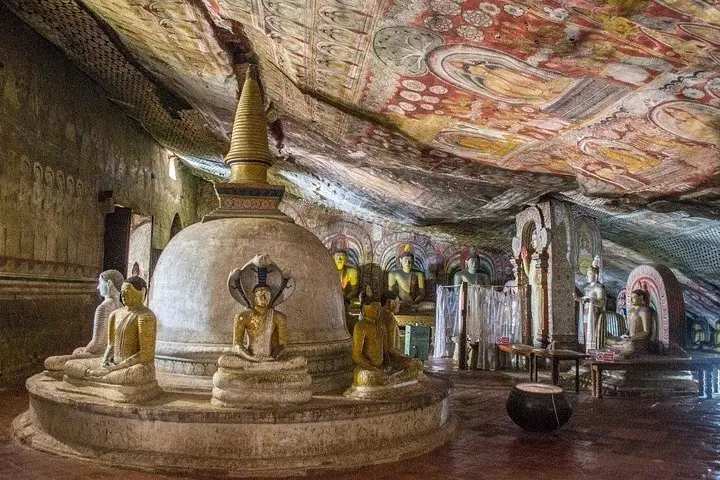
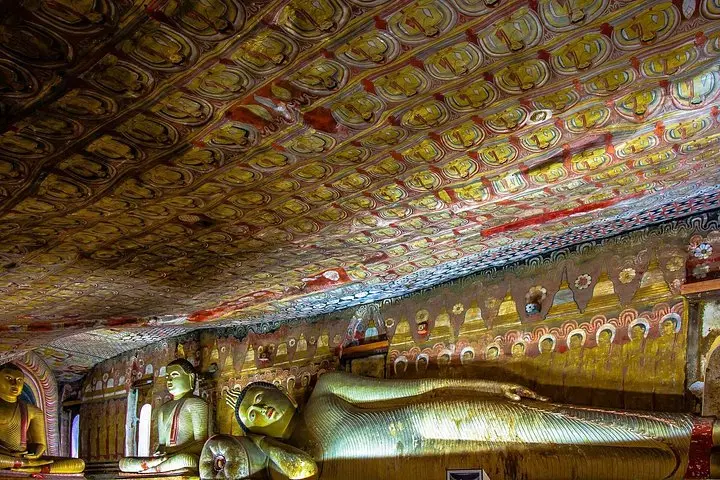
At Dambulla, the approach is deliberate—steps climb through scrub to a series of five caves whose dark, vaulted interiors hold over 150 Buddha images and wall paintings that stretch back two millennia. The air inside is cool and still; the ochre and red pigments that survived centuries of humidity lean close to you. History here is tactile—offerings on low altars, carved stone floors smoothed by generations of pilgrims.
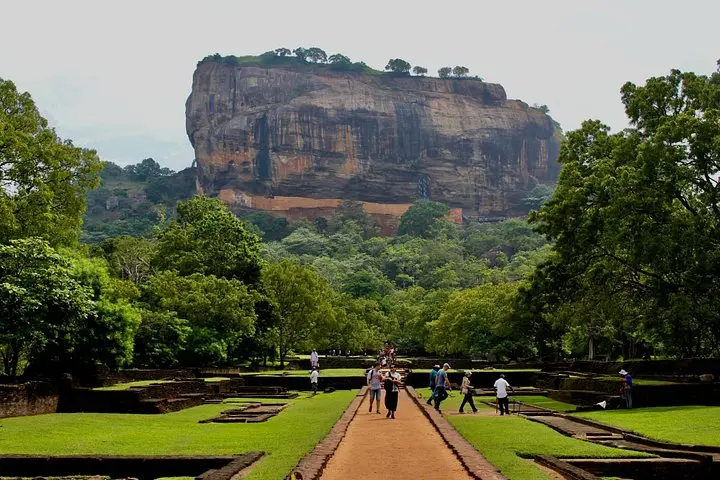
Later, Sigiriya rises like a geological argument—a hardened magma plug left when surrounding rock eroded away. The fortress was transformed in the 5th century by King Kashyapa into a royal citadel: terraces, water gardens, and frescoed galleries cling to the rock. The climb itself is honest: metal staircases and narrow stone steps taking you roughly 200 metres up, with a cumulative step count that many visitors describe as around 1,000–1,200. Halfway up you’ll pass the mirror wall and the remnants of the famed frescoes; near the top, the lion’s paws mark the final, vertiginous approach.
Culture and conservation intersect at both sites: Dambulla’s cave paintings require respectful distance, and Sigiriya’s pathways are managed to protect fragile archaeology. Local guides often supply context about Kandyan rebellions, ancient irrigation systems, and the engineering behind the palace gardens—tiny feats of hydrology in an otherwise dry plain.
Practical edge: the day is long—expect 10–12 hours door to door from Negombo—so hydrate early, start with light clothing and a sun hat, and bring comfortable grippy shoes for the metal steps at Sigiriya. Move at your own pace on the climb; there are shaded rest points and vendors near the base. Cameras are allowed but avoid flash in the caves and don’t touch painted surfaces.
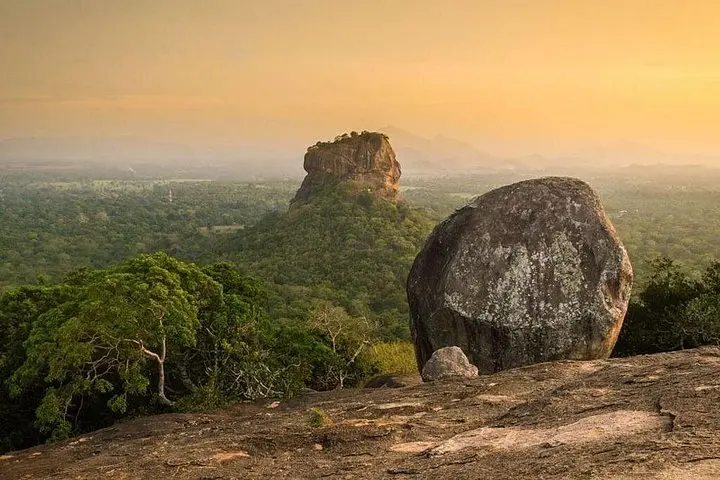
Plan time for a late afternoon descent to catch the plain’s long shadows and, if your schedule allows, swing by Pidurangala Rock across the valley for a quieter sunset view of Sigiriya’s silhouette. Between the carved stone and high vistas, the tour balances a lesson in Sri Lankan history with the simple, satisfying work of climbing a mountain built by men who wanted to be remembered.
Expect about 3–3.5 hours one way depending on traffic; pickup typically starts around 05:30 to maximize daylight at the sites.
This tour lists admissions as not included—bring cash or card to pay national park and monument entrance fees at Dambulla and Sigiriya.
The climb is steep in parts but has many rest points; children and older visitors can ascend at their own pace—avoid if mobility is severely limited.
Shoes must be removed to enter the cave temples; there are supervised areas and nearby stalls for short‑term storage.
Local certified guides are available for hire; the tour is private and may include a driver who can coordinate licensed guides on request.
Major tourist sites accept cash and some accept cards, but it’s wise to carry Sri Lankan rupees for smaller vendors and entrance kiosks.
Sigiri Tours operates guided outdoor trips and adventures with an emphasis on safety, stewardship, and memorable experiences.
You wake before dawn in the coastal calm of Negombo and settle into a private air‑conditioned vehicle while the town sleeps. The road inland slips past rice paddies and coconut groves; by the time the sky bleeds into a clear, humid blue you’ve traded salt wind for the dry, ochre profile of central Sri Lanka. Your driver steers toward two of the island’s most decisive landmarks: the painted caves of Dambulla and the 200‑metre monolith of Sigiriya.
You wake before dawn in the coastal calm of Negombo and settle into a private air‑conditioned vehicle while the town sleeps. The road inland slips past rice paddies and coconut groves; by the time the sky bleeds into a clear, humid blue you’ve traded salt wind for the dry, ochre profile of central Sri Lanka. Your driver steers toward two of the island’s most decisive landmarks: the painted caves of Dambulla and the 200‑metre monolith of Sigiriya.
At Dambulla, the approach is deliberate—steps climb through scrub to a series of five caves whose dark, vaulted interiors hold over 150 Buddha images and wall paintings that stretch back two millennia. The air inside is cool and still; the ochre and red pigments that survived centuries of humidity lean close to you. History here is tactile—offerings on low altars, carved stone floors smoothed by generations of pilgrims.
Later, Sigiriya rises like a geological argument—a hardened magma plug left when surrounding rock eroded away. The fortress was transformed in the 5th century by King Kashyapa into a royal citadel: terraces, water gardens, and frescoed galleries cling to the rock. The climb itself is honest: metal staircases and narrow stone steps taking you roughly 200 metres up, with a cumulative step count that many visitors describe as around 1,000–1,200. Halfway up you’ll pass the mirror wall and the remnants of the famed frescoes; near the top, the lion’s paws mark the final, vertiginous approach.
Culture and conservation intersect at both sites: Dambulla’s cave paintings require respectful distance, and Sigiriya’s pathways are managed to protect fragile archaeology. Local guides often supply context about Kandyan rebellions, ancient irrigation systems, and the engineering behind the palace gardens—tiny feats of hydrology in an otherwise dry plain.
Practical edge: the day is long—expect 10–12 hours door to door from Negombo—so hydrate early, start with light clothing and a sun hat, and bring comfortable grippy shoes for the metal steps at Sigiriya. Move at your own pace on the climb; there are shaded rest points and vendors near the base. Cameras are allowed but avoid flash in the caves and don’t touch painted surfaces.
Plan time for a late afternoon descent to catch the plain’s long shadows and, if your schedule allows, swing by Pidurangala Rock across the valley for a quieter sunset view of Sigiriya’s silhouette. Between the carved stone and high vistas, the tour balances a lesson in Sri Lankan history with the simple, satisfying work of climbing a mountain built by men who wanted to be remembered.