THE ADVENTURE COLLECTIVE® · Independent discovery and booking for outdoor travel
Climb the sheer face of Sigiriya’s ancient rock fortress and step into the painted caves of Dambulla on a private day trip that pairs panoramic vistas with centuries of Buddhist art. This full‑day tour combines history, geology and local insight—ideal for travelers who want context with their views.
Climb the sheer face of Sigiriya’s ancient rock fortress and step into the painted caves of Dambulla on a private day trip that pairs panoramic vistas with centuries of Buddhist art. This full‑day tour combines history, geology and local insight—ideal for travelers who want context with their views.
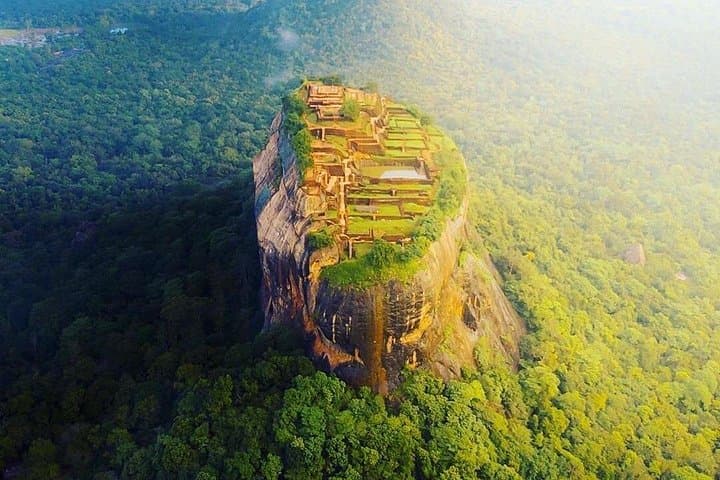
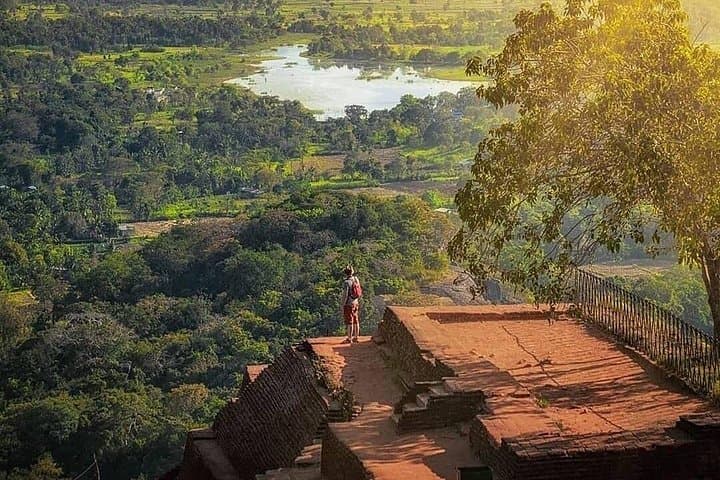
The day begins before the heat—tea-dark sky giving way to the first pale light over rice paddies as your driver threads quiet roads toward the central plains. At Sigiriya the rock rises like a deliberate interruption to the flatland: a 200‑metre slab of ancient stone whose sheer flanks throw long shadows across engineered water gardens below. You start at the base, stepping through carved terraces, past the painted Mirror Wall, each step punctuated by breather views of a landscape where cloud and field test the horizon.
Verified experiences and guided adventures in the surrounding area.
Operated by Beyond Escapes · Dambulla, Central Province
The day begins before the heat—tea-dark sky giving way to the first pale light over rice paddies as your driver threads quiet roads toward the central plains. At Sigiriya the rock rises like a deliberate interruption to the flatland: a 200‑metre slab of ancient stone whose sheer flanks throw long shadows across engineered water gardens below. You start at the base, stepping through carved terraces, past the painted Mirror Wall, each step punctuated by breather views of a landscape where cloud and field test the horizon.
Sigiriya is not just a climb; it’s a lived monument. Built in the late 5th century for King Kassapa I, the fortress complex pairs military necessity with aesthetic ambition—moats, concentric terraces and frescoed galleries that hold a rare glimpse into early Sinhalese court life. Geologically the summit is a hardened magma plug; its resistance to erosion left a solitary pillar that human hands reshaped into palace and lookout.
An hour south, Dambulla offers a different conversation between rock and devotion. The Golden Temple’s cave complex is a hollowed ridge of volcanic rock converted over centuries into five main shrines, their ceilings and walls painted with Buddhist murals and filled with nearly 150 statues of the Buddha and other figures. The approach is a short, shaded stair climb and a veranda that opens on the valley—an intimate counterpoint to Sigiriya’s panoramic theater.
Culturally, these sites sit in the island’s dry zone where farming rhythms and temple rites still shape village life. Local guides—part historian, part storyteller—thread legends, architectural detail and conservation notes through the tour. Expect to remove shoes at the cave entrances and wear modest clothing; both sites are living heritage, not stage sets.
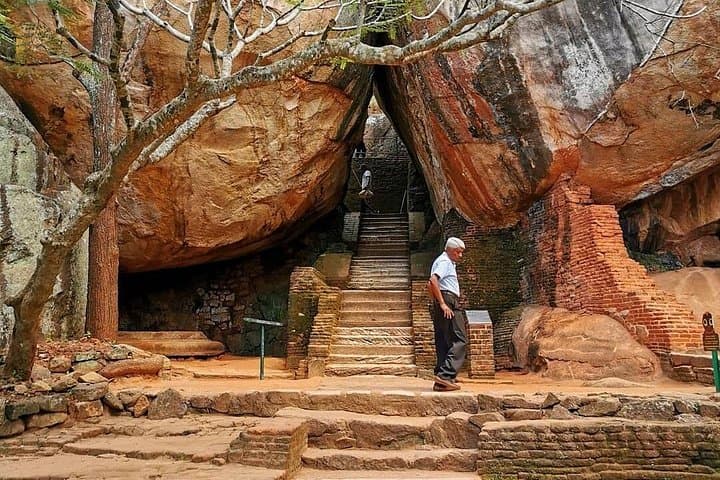
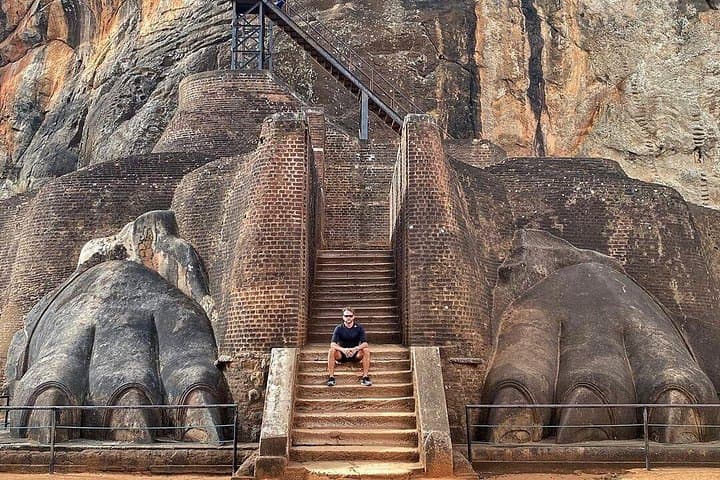
Practicalities: the private day trip runs about 12–14 hours from Colombo (pickup and drop‑off included), with roughly 3–4 hours of driving each way depending on traffic. Climbing Sigiriya involves about 1,200 steps and roughly 200 m of elevation gain; plan for uneven stonework and narrow stairways. Dambulla requires a gentler ascent of a few hundred steps to reach the main caves.
Bring at least 2 liters of water, sun protection, and sturdy shoes with good traction. Tickets for both sites are typically paid on site (entrance not included in some packages), so carry local currency. Start early to beat mid‑day heat and capture the best light, and keep your guide close—the stories and historical context make the climb more than a workout.
These two UNESCO sites together map Sri Lanka’s layered past: royal ambition, devotional practice, and a landscape that continues to test and reward those who explore it with care.
Some packages include entrance fees but many do not—confirm before booking and carry local currency to pay for Sigiriya and Dambulla entrances on site.
Expect roughly 1,000–1,200 steps with some steep and narrow sections; allow time for stops and photo breaks.
Families often do it, but travelers should be comfortable with stairs and a long day; those with serious mobility issues should avoid the Sigiriya summit.
Plan 60–90 minutes to see the main caves, murals and statues at a measured pace.
Cover shoulders and knees; shoes must be removed at cave entrances and respectful behavior is required inside shrines.
Driving from Colombo to Sigiriya/Dambulla takes about 3.5–4.5 hours each way depending on traffic, hence the long full‑day schedule.
Beyond Escapes operates guided outdoor trips and adventures with an emphasis on safety, stewardship, and memorable experiences.
The day begins before the heat—tea-dark sky giving way to the first pale light over rice paddies as your driver threads quiet roads toward the central plains. At Sigiriya the rock rises like a deliberate interruption to the flatland: a 200‑metre slab of ancient stone whose sheer flanks throw long shadows across engineered water gardens below. You start at the base, stepping through carved terraces, past the painted Mirror Wall, each step punctuated by breather views of a landscape where cloud and field test the horizon.
The day begins before the heat—tea-dark sky giving way to the first pale light over rice paddies as your driver threads quiet roads toward the central plains. At Sigiriya the rock rises like a deliberate interruption to the flatland: a 200‑metre slab of ancient stone whose sheer flanks throw long shadows across engineered water gardens below. You start at the base, stepping through carved terraces, past the painted Mirror Wall, each step punctuated by breather views of a landscape where cloud and field test the horizon.
Sigiriya is not just a climb; it’s a lived monument. Built in the late 5th century for King Kassapa I, the fortress complex pairs military necessity with aesthetic ambition—moats, concentric terraces and frescoed galleries that hold a rare glimpse into early Sinhalese court life. Geologically the summit is a hardened magma plug; its resistance to erosion left a solitary pillar that human hands reshaped into palace and lookout.
An hour south, Dambulla offers a different conversation between rock and devotion. The Golden Temple’s cave complex is a hollowed ridge of volcanic rock converted over centuries into five main shrines, their ceilings and walls painted with Buddhist murals and filled with nearly 150 statues of the Buddha and other figures. The approach is a short, shaded stair climb and a veranda that opens on the valley—an intimate counterpoint to Sigiriya’s panoramic theater.
Culturally, these sites sit in the island’s dry zone where farming rhythms and temple rites still shape village life. Local guides—part historian, part storyteller—thread legends, architectural detail and conservation notes through the tour. Expect to remove shoes at the cave entrances and wear modest clothing; both sites are living heritage, not stage sets.
Practicalities: the private day trip runs about 12–14 hours from Colombo (pickup and drop‑off included), with roughly 3–4 hours of driving each way depending on traffic. Climbing Sigiriya involves about 1,200 steps and roughly 200 m of elevation gain; plan for uneven stonework and narrow stairways. Dambulla requires a gentler ascent of a few hundred steps to reach the main caves.
Bring at least 2 liters of water, sun protection, and sturdy shoes with good traction. Tickets for both sites are typically paid on site (entrance not included in some packages), so carry local currency. Start early to beat mid‑day heat and capture the best light, and keep your guide close—the stories and historical context make the climb more than a workout.
These two UNESCO sites together map Sri Lanka’s layered past: royal ambition, devotional practice, and a landscape that continues to test and reward those who explore it with care.
