THE ADVENTURE COLLECTIVE® · Independent discovery and booking for outdoor travel

Board a hybrid-electric vessel from Tromsø for a low-noise whale safari to herring-rich fjords near Skjervøy. Expect long transit times, panoramic views, and a silent electric approach that lets you observe humpbacks, orcas and other whales with minimal disturbance.
Board a hybrid-electric vessel from Tromsø for a low-noise whale safari to herring-rich fjords near Skjervøy. Expect long transit times, panoramic views, and a silent electric approach that lets you observe humpbacks, orcas and other whales with minimal disturbance.
The boat slips away from Tromsø’s harbor before dawn, engines humming steady as the city’s lights recede and the fjords open like a cold, wide throat. Onboard, panoramic windows frame snow-scoured ridges while the hybrid system pushes the vessel into fjord arms threaded with ice and brash; when whales are found the diesel cuts and a silent electric glide brings passengers close enough to feel the ocean’s breath.
Verified experiences and guided adventures in the surrounding area.
Operated by Brim Explorer · Tromsø, Troms og Finnmark
The boat slips away from Tromsø’s harbor before dawn, engines humming steady as the city’s lights recede and the fjords open like a cold, wide throat. Onboard, panoramic windows frame snow-scoured ridges while the hybrid system pushes the vessel into fjord arms threaded with ice and brash; when whales are found the diesel cuts and a silent electric glide brings passengers close enough to feel the ocean’s breath.
This coastline is shaped by Quaternary glaciers and a long history of herring runs that have driven fisheries and settlements for centuries. The feeding grounds near Skjervøy are part of an ecological pulse: migrating herring attract humpbacks, orcas, fin and sperm whales in autumn and winter. Local maritime culture—from Sámi coastal history to modern Norwegian fisheries—still orbits those marine riches.
Practicalities are straightforward: expect an 8–9 hour excursion with up to 3.5 hours transit to the feeding area, panoramic lounges, decks, café service and onboard restrooms. Sightings aren’t guaranteed; guides use local knowledge and real-time tracking to maximize chances. Dress in insulated, windproof layers, bring binoculars and a charged camera, and prepare for long periods outside in cold winds. Motion-sickness measures are wise for those prone to it. Respect distance and guidance from crew—quiet electric approach reduces disturbance, but the safest wildlife encounters follow strict viewing protocols.
For photographers and naturalists this is high-reward: raw Arctic light, breaching whales and a hushed approach that prioritizes animal welfare. Book with early-season flexibility and allow the whole day—the ocean dictates the schedule.
No—sightings depend on whale locations and feeding behavior. Guides use local reports and tracking to maximize chances but cannot guarantee sightings.
The vessel offers panoramic lounges, two decks, a café for food and drinks, onboard restrooms, Wi‑Fi and an experienced live guide.
The tour lists wheelchair accessibility and specialized infant seats; contact the operator to confirm specific accessibility needs before booking.
Whales are typically present between late October and the end of January when herring concentrations attract large predators.
Brim Explorer operates guided outdoor trips and adventures with an emphasis on safety, stewardship, and memorable experiences.
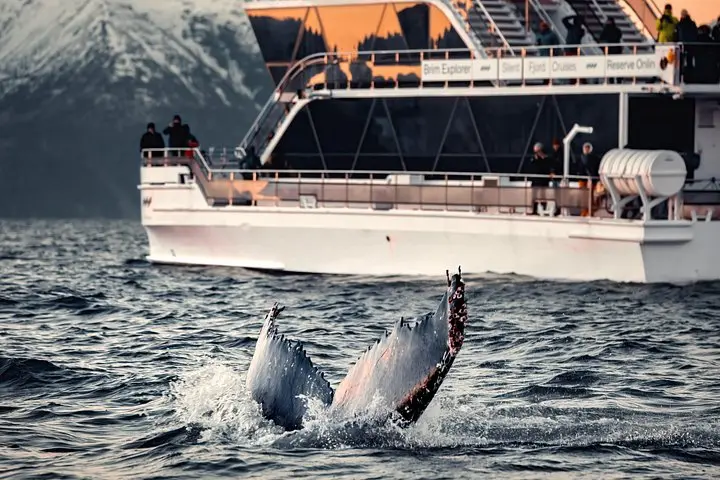
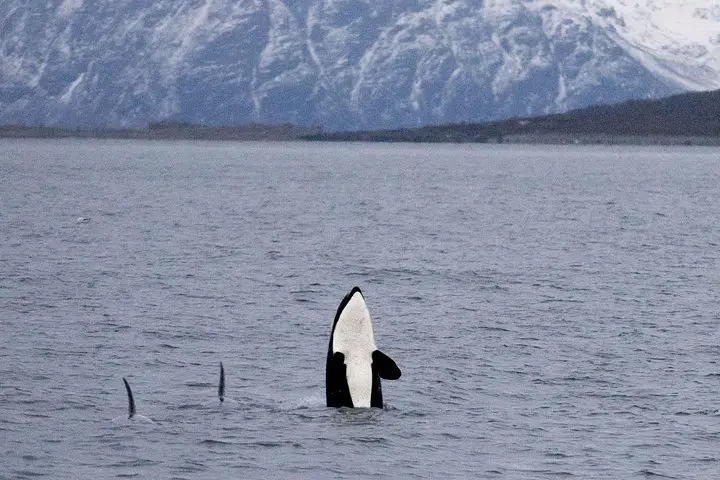
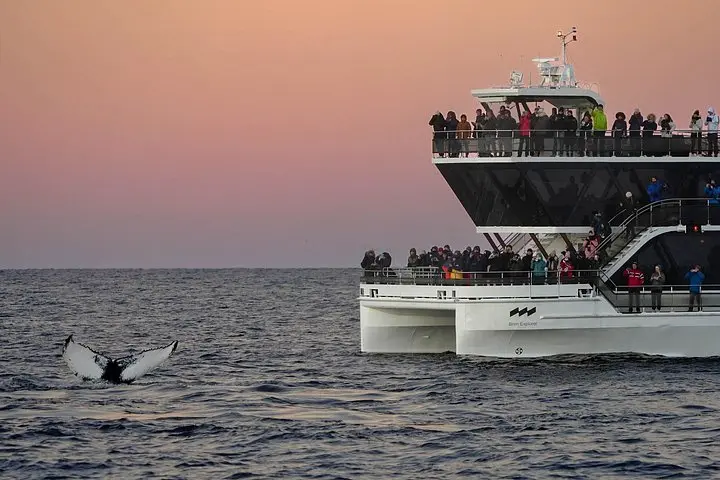
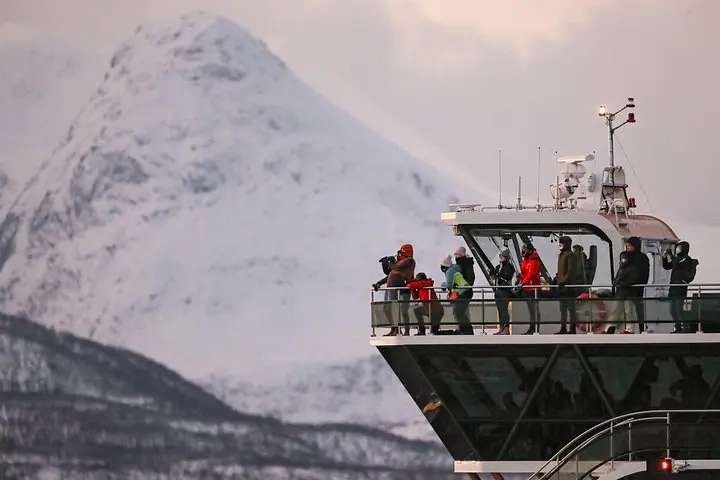
The boat slips away from Tromsø’s harbor before dawn, engines humming steady as the city’s lights recede and the fjords open like a cold, wide throat. Onboard, panoramic windows frame snow-scoured ridges while the hybrid system pushes the vessel into fjord arms threaded with ice and brash; when whales are found the diesel cuts and a silent electric glide brings passengers close enough to feel the ocean’s breath.
The boat slips away from Tromsø’s harbor before dawn, engines humming steady as the city’s lights recede and the fjords open like a cold, wide throat. Onboard, panoramic windows frame snow-scoured ridges while the hybrid system pushes the vessel into fjord arms threaded with ice and brash; when whales are found the diesel cuts and a silent electric glide brings passengers close enough to feel the ocean’s breath.
This coastline is shaped by Quaternary glaciers and a long history of herring runs that have driven fisheries and settlements for centuries. The feeding grounds near Skjervøy are part of an ecological pulse: migrating herring attract humpbacks, orcas, fin and sperm whales in autumn and winter. Local maritime culture—from Sámi coastal history to modern Norwegian fisheries—still orbits those marine riches.
Practicalities are straightforward: expect an 8–9 hour excursion with up to 3.5 hours transit to the feeding area, panoramic lounges, decks, café service and onboard restrooms. Sightings aren’t guaranteed; guides use local knowledge and real-time tracking to maximize chances. Dress in insulated, windproof layers, bring binoculars and a charged camera, and prepare for long periods outside in cold winds. Motion-sickness measures are wise for those prone to it. Respect distance and guidance from crew—quiet electric approach reduces disturbance, but the safest wildlife encounters follow strict viewing protocols.
For photographers and naturalists this is high-reward: raw Arctic light, breaching whales and a hushed approach that prioritizes animal welfare. Book with early-season flexibility and allow the whole day—the ocean dictates the schedule.