THE ADVENTURE COLLECTIVE® · Independent discovery and booking for outdoor travel

Glide across Königssee’s glassy surface beneath sheer limestone walls, then explore St. Bartholomä and nearby falls with a private guide. This two-hour electric-boat and walking tour blends geology, local history, and hush-preserving traditions.
Glide across Königssee’s glassy surface beneath sheer limestone walls, then explore St. Bartholomä and nearby falls with a private guide. This two-hour electric-boat and walking tour blends geology, local history, and hush-preserving traditions.
Dawn light slides across a glassy lake; the boat moves with a hush that feels deliberate, as if the water itself refuses to speak. At Königssee the mountains lean in—the Watzmann’s eastern face drops almost vertically and every sound bounces back, an echo that can repeat seven times and turns a shouted name into a small performance.
Verified experiences and guided adventures in the surrounding area.
Operated by Global Guide Services · Schönau am Königssee, Bavaria
Dawn light slides across a glassy lake; the boat moves with a hush that feels deliberate, as if the water itself refuses to speak. At Königssee the mountains lean in—the Watzmann’s eastern face drops almost vertically and every sound bounces back, an echo that can repeat seven times and turns a shouted name into a small performance.
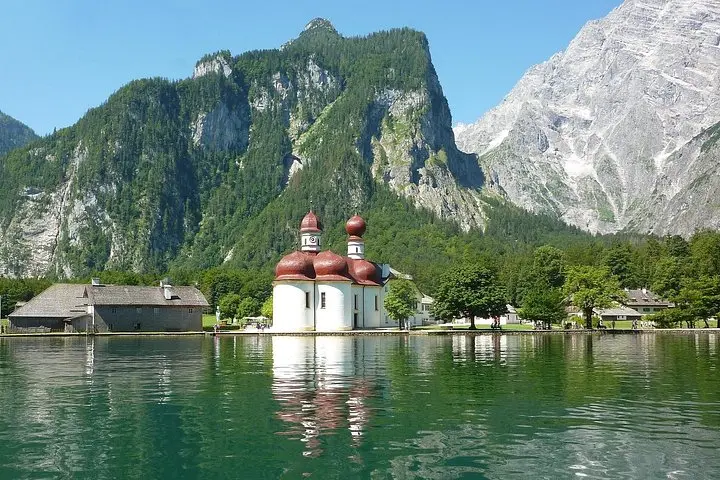
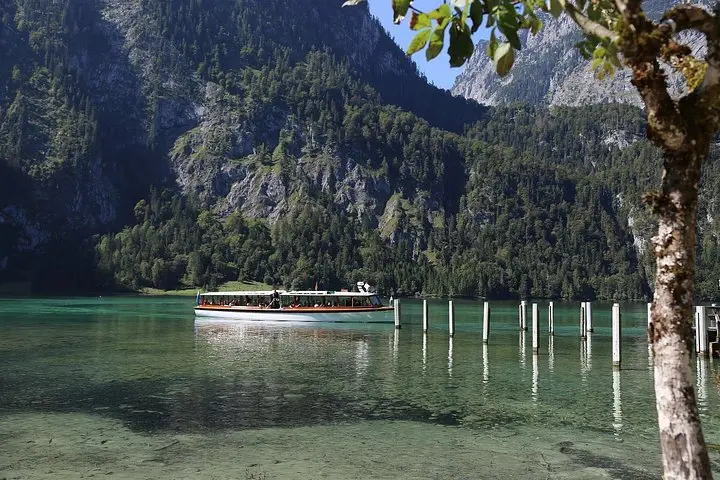
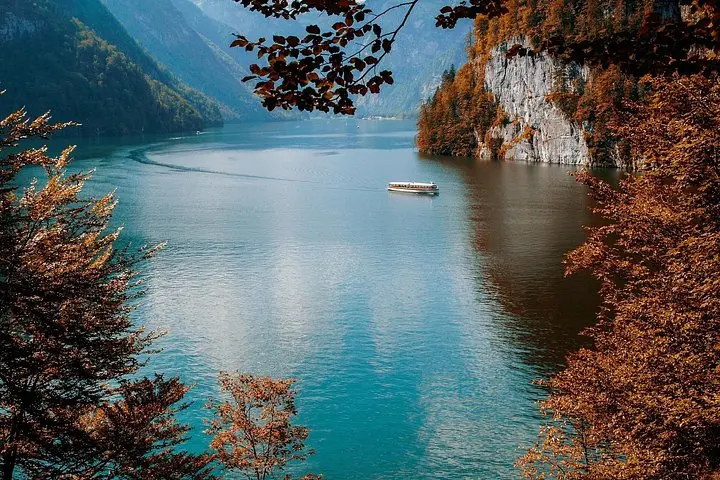
This private walking-and-boat tour threads natural history with regional culture. Geologically, the lake occupies a deep glacial trough—some 190–200 meters deep—surrounded by Triassic limestone cliffs. Historically, Berchtesgaden’s salt mines financed princely courts, while 19th-century Bavarian elites shaped the lake’s quiet rules: only electrically driven boats operate here to preserve wildlife and the solemn atmosphere. Guides tell the Watzmann legend, point out St. Bartholomä’s red onion church, and trace routes used by hunters and pilgrims.
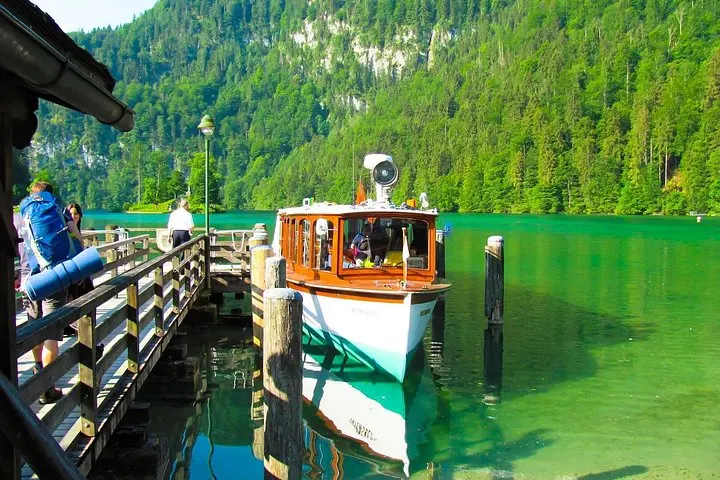
Expect two hours of paced exploration: a short shoreline walk in Schönau, a smooth electric-boat crossing to St. Bartholomä, and views toward the Röthbach waterfall—the highest in Germany—visible when water levels are right. The tour suits all fitness levels; paths are mostly even but can be wet and rocky near streams. Photography opportunities are constant; bring layers for sudden alpine wind and a voice loud enough to test the echoes if you like.
Practical tips: book morning crossings to avoid crowds, check national park rules (no swimming in main lake), and respect quiet zones around the church and wildlife. A private guide customizes pacing and points of interest, making this a compact, low-impact way to experience one of Germany’s most austere alpine lakes.
Crossings vary by route but the main electric-boat segment to St. Bartholomä takes about 20–30 minutes each way depending on stops.
The tour notes indicate wheelchair-accessible options; check with the operator about specific boat boarding assistance and any shore path constraints.
Swimming in the main lake is generally discouraged and restricted in parts of the national park to protect water quality and wildlife—ask your guide for permitted spots.
Yes—electric launches were introduced in the early 20th century to reduce noise and protect wildlife; they remain the only motorized craft allowed on the lake.
Global Guide Services operates guided outdoor trips and adventures with an emphasis on safety, stewardship, and memorable experiences.
Dawn light slides across a glassy lake; the boat moves with a hush that feels deliberate, as if the water itself refuses to speak. At Königssee the mountains lean in—the Watzmann’s eastern face drops almost vertically and every sound bounces back, an echo that can repeat seven times and turns a shouted name into a small performance.
Dawn light slides across a glassy lake; the boat moves with a hush that feels deliberate, as if the water itself refuses to speak. At Königssee the mountains lean in—the Watzmann’s eastern face drops almost vertically and every sound bounces back, an echo that can repeat seven times and turns a shouted name into a small performance.
This private walking-and-boat tour threads natural history with regional culture. Geologically, the lake occupies a deep glacial trough—some 190–200 meters deep—surrounded by Triassic limestone cliffs. Historically, Berchtesgaden’s salt mines financed princely courts, while 19th-century Bavarian elites shaped the lake’s quiet rules: only electrically driven boats operate here to preserve wildlife and the solemn atmosphere. Guides tell the Watzmann legend, point out St. Bartholomä’s red onion church, and trace routes used by hunters and pilgrims.
Expect two hours of paced exploration: a short shoreline walk in Schönau, a smooth electric-boat crossing to St. Bartholomä, and views toward the Röthbach waterfall—the highest in Germany—visible when water levels are right. The tour suits all fitness levels; paths are mostly even but can be wet and rocky near streams. Photography opportunities are constant; bring layers for sudden alpine wind and a voice loud enough to test the echoes if you like.
Practical tips: book morning crossings to avoid crowds, check national park rules (no swimming in main lake), and respect quiet zones around the church and wildlife. A private guide customizes pacing and points of interest, making this a compact, low-impact way to experience one of Germany’s most austere alpine lakes.