THE ADVENTURE COLLECTIVE® · Independent discovery and booking for outdoor travel

Float between continents in the crystal-cold water of Silfra, then continue to geysers, waterfalls and a volcanic crater on a compact Golden Circle day tour from Reykjavík. This small-group run mixes technical thrill with easy sightseeing and local context.
Float between continents in the crystal-cold water of Silfra, then continue to geysers, waterfalls and a volcanic crater on a compact Golden Circle day tour from Reykjavík. This small-group run mixes technical thrill with easy sightseeing and local context.
On a gray Reykjavík morning the minibus eases out of the city and the landscape opens into angles and steam: frosted lava fields, sudden gullies, and a sky that can change with a single gust. By mid-morning the group stands at the edge of Thingvellir National Park, where tectonic plates part like a deliberate seam. Guides fit drysuits and explain that the water ahead is glacier-filtered, almost surgically clear — the fissure doesn’t so much hide as dare you to look deeper.
Verified experiences and guided adventures in the surrounding area.
Operated by Arctic Adventures · Thingvellir National Park, Capital Region
On a gray Reykjavík morning the minibus eases out of the city and the landscape opens into angles and steam: frosted lava fields, sudden gullies, and a sky that can change with a single gust. By mid-morning the group stands at the edge of Thingvellir National Park, where tectonic plates part like a deliberate seam. Guides fit drysuits and explain that the water ahead is glacier-filtered, almost surgically clear — the fissure doesn’t so much hide as dare you to look deeper.
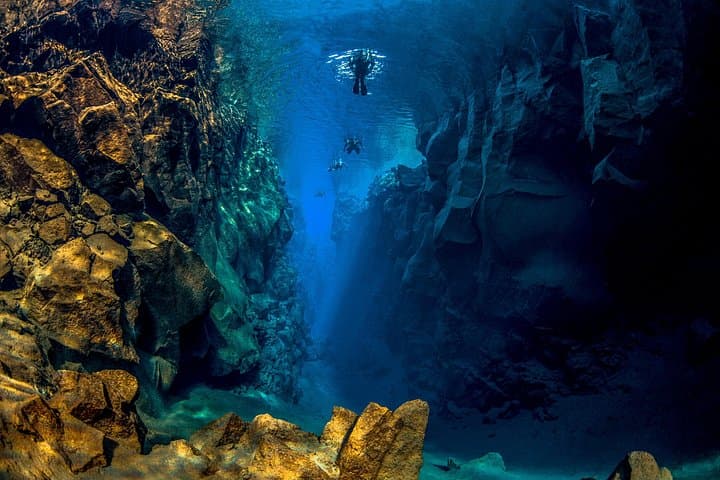
Floating in Silfra is a peculiar kind of quiet. The current is polite, pushing gently through narrow corridors named Silfra Lagoon, Cathedral, Hall and Deep Crack. Visibility can reach extraordinary distances — sometimes up to 100 meters — so rock, lichen and the sharp blue of meltwater appear with an unnerving intimacy. Above the surface, the folded ground of Thingvellir holds the vestiges of Iceland’s earliest meetings: this is the place of the Alþingi, the world’s oldest parliamentary site, a plain where saga and geology meet.
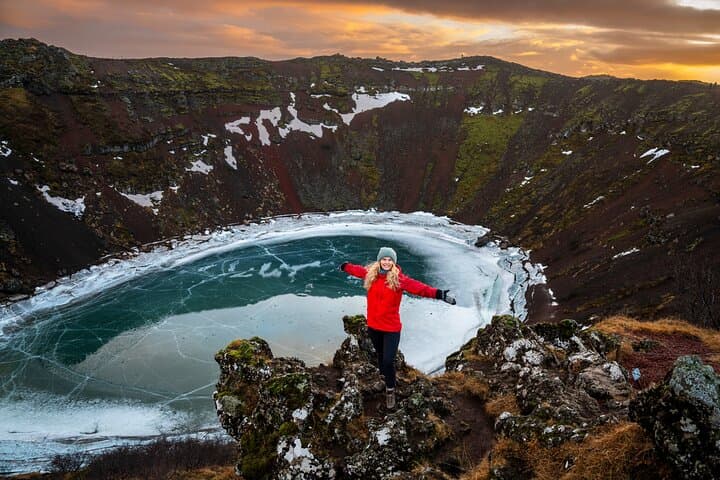
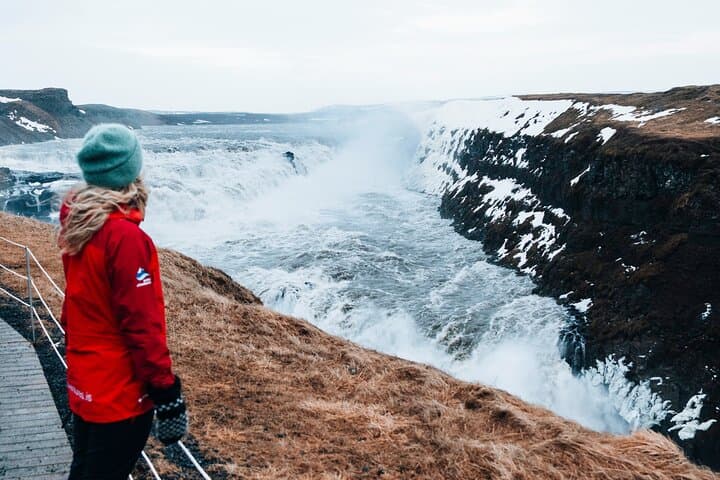
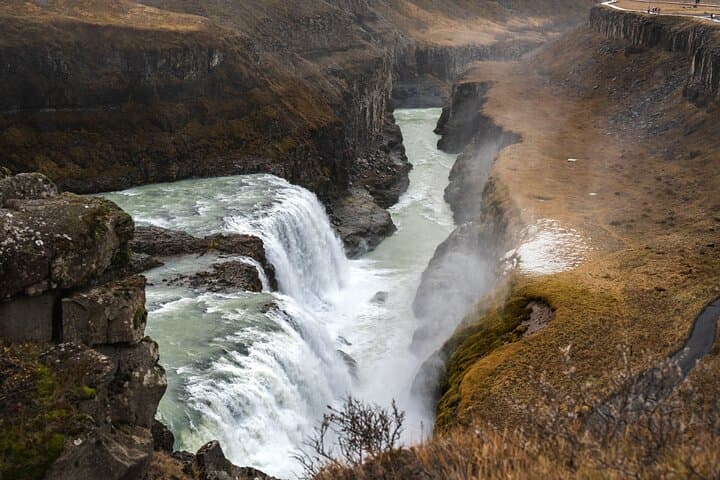
The afternoon continues in Haukadalur valley where geothermal forces keep a low, constant drama. Geysir’s legendary eruptions are now quiet, but Strokkur nearby still throws boiling water skyward every few minutes, puncturing steam and frost with an explosive gesture. Gullfoss follows — a two-tiered fall that rips into a gorge, the Hvítá river hurling itself as if testing gravity’s patience. A final stop at Kerið offers a calmer, crater-lake view: volcanic color, a ring of oxidized rock, and an easy rim walk that contrasts the raw energy seen earlier.
Practical notes: the full trip runs about nine hours with hotel pickup in Reykjavík. Snorkeling requires swimming ability, a moderate fitness level and adherence to strict medical and size limits (height 150–200 cm; weight 45–120 kg). Guides provide drysuits, thermal undergarments, fins and masks, plus hot chocolate and cookies after the water. Expect cold water temperatures (near 2–4°C) despite the clear visibility — the drysuit is essential.
Timing and gear choices matter. Layer with wool or synthetic base layers; bring a small towel and change of clothes. Photography is best from the shore at Silfra (overhead and close-up textures) and from Gullfoss’s lower platforms where mist and light create dramatic contrasts. Respect the site: Thingvellir and Silfra are protected; follow guide instructions and minimize impact.
This is not a passive sightseeing loop but a day of geological literacy and physical novelty: continent-scale forces you can float above, a geyser that refuses to be predictable and a waterfall that insists on being noticed. For travelers who want Iceland’s elemental scenes condensed into a single, well-paced day, this combined snorkel-and-Golden-Circle itinerary delivers clarity — in water and in memory.
Silfra’s water is glacier-filtered and typically around 2–4°C; drysuits and thermal undergarments provided keep you insulated.
No advanced skills required, but you must be able to swim and be comfortable with basic snorkeling; guides brief and assist all participants.
This is a small-group tour, up to about 19 people, and runs roughly nine hours including pickup and return to Reykjavík.
Minimum age for snorkeling is 12; certain medical conditions disqualify participants or require doctor clearance—review the operator’s medical handbook.
Yes—pickup and drop-off from specified Reykjavík locations are included; you must select a listed pickup point when booking.
Bring a waterproof case for shoreline shots, a wide-angle lens for Gullfoss vistas, and spare batteries — cold reduces battery life.
Arctic Adventures operates guided outdoor trips and adventures with an emphasis on safety, stewardship, and memorable experiences.
On a gray Reykjavík morning the minibus eases out of the city and the landscape opens into angles and steam: frosted lava fields, sudden gullies, and a sky that can change with a single gust. By mid-morning the group stands at the edge of Thingvellir National Park, where tectonic plates part like a deliberate seam. Guides fit drysuits and explain that the water ahead is glacier-filtered, almost surgically clear — the fissure doesn’t so much hide as dare you to look deeper.
On a gray Reykjavík morning the minibus eases out of the city and the landscape opens into angles and steam: frosted lava fields, sudden gullies, and a sky that can change with a single gust. By mid-morning the group stands at the edge of Thingvellir National Park, where tectonic plates part like a deliberate seam. Guides fit drysuits and explain that the water ahead is glacier-filtered, almost surgically clear — the fissure doesn’t so much hide as dare you to look deeper.
Floating in Silfra is a peculiar kind of quiet. The current is polite, pushing gently through narrow corridors named Silfra Lagoon, Cathedral, Hall and Deep Crack. Visibility can reach extraordinary distances — sometimes up to 100 meters — so rock, lichen and the sharp blue of meltwater appear with an unnerving intimacy. Above the surface, the folded ground of Thingvellir holds the vestiges of Iceland’s earliest meetings: this is the place of the Alþingi, the world’s oldest parliamentary site, a plain where saga and geology meet.
The afternoon continues in Haukadalur valley where geothermal forces keep a low, constant drama. Geysir’s legendary eruptions are now quiet, but Strokkur nearby still throws boiling water skyward every few minutes, puncturing steam and frost with an explosive gesture. Gullfoss follows — a two-tiered fall that rips into a gorge, the Hvítá river hurling itself as if testing gravity’s patience. A final stop at Kerið offers a calmer, crater-lake view: volcanic color, a ring of oxidized rock, and an easy rim walk that contrasts the raw energy seen earlier.
Practical notes: the full trip runs about nine hours with hotel pickup in Reykjavík. Snorkeling requires swimming ability, a moderate fitness level and adherence to strict medical and size limits (height 150–200 cm; weight 45–120 kg). Guides provide drysuits, thermal undergarments, fins and masks, plus hot chocolate and cookies after the water. Expect cold water temperatures (near 2–4°C) despite the clear visibility — the drysuit is essential.
Timing and gear choices matter. Layer with wool or synthetic base layers; bring a small towel and change of clothes. Photography is best from the shore at Silfra (overhead and close-up textures) and from Gullfoss’s lower platforms where mist and light create dramatic contrasts. Respect the site: Thingvellir and Silfra are protected; follow guide instructions and minimize impact.
This is not a passive sightseeing loop but a day of geological literacy and physical novelty: continent-scale forces you can float above, a geyser that refuses to be predictable and a waterfall that insists on being noticed. For travelers who want Iceland’s elemental scenes condensed into a single, well-paced day, this combined snorkel-and-Golden-Circle itinerary delivers clarity — in water and in memory.