THE ADVENTURE COLLECTIVE® · Independent discovery and booking for outdoor travel

Feel sand and speed on a guided quad ride through the Sinai, then slow to camel pace in a Bedouin-style camp for tea and photos. This half-day mix of excitement and tradition is an easy introduction to the region’s desert landscapes.
Feel sand and speed on a guided quad ride through the Sinai, then slow to camel pace in a Bedouin-style camp for tea and photos. This half-day mix of excitement and tradition is an easy introduction to the region’s desert landscapes.
The engine thumps, sand sprays, and the desert opens—wide, bright and restless. Riders peel away from the main road outside Sharm El Sheikh and cross wind-sculpted plains where low scrub and scattered rock give the impression the land itself is moving. After the adrenaline of a guided quad route, the pace drops: a camel train ambles to a Bedouin-style tent where herbal tea steams and the horizon flattens into long, honeyed light.
Verified experiences and guided adventures in the surrounding area.
Operated by New Whale Tours · Sharm el Sheikh, South Sinai Governorate
The engine thumps, sand sprays, and the desert opens—wide, bright and restless. Riders peel away from the main road outside Sharm El Sheikh and cross wind-sculpted plains where low scrub and scattered rock give the impression the land itself is moving. After the adrenaline of a guided quad route, the pace drops: a camel train ambles to a Bedouin-style tent where herbal tea steams and the horizon flattens into long, honeyed light.
This rim of the Sinai sits on ancient tectonic seams: fractured limestone and sandstone layers folded by the Red Sea rift. For millennia Bedouin groups used these corridors for trade and seasonal grazing; the camel remains the slow, reliable way to read the landscape. Local culture is present in small rituals—tea served in a tin cup, sand brushed off boots, stories told beneath a simple shade.
Expect a mixed-pace half-day: dusty tracks, short dunes, and compacted gravel where a quad’s suspension is tested, followed by a low, steady camel walk across softer sand. The trip is largely accessible for first-time riders, but note spinal or pregnancy restrictions and the need to follow the guide’s safety brief.
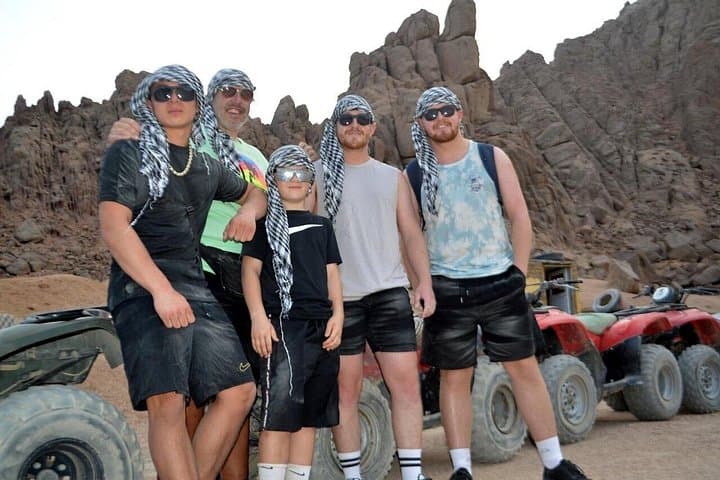
Practical pointers: arrive hydrated and sun-ready, use closed-toe shoes with grip, and bring a buff or scarf for dust. Time your ride for morning or late afternoon to avoid peak heat and catch the best light for photos. Respect the camp—ask before photographing people and minimize waste; the Sinai’s desert ecology is resilient but fragile, and small actions help keep these routes open for future visits.
Total time is typically 2–3 hours, including hotel pickup, a guided quad session, the camel trek and a short camp stop for tea.
No. Guides provide a safety briefing and basic instructions; the quad portion is guided and suitable for beginners.
Infants must sit on laps; the operator advises against participation for pregnant travelers or those with spinal injuries.
Light, breathable layers, closed-toe shoes, a hat and sunscreen; expect dust so bring a scarf or buff for your face.
New Whale Tours operates guided outdoor trips and adventures with an emphasis on safety, stewardship, and memorable experiences.


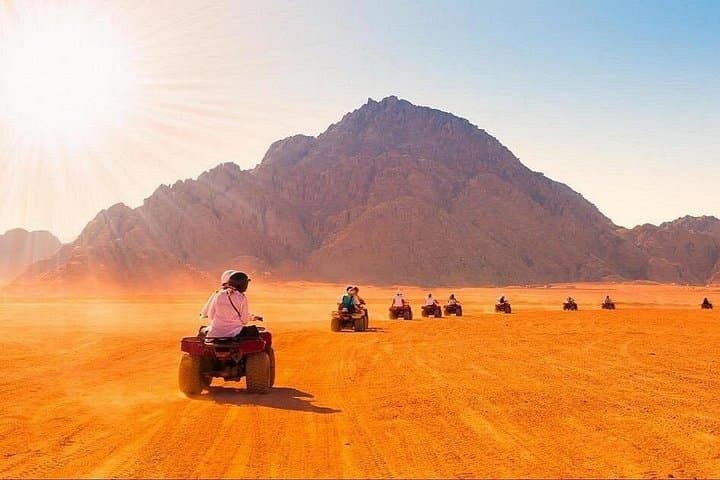
The engine thumps, sand sprays, and the desert opens—wide, bright and restless. Riders peel away from the main road outside Sharm El Sheikh and cross wind-sculpted plains where low scrub and scattered rock give the impression the land itself is moving. After the adrenaline of a guided quad route, the pace drops: a camel train ambles to a Bedouin-style tent where herbal tea steams and the horizon flattens into long, honeyed light.
The engine thumps, sand sprays, and the desert opens—wide, bright and restless. Riders peel away from the main road outside Sharm El Sheikh and cross wind-sculpted plains where low scrub and scattered rock give the impression the land itself is moving. After the adrenaline of a guided quad route, the pace drops: a camel train ambles to a Bedouin-style tent where herbal tea steams and the horizon flattens into long, honeyed light.
This rim of the Sinai sits on ancient tectonic seams: fractured limestone and sandstone layers folded by the Red Sea rift. For millennia Bedouin groups used these corridors for trade and seasonal grazing; the camel remains the slow, reliable way to read the landscape. Local culture is present in small rituals—tea served in a tin cup, sand brushed off boots, stories told beneath a simple shade.
Expect a mixed-pace half-day: dusty tracks, short dunes, and compacted gravel where a quad’s suspension is tested, followed by a low, steady camel walk across softer sand. The trip is largely accessible for first-time riders, but note spinal or pregnancy restrictions and the need to follow the guide’s safety brief.
Practical pointers: arrive hydrated and sun-ready, use closed-toe shoes with grip, and bring a buff or scarf for dust. Time your ride for morning or late afternoon to avoid peak heat and catch the best light for photos. Respect the camp—ask before photographing people and minimize waste; the Sinai’s desert ecology is resilient but fragile, and small actions help keep these routes open for future visits.