THE ADVENTURE COLLECTIVE® · Independent discovery and booking for outdoor travel

A high-ridge Himalayan trek from Manebhanjan to Sandakphu and Phalut, the Singalila Ridge Trek delivers dramatic sunrise panoramas of Kanchenjunga and Everest. Expect ridge walking, rhododendron forests, small border villages, and potential red panda sightings on this 8-day itinerary.
A high-ridge Himalayan trek from Manebhanjan to Sandakphu and Phalut, the Singalila Ridge Trek delivers dramatic sunrise panoramas of Kanchenjunga and Everest. Expect ridge walking, rhododendron forests, small border villages, and potential red panda sightings on this 8-day itinerary.
Dawn arrives on the Singalila Ridge with a sharp cold that pricks the lungs and clears the world: prayer flags snap like small commands, and peaks—Kanchenjunga, Everest, Makalu—stand aligned along the horizon as if posing for inspection.
Verified experiences and guided adventures in the surrounding area.
Operated by Smile Panda Tours · Darjeeling, West Bengal
Dawn arrives on the Singalila Ridge with a sharp cold that pricks the lungs and clears the world: prayer flags snap like small commands, and peaks—Kanchenjunga, Everest, Makalu—stand aligned along the horizon as if posing for inspection.
The route follows an exposed ridge and high meadows between Manebhanjan (2,134 m) and Sandakphu (3,636 m), with key overnight points at Tonglu (3,170 m) and Phalut (≈3,600 m). Geology here is steep terraces and lateritic soils carved by monsoon runoff; vegetation flips between dense malingo bamboo and rhododendron groves that explode into color each spring. Cultural notes: hamlets like Meghma and Gorkhey sit astride the India–Nepal border and reflect mixed Nepali-Bhutia heritage; tea gardens below recall Darjeeling’s colonial plantation era.
Trekkers should expect steep ascents, exposed ridge walking, narrow single-track trails, and river crossings on lower days. Wildlife is shy but present—red panda and barking deer are possible sightings in thick bamboo and forest pockets. Permits and a licensed guide are standard in the national park; nights alternate between basic trekkers' huts, campsites and village homestays.
Practical edge: acclimatize early, carry a 30–40 L pack with layered insulating clothes, use waterproof boots with confident tread, and plan to start pre-dawn for sunrise viewpoints. Water purification, energy snacks, and a simple first-aid kit for blisters and altitude-related symptoms are essential. Best windows are post-monsoon (Oct–Nov) and spring (Mar–May) for clear vistas—monsoon brings slippery trails and leeches, winter brings deep cold and occasional snow.
Post-monsoon (October–November) and spring (March–May) offer the clearest mountain views and stable trail conditions; monsoon months are wet and prone to slippery trails.
Yes—treks in Singalila National Park require permits and a licensed guide is commonly provided; your operator handles these inclusions in the itinerary.
Red pandas are elusive; sightings happen in dense bamboo sections (especially at dawn/dusk) but are not guaranteed—treat sightings as an exceptional bonus.
Ascend slowly, stay hydrated, watch for symptoms like headache or nausea, and communicate with guides; carry basic altitude meds if advised by a physician.
Smile Panda Tours operates guided outdoor trips and adventures with an emphasis on safety, stewardship, and memorable experiences.
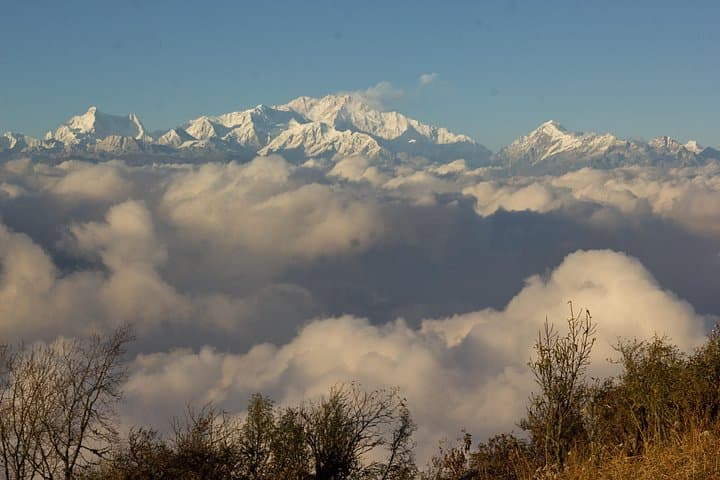


Dawn arrives on the Singalila Ridge with a sharp cold that pricks the lungs and clears the world: prayer flags snap like small commands, and peaks—Kanchenjunga, Everest, Makalu—stand aligned along the horizon as if posing for inspection.
Dawn arrives on the Singalila Ridge with a sharp cold that pricks the lungs and clears the world: prayer flags snap like small commands, and peaks—Kanchenjunga, Everest, Makalu—stand aligned along the horizon as if posing for inspection.
The route follows an exposed ridge and high meadows between Manebhanjan (2,134 m) and Sandakphu (3,636 m), with key overnight points at Tonglu (3,170 m) and Phalut (≈3,600 m). Geology here is steep terraces and lateritic soils carved by monsoon runoff; vegetation flips between dense malingo bamboo and rhododendron groves that explode into color each spring. Cultural notes: hamlets like Meghma and Gorkhey sit astride the India–Nepal border and reflect mixed Nepali-Bhutia heritage; tea gardens below recall Darjeeling’s colonial plantation era.
Trekkers should expect steep ascents, exposed ridge walking, narrow single-track trails, and river crossings on lower days. Wildlife is shy but present—red panda and barking deer are possible sightings in thick bamboo and forest pockets. Permits and a licensed guide are standard in the national park; nights alternate between basic trekkers' huts, campsites and village homestays.
Practical edge: acclimatize early, carry a 30–40 L pack with layered insulating clothes, use waterproof boots with confident tread, and plan to start pre-dawn for sunrise viewpoints. Water purification, energy snacks, and a simple first-aid kit for blisters and altitude-related symptoms are essential. Best windows are post-monsoon (Oct–Nov) and spring (Mar–May) for clear vistas—monsoon brings slippery trails and leeches, winter brings deep cold and occasional snow.