THE ADVENTURE COLLECTIVE® · Independent discovery and booking for outdoor travel

Taste decades of migration in four hours: a guided walk through Chinatown’s hawker centres, wet market and temples where Hainanese chicken rice, char kway teow and Peranakan architecture meet. Learn the stories behind the dishes as you sample them.
Taste decades of migration in four hours: a guided walk through Chinatown’s hawker centres, wet market and temples where Hainanese chicken rice, char kway teow and Peranakan architecture meet. Learn the stories behind the dishes as you sample them.
You step out of Chinatown MRT Exit A into a corridor of steam, spice and shouted orders—woks clang like percussion, sugarcane stalls flash emerald juice, and the smell of roasted pork pulls you down Pagoda Street. Narrow lanes of painted shophouses rise on either side, Peranakan tiles catching the sun while temple bells punctuate the chatter.
Verified experiences and guided adventures in the surrounding area.
Operated by Singapore City Explorers · Singapore, Singapore
You step out of Chinatown MRT Exit A into a corridor of steam, spice and shouted orders—woks clang like percussion, sugarcane stalls flash emerald juice, and the smell of roasted pork pulls you down Pagoda Street. Narrow lanes of painted shophouses rise on either side, Peranakan tiles catching the sun while temple bells punctuate the chatter.
Chinatown grew from 19th‑century immigrant quarters into a layered neighborhood where Chinese clan associations, Malay merchants and Indian temples stand block to block. The shophouses tell that history: coolie lodgings, family-run workshops, and the pragmatism of mixed-use streets. The Buddha Tooth Relic Temple, built in Tang-style architecture in the 2000s, and the URA Gallery both chart Singapore’s rapid shift from fishing village to global port—an urban geology of reclamation and planning more than cliffs and rivers.
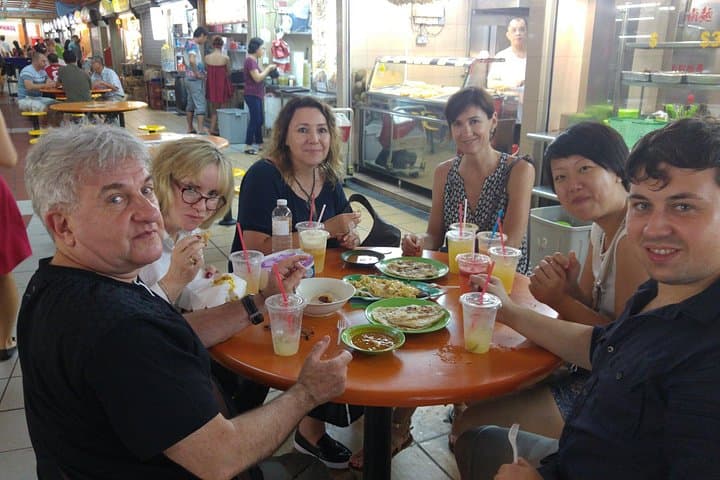
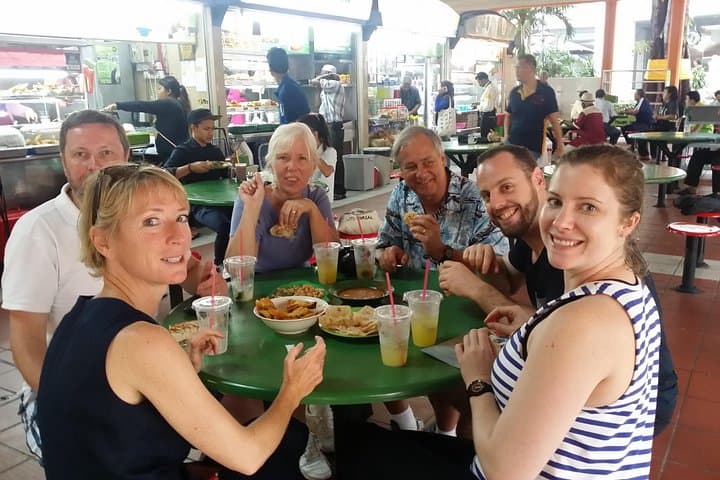
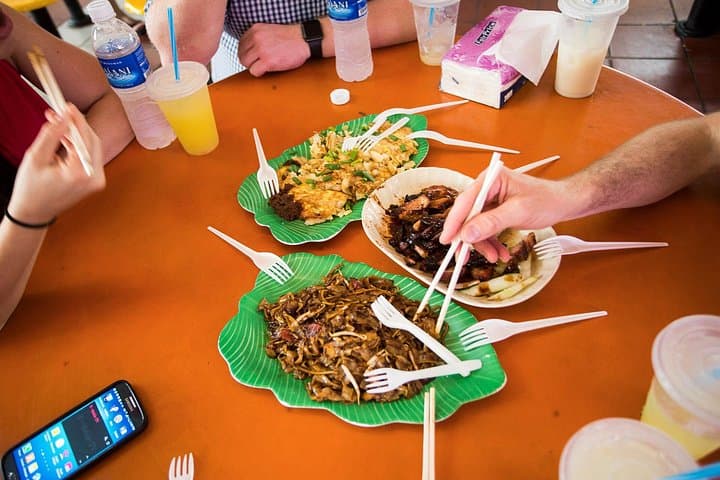
This is a walking food tour that pairs food with context: hawker stalls at Chinatown Complex and Maxwell Hawker Centre serve Hainanese chicken rice, char kway teow and Hokkien mee alongside hawker lore. Expect market stops, a wet market visit, and religious sites like Sri Mariamman as cultural punctuation.
Practicalities: meet at Chinatown MRT (Exit A); the tour lasts about 3–4 hours and requires moderate mobility—there are stairs at some stalls and crowds to navigate. Bring a refillable water bottle, light clothing and a modest umbrella for sudden tropical rain. Food is shared family‑style; guests with strict dietary restrictions should advise the operator in advance. Go hungry but pace tastings—this route is equal parts history and flavor.
Yes—tasting portions at multiple hawker stalls and beverages described in the itinerary are included as part of the tour.
Because food is shared and prepared at hawker stalls, the operator may be unable to meet strict dietary needs; notify them in advance to check options.
The tour meets inside Chinatown MRT station, Exit A, and finishes near South Bridge Road by Chinatown MRT; total duration is approximately 3–4 hours.
The tour is listed as wheelchair accessible, but some hawker stalls and market lanes can be tight—advise the operator when booking so they can plan accessible routing.
Singapore City Explorers operates guided outdoor trips and adventures with an emphasis on safety, stewardship, and memorable experiences.
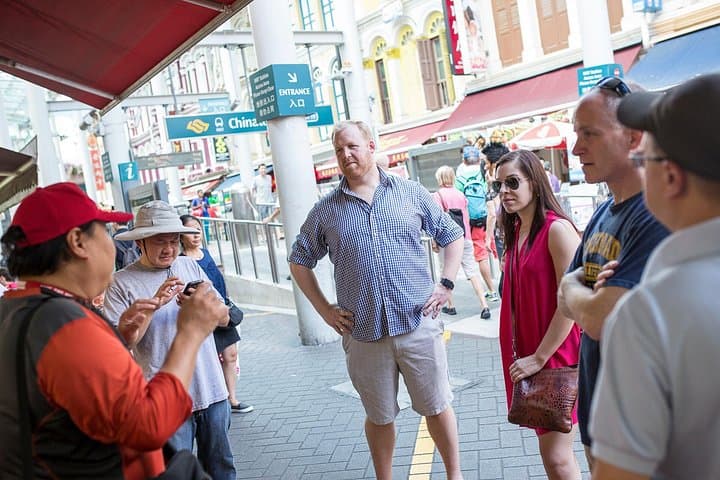
You step out of Chinatown MRT Exit A into a corridor of steam, spice and shouted orders—woks clang like percussion, sugarcane stalls flash emerald juice, and the smell of roasted pork pulls you down Pagoda Street. Narrow lanes of painted shophouses rise on either side, Peranakan tiles catching the sun while temple bells punctuate the chatter.
You step out of Chinatown MRT Exit A into a corridor of steam, spice and shouted orders—woks clang like percussion, sugarcane stalls flash emerald juice, and the smell of roasted pork pulls you down Pagoda Street. Narrow lanes of painted shophouses rise on either side, Peranakan tiles catching the sun while temple bells punctuate the chatter.
Chinatown grew from 19th‑century immigrant quarters into a layered neighborhood where Chinese clan associations, Malay merchants and Indian temples stand block to block. The shophouses tell that history: coolie lodgings, family-run workshops, and the pragmatism of mixed-use streets. The Buddha Tooth Relic Temple, built in Tang-style architecture in the 2000s, and the URA Gallery both chart Singapore’s rapid shift from fishing village to global port—an urban geology of reclamation and planning more than cliffs and rivers.
This is a walking food tour that pairs food with context: hawker stalls at Chinatown Complex and Maxwell Hawker Centre serve Hainanese chicken rice, char kway teow and Hokkien mee alongside hawker lore. Expect market stops, a wet market visit, and religious sites like Sri Mariamman as cultural punctuation.
Practicalities: meet at Chinatown MRT (Exit A); the tour lasts about 3–4 hours and requires moderate mobility—there are stairs at some stalls and crowds to navigate. Bring a refillable water bottle, light clothing and a modest umbrella for sudden tropical rain. Food is shared family‑style; guests with strict dietary restrictions should advise the operator in advance. Go hungry but pace tastings—this route is equal parts history and flavor.