THE ADVENTURE COLLECTIVE® · Independent discovery and booking for outdoor travel

A single day that pairs Sintra’s fairy-tale palaces and forested hills with the raw Atlantic cliffs of Cabo da Roca and the narrow streets of Cascais. Expect dramatic views, cobbled lanes, and a 7–8 hour loop from Lisbon.
A single day that pairs Sintra’s fairy-tale palaces and forested hills with the raw Atlantic cliffs of Cabo da Roca and the narrow streets of Cascais. Expect dramatic views, cobbled lanes, and a 7–8 hour loop from Lisbon.
You step off the air-conditioned minivan and the forest takes the first breath — cool, green, and dense enough to damp the sound of the coast. The road up to Sintra climbs in a series of hairpins, and the town reveals itself in fragments: a Moorish wall here, a candy-colored palace turret there, roofs slipped among laurel and cork oaks. The guide compares the light on the tiles to sugar; the place answers with a damp scent of moss and old stone.
Verified experiences and guided adventures in the surrounding area.
Operated by Get Stoked · Sintra, Lisbon District
You step off the air-conditioned minivan and the forest takes the first breath — cool, green, and dense enough to damp the sound of the coast. The road up to Sintra climbs in a series of hairpins, and the town reveals itself in fragments: a Moorish wall here, a candy-colored palace turret there, roofs slipped among laurel and cork oaks. The guide compares the light on the tiles to sugar; the place answers with a damp scent of moss and old stone.
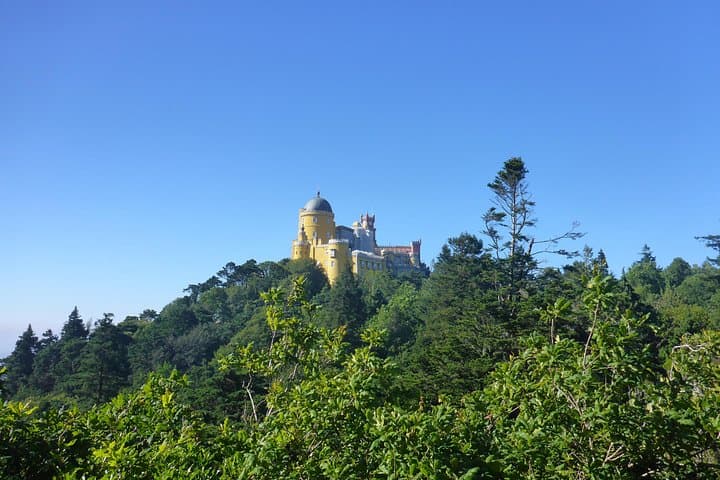
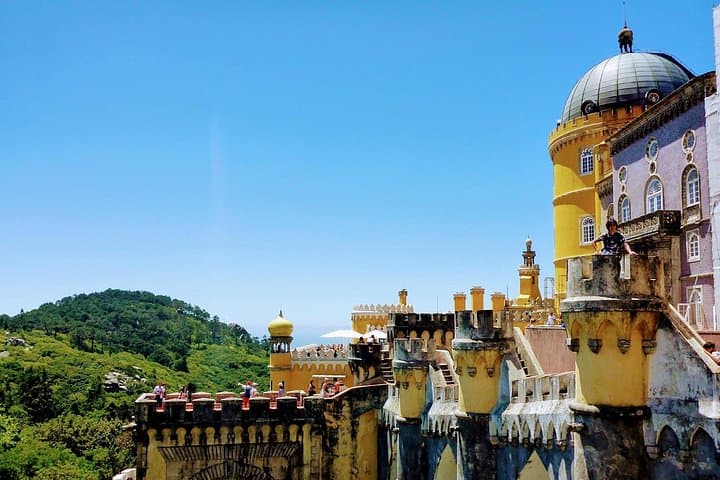
Sintra’s hills are not high — the massif tops out around 528 meters at Pena — but the geology is unusual: granite outcrops worn into rounded boulders and abrupt cliffs that channel atlantic mist inland. The town earned UNESCO recognition not just for individual monuments like the Romantic-era Pena Palace, but for a cultural landscape where 19th-century imagination reshaped an ancient site into something theatrical and singular.
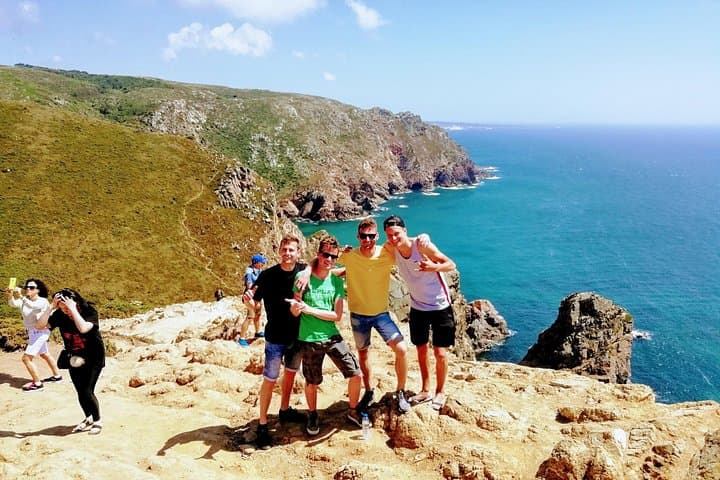
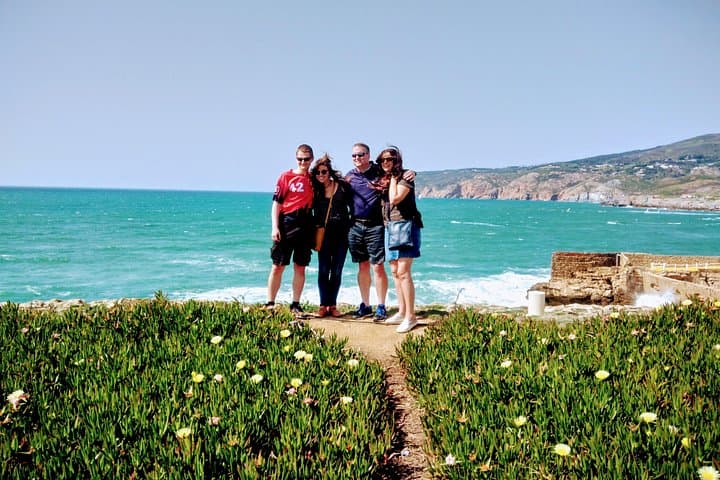
By midday the tour slides down from forest into sea. Cabo da Roca, the western edge of continental Europe, presents a different story: wind-twisted vegetation and cliffs throwing themselves into the ocean. The Atlantic here is an impatient neighbor, its currents pulling at kelp beds and daring gulls to hover above jagged shoals. Cascais, once a fishing village and now a compact seaside town, keeps the rhythm of salt and commerce — narrow streets, tiled facades, and fish markets that still smell of the morning catch.
The itinerary balances built history with natural drama: Romantic architecture and parkland, a viewpoint at Europe’s edge, then beaches rimmed with dunes. Expect cobbled paths, a few steep climbs between viewpoints, and brief stretches along urban promenade.
Practical guidance: this is a full-day outing — plan for 7–8 hours including transport and multiple short stops. Comfortable walking shoes with good grip are essential; many streets are cobbled and some trails are uneven. Weather can flip quickly on the coast, so pack a light rain shell and layers. Bring sunscreen and a hat for exposure at Cabo da Roca; bottled water is usually supplied, but carry a refillable bottle to reduce plastic.
Tickets: entrance to certain palaces may not be included, and peak-season lines at Pena can be long — buy timed-entry if you want to skip waits. The tour starts and ends at the Lisbon Zoo entrance; public transport options and parking are available nearby. If you prefer a gentler pace, ask about private or small-group options — the operator runs tours with a maximum of seven guests.
For the traveler who wants both inland romance and coastal wind in one day, this itinerary reads like a condensed chapter of Portugal: castles that flirt with the sky, cliffs that push outward to the Atlantic, and a seaside town that remembers its nets. It’s a day designed to show contrast — and to leave you with the urge to return and slow down.
The full experience runs about 7–8 hours (420–480 minutes), including transport, viewpoints, and guided stops.
Some palace admissions are not included—Pena Palace, for example, often requires a separate ticket and timed entry.
Meet your guide at the entrance to the Lisbon Zoo (Praça Marechal Humberto Delgado); the tour returns to the same point.
Yes—infant seats are available on request; the tour is family-friendly but involves walking and some stairs.
The operator may reschedule or refund if the tour is canceled due to poor weather; check the cancellation policy when booking.
The tour involves cobbled streets, stairs, and uneven terrain; it’s suitable for those with moderate mobility but not for full wheelchair access.
Get Stoked operates guided outdoor trips and adventures with an emphasis on safety, stewardship, and memorable experiences.
You step off the air-conditioned minivan and the forest takes the first breath — cool, green, and dense enough to damp the sound of the coast. The road up to Sintra climbs in a series of hairpins, and the town reveals itself in fragments: a Moorish wall here, a candy-colored palace turret there, roofs slipped among laurel and cork oaks. The guide compares the light on the tiles to sugar; the place answers with a damp scent of moss and old stone.
You step off the air-conditioned minivan and the forest takes the first breath — cool, green, and dense enough to damp the sound of the coast. The road up to Sintra climbs in a series of hairpins, and the town reveals itself in fragments: a Moorish wall here, a candy-colored palace turret there, roofs slipped among laurel and cork oaks. The guide compares the light on the tiles to sugar; the place answers with a damp scent of moss and old stone.
Sintra’s hills are not high — the massif tops out around 528 meters at Pena — but the geology is unusual: granite outcrops worn into rounded boulders and abrupt cliffs that channel atlantic mist inland. The town earned UNESCO recognition not just for individual monuments like the Romantic-era Pena Palace, but for a cultural landscape where 19th-century imagination reshaped an ancient site into something theatrical and singular.
By midday the tour slides down from forest into sea. Cabo da Roca, the western edge of continental Europe, presents a different story: wind-twisted vegetation and cliffs throwing themselves into the ocean. The Atlantic here is an impatient neighbor, its currents pulling at kelp beds and daring gulls to hover above jagged shoals. Cascais, once a fishing village and now a compact seaside town, keeps the rhythm of salt and commerce — narrow streets, tiled facades, and fish markets that still smell of the morning catch.
The itinerary balances built history with natural drama: Romantic architecture and parkland, a viewpoint at Europe’s edge, then beaches rimmed with dunes. Expect cobbled paths, a few steep climbs between viewpoints, and brief stretches along urban promenade.
Practical guidance: this is a full-day outing — plan for 7–8 hours including transport and multiple short stops. Comfortable walking shoes with good grip are essential; many streets are cobbled and some trails are uneven. Weather can flip quickly on the coast, so pack a light rain shell and layers. Bring sunscreen and a hat for exposure at Cabo da Roca; bottled water is usually supplied, but carry a refillable bottle to reduce plastic.
Tickets: entrance to certain palaces may not be included, and peak-season lines at Pena can be long — buy timed-entry if you want to skip waits. The tour starts and ends at the Lisbon Zoo entrance; public transport options and parking are available nearby. If you prefer a gentler pace, ask about private or small-group options — the operator runs tours with a maximum of seven guests.
For the traveler who wants both inland romance and coastal wind in one day, this itinerary reads like a condensed chapter of Portugal: castles that flirt with the sky, cliffs that push outward to the Atlantic, and a seaside town that remembers its nets. It’s a day designed to show contrast — and to leave you with the urge to return and slow down.