THE ADVENTURE COLLECTIVE® · Independent discovery and booking for outdoor travel

Follow in Lord Byron’s footsteps through Sintra’s mist-smudged hills on a private full‑day tour that pairs dramatic viewpoints with royal palaces and secret gardens. Ideal for travelers who want curated history, ease of transport, and the freedom to linger where the landscape insists.
Follow in Lord Byron’s footsteps through Sintra’s mist-smudged hills on a private full‑day tour that pairs dramatic viewpoints with royal palaces and secret gardens. Ideal for travelers who want curated history, ease of transport, and the freedom to linger where the landscape insists.
A morning in Sintra begins like a page peeled from a travel diary: low cloud clinging to the hills, a cool Atlantic wind that seems to nudge you up the winding lanes. Guests collected in Lisbon slide into air-conditioned comfort and, within an hour, the narrow streets of the historic center open like a stage. The tour moves at a deliberate pace—short walks, layered viewpoints, and long stops in places that shaped 19th‑century European ideas about landscape and longing.
Verified experiences and guided adventures in the surrounding area.
Operated by Visite découverte sur les traces de Lord Byron · Sintra, Lisbon District
A morning in Sintra begins like a page peeled from a travel diary: low cloud clinging to the hills, a cool Atlantic wind that seems to nudge you up the winding lanes. Guests collected in Lisbon slide into air-conditioned comfort and, within an hour, the narrow streets of the historic center open like a stage. The tour moves at a deliberate pace—short walks, layered viewpoints, and long stops in places that shaped 19th‑century European ideas about landscape and longing.
Sintra’s geology explains its mood. Granite hills, carved by millennia of rain and wind, lift abrupt ridgelines from a carpet of laurel and pine. Those hills caught the eye of Lord Byron and later the Portuguese intelligentsia; the result is architecture conspicuous and eclectic—the neo-Manueline flourishes of the National Palace, the fanciful colors of the Pena Palace, and the Moorish Castle’s crenellated spine, which clings to the summit like an old guard.
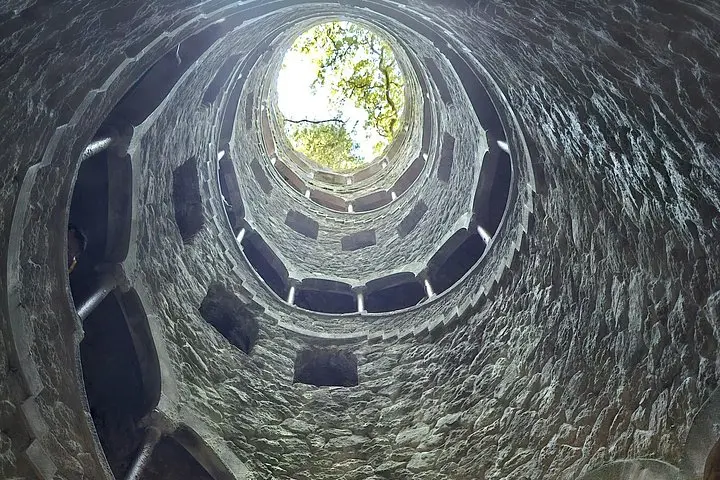
This private, full‑day tour threads those high points with smaller treasures: the ceremonial plunge into Quinta da Regaleira’s initiatory well, the Victorian botany of Monserrate, and a stop at Cabo da Roca—the westernmost edge of continental Europe—where the Atlantic dares you to walk to the cliff’s lip.
Culturally, Sintra is both royal playground and palimpsest. Romans and Moors left fortifications and waterworks; the Romantic era rewrote the town’s identity, layering follies and exotic plantings on older foundations. Today, local pastry shops still serve queijadas and travesseiros—small, sugary archive snapshots of daily life—and tiny museums preserve liturgical art and civic pomp.
Practicalities separate a pleasant day from a strained one. The route covers several sites across steep, cobbled terrain with short to moderate climbs and steps—expect 3–5 miles total of on‑foot exploration spread through the day. Comfortable, grippy footwear and a water bottle are essential; admission to major palaces is not always included and queues can form in high season, so book entry tickets in advance when possible. The tour’s private transport reduces walking distances between monuments, but many viewpoints require short uphill approaches.
Timing matters: early departures avoid midday crowds at Pena and the Moorish Castle; late afternoons reveal warm light across the Atlantic at Cabo da Roca. Weather can turn quickly near the coast—bring a light shell. For those who want context with convenience, this itinerary is an efficient way to move through Sintra’s layers of history and natural drama without losing the freedom to linger where the view compels you.
Yes—private air‑conditioned transport is provided to move between Sintra’s dispersed sites and coastal viewpoints.
Some historic palaces are not included; check your booking details and reserve timed tickets for Pena or Quinta da Regaleira in advance when possible.
Expect several short walks and stair climbs totaling roughly 3–5 miles over the day, with steeper sections at castles and viewpoints.
The transport is wheelchair accessible, but many monuments and viewpoints have steps, uneven surfaces, and limited accessibility—contact the operator to discuss specific needs.
Spring and fall offer the most comfortable temperatures and fewer crowds; early departures help avoid peak midday visitors at Pena Palace.
Yes—infant seats are available and the tour accommodates families, but note there are staircases and uneven surfaces at many sites.
Visite découverte sur les traces de Lord Byron operates guided outdoor trips and adventures with an emphasis on safety, stewardship, and memorable experiences.

A morning in Sintra begins like a page peeled from a travel diary: low cloud clinging to the hills, a cool Atlantic wind that seems to nudge you up the winding lanes. Guests collected in Lisbon slide into air-conditioned comfort and, within an hour, the narrow streets of the historic center open like a stage. The tour moves at a deliberate pace—short walks, layered viewpoints, and long stops in places that shaped 19th‑century European ideas about landscape and longing.
A morning in Sintra begins like a page peeled from a travel diary: low cloud clinging to the hills, a cool Atlantic wind that seems to nudge you up the winding lanes. Guests collected in Lisbon slide into air-conditioned comfort and, within an hour, the narrow streets of the historic center open like a stage. The tour moves at a deliberate pace—short walks, layered viewpoints, and long stops in places that shaped 19th‑century European ideas about landscape and longing.
Sintra’s geology explains its mood. Granite hills, carved by millennia of rain and wind, lift abrupt ridgelines from a carpet of laurel and pine. Those hills caught the eye of Lord Byron and later the Portuguese intelligentsia; the result is architecture conspicuous and eclectic—the neo-Manueline flourishes of the National Palace, the fanciful colors of the Pena Palace, and the Moorish Castle’s crenellated spine, which clings to the summit like an old guard.
This private, full‑day tour threads those high points with smaller treasures: the ceremonial plunge into Quinta da Regaleira’s initiatory well, the Victorian botany of Monserrate, and a stop at Cabo da Roca—the westernmost edge of continental Europe—where the Atlantic dares you to walk to the cliff’s lip.
Culturally, Sintra is both royal playground and palimpsest. Romans and Moors left fortifications and waterworks; the Romantic era rewrote the town’s identity, layering follies and exotic plantings on older foundations. Today, local pastry shops still serve queijadas and travesseiros—small, sugary archive snapshots of daily life—and tiny museums preserve liturgical art and civic pomp.
Practicalities separate a pleasant day from a strained one. The route covers several sites across steep, cobbled terrain with short to moderate climbs and steps—expect 3–5 miles total of on‑foot exploration spread through the day. Comfortable, grippy footwear and a water bottle are essential; admission to major palaces is not always included and queues can form in high season, so book entry tickets in advance when possible. The tour’s private transport reduces walking distances between monuments, but many viewpoints require short uphill approaches.
Timing matters: early departures avoid midday crowds at Pena and the Moorish Castle; late afternoons reveal warm light across the Atlantic at Cabo da Roca. Weather can turn quickly near the coast—bring a light shell. For those who want context with convenience, this itinerary is an efficient way to move through Sintra’s layers of history and natural drama without losing the freedom to linger where the view compels you.