THE ADVENTURE COLLECTIVE® · Independent discovery and booking for outdoor travel

A compact private tour that threads Sintra’s forested hills, a fairytale palace and a cliff-top Atlantic outlook into a four‑hour loop. Ideal for travelers short on time who want a guided introduction to the town’s Romantic era monuments and dramatic coastline.
A compact private tour that threads Sintra’s forested hills, a fairytale palace and a cliff-top Atlantic outlook into a four‑hour loop. Ideal for travelers short on time who want a guided introduction to the town’s Romantic era monuments and dramatic coastline.
A bus eases out of Lisbon’s morning hush and the city gives way to a green, dune-like ridge crowned with stone. By the time the group spills into Sintra’s cobbled lanes, salt from the nearby Atlantic is already in the air; pine and eucalyptus press in from the hills, as if the landscape itself is steering visitors toward the palaces perched above.
Verified experiences and guided adventures in the surrounding area.
Operated by BlackCab Portugal · Sintra, Lisbon
A bus eases out of Lisbon’s morning hush and the city gives way to a green, dune-like ridge crowned with stone. By the time the group spills into Sintra’s cobbled lanes, salt from the nearby Atlantic is already in the air; pine and eucalyptus press in from the hills, as if the landscape itself is steering visitors toward the palaces perched above.
On this four-hour private run through the Serra de Sintra, the pace is deliberate. The ride up to Pena Palace deposits you at a flamboyant 19th-century folly that clings to a granite peak roughly 400–450 meters above sea level. The palace’s painted terraces and Moorish chimneys startle against a stitched backdrop of forest; from the ramparts the coastline narrows into a single, glinting line that dares you to cross it.
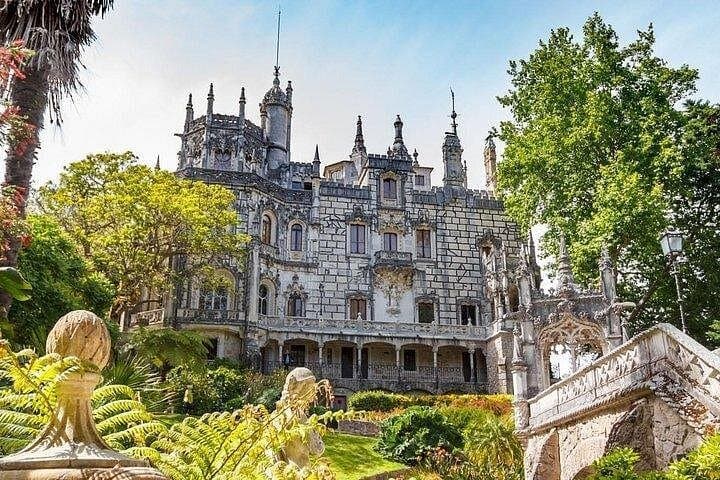
Quinta da Regaleira is quieter but no less theatrical. Its wells, grottoes and secret tunnels were conceived as an initiation landscape for an eccentric patron, and visitors step through symbolic portals that marry masons’ craft with occult references. In the town of Sintra itself, 18th- and 19th-century mansions and shaded gardens reflect a wave of Romanticism that declared this place Europe’s landscape laboratory.
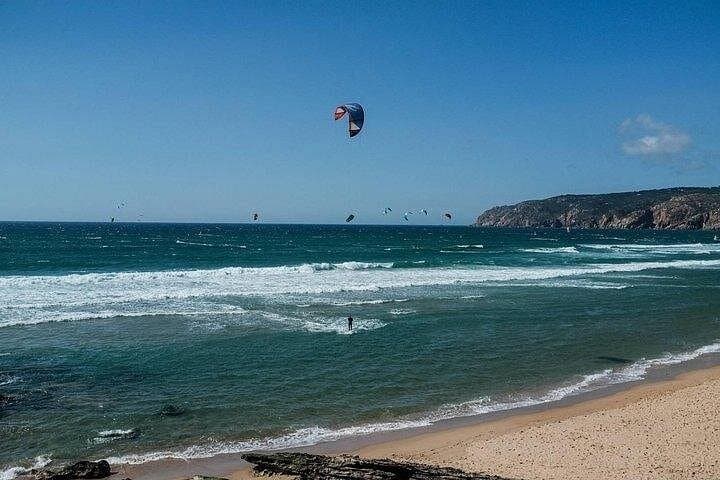
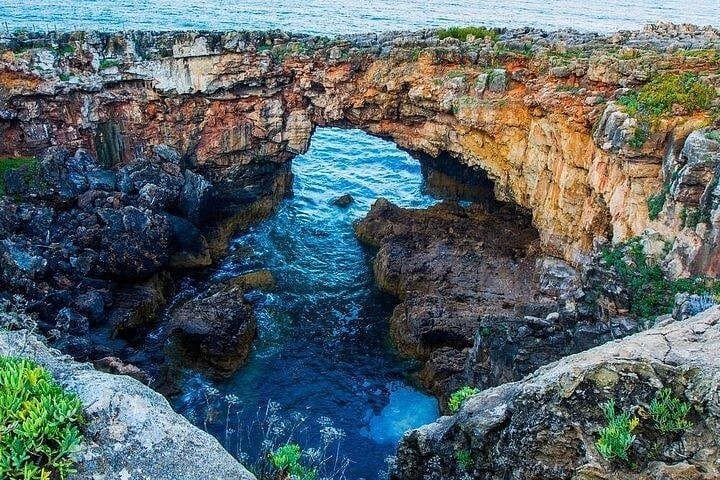
The itinerary swings west to Cabo da Roca — the continent’s westernmost point — where wind and sea argue like old friends. Cliffs here fall clean to the Atlantic; waves carve echo chambers in the rock and send spray toward anyone bold enough to linger on the fence line. The tour can also include Boca do Inferno (Hell’s Mouth), a dramatic coastal cleft outside Cascais where water has chewed a theatrical gap in the stone.
For travelers, the practical notes matter. Walking is light but includes uneven cobbles and stone steps — expect several short, steep sections and bring footwear with good grip. Weather can change fast: mist lifts from the sea in the morning and returns by afternoon, so layers are essential. The tour is private and transport is air-conditioned; admission to paid sites is typically not included, so book tickets for Pena Palace in advance to avoid lines. Guide commentary fills the drive with history, from Moorish fortifications to 19th-century Romanticism, and points out geological transitions from granitic knobs to the limestone cliffs at the coast.
This half-day loop is compact but layered: it gives a taste of Sintra’s gardens and palaces, a walk through an architect’s secret symbolism, and a cliff-top reminder that Portugal’s edge is where landscape meets the Atlantic with intent. Time it for morning light to catch palace colors, and plan a longer return visit if the mossy paths and secret wells leave you wanting more.
This private tour lasts about four hours (240 minutes) covering Sintra village, Pena Palace, Quinta da Regaleira and coastal viewpoints.
Admission to paid attractions such as Pena Palace and Quinta da Regaleira is typically not included—book tickets in advance if you want guaranteed entry.
The tour is family-friendly and the vehicle is accessible, but many historic sites have steep steps and uneven ground that can limit access for wheelchairs.
Pickup is flexible—operators often meet in Lisbon or at specified hotels; confirm your pickup point when booking.
Comfortable, layered clothing and sturdy shoes are recommended; bring a light jacket for the coast and sunscreen for sunny days.
As a private tour, the route can often be adjusted—contact the supplier to request specific stops or longer visits at particular sites.
BlackCab Portugal operates guided outdoor trips and adventures with an emphasis on safety, stewardship, and memorable experiences.

A bus eases out of Lisbon’s morning hush and the city gives way to a green, dune-like ridge crowned with stone. By the time the group spills into Sintra’s cobbled lanes, salt from the nearby Atlantic is already in the air; pine and eucalyptus press in from the hills, as if the landscape itself is steering visitors toward the palaces perched above.
A bus eases out of Lisbon’s morning hush and the city gives way to a green, dune-like ridge crowned with stone. By the time the group spills into Sintra’s cobbled lanes, salt from the nearby Atlantic is already in the air; pine and eucalyptus press in from the hills, as if the landscape itself is steering visitors toward the palaces perched above.
On this four-hour private run through the Serra de Sintra, the pace is deliberate. The ride up to Pena Palace deposits you at a flamboyant 19th-century folly that clings to a granite peak roughly 400–450 meters above sea level. The palace’s painted terraces and Moorish chimneys startle against a stitched backdrop of forest; from the ramparts the coastline narrows into a single, glinting line that dares you to cross it.
Quinta da Regaleira is quieter but no less theatrical. Its wells, grottoes and secret tunnels were conceived as an initiation landscape for an eccentric patron, and visitors step through symbolic portals that marry masons’ craft with occult references. In the town of Sintra itself, 18th- and 19th-century mansions and shaded gardens reflect a wave of Romanticism that declared this place Europe’s landscape laboratory.
The itinerary swings west to Cabo da Roca — the continent’s westernmost point — where wind and sea argue like old friends. Cliffs here fall clean to the Atlantic; waves carve echo chambers in the rock and send spray toward anyone bold enough to linger on the fence line. The tour can also include Boca do Inferno (Hell’s Mouth), a dramatic coastal cleft outside Cascais where water has chewed a theatrical gap in the stone.
For travelers, the practical notes matter. Walking is light but includes uneven cobbles and stone steps — expect several short, steep sections and bring footwear with good grip. Weather can change fast: mist lifts from the sea in the morning and returns by afternoon, so layers are essential. The tour is private and transport is air-conditioned; admission to paid sites is typically not included, so book tickets for Pena Palace in advance to avoid lines. Guide commentary fills the drive with history, from Moorish fortifications to 19th-century Romanticism, and points out geological transitions from granitic knobs to the limestone cliffs at the coast.
This half-day loop is compact but layered: it gives a taste of Sintra’s gardens and palaces, a walk through an architect’s secret symbolism, and a cliff-top reminder that Portugal’s edge is where landscape meets the Atlantic with intent. Time it for morning light to catch palace colors, and plan a longer return visit if the mossy paths and secret wells leave you wanting more.