THE ADVENTURE COLLECTIVE® · Independent discovery and booking for outdoor travel

Spend a private day tracing Sintra’s dramatic high places—Pena Palace, Moorish Castle and Quinta da Regaleira—then finish at the windswept cliffs of Cabo da Roca. This eight‑to‑nine hour tour blends Romantic history, forested climbs and Atlantic views with door‑to‑door transport from Lisbon.
Spend a private day tracing Sintra’s dramatic high places—Pena Palace, Moorish Castle and Quinta da Regaleira—then finish at the windswept cliffs of Cabo da Roca. This eight‑to‑nine hour tour blends Romantic history, forested climbs and Atlantic views with door‑to‑door transport from Lisbon.
You step out of the air‑conditioned van onto a narrow cobbled lane and the mountain takes the air from you—not by force but by atmosphere. Pines and eucalyptus press close, a cool mist threads the trees, and the first sight of Pena Palace appears like a painted stage set: ochre and crimson roofs against a mossy green ridge. For the next eight to nine hours, this private tour moves like a well-paced story: palaces, ramparts, secret wells and a final spill of sea at Europe’s western edge.
Verified experiences and guided adventures in the surrounding area.
Operated by Trajetória Exclusiva · Sintra, Lisbon
You step out of the air‑conditioned van onto a narrow cobbled lane and the mountain takes the air from you—not by force but by atmosphere. Pines and eucalyptus press close, a cool mist threads the trees, and the first sight of Pena Palace appears like a painted stage set: ochre and crimson roofs against a mossy green ridge. For the next eight to nine hours, this private tour moves like a well-paced story: palaces, ramparts, secret wells and a final spill of sea at Europe’s western edge.
Sintra sits on an isolated granite outcrop where microclimates breed ferns and cloud. The town’s Victorian-era reinvention was driven by Ferdinand II, whose 19th-century restorations turned convents into palaces soaked in Romantic-era theatrics. Before that the Moors strengthened the ridge with Castelo dos Mouros; its rough stone walls still follow the spine of the mountain, offering panoramic views and a direct sense of the site’s strategic geology: granite tors dropping off into coastal schist and cliffs.
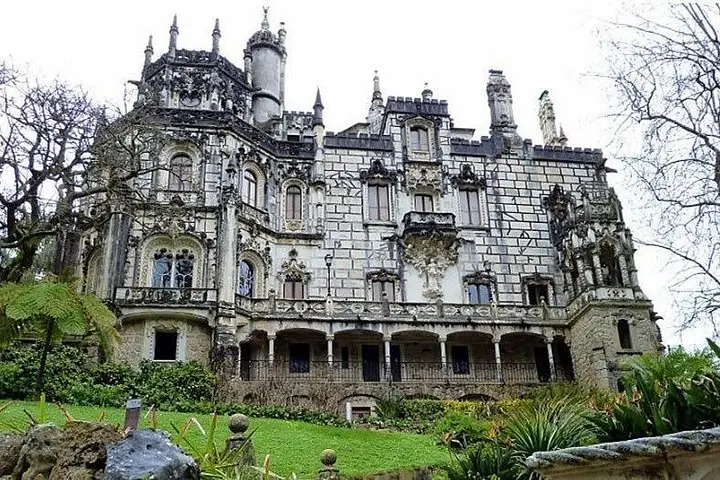
Culture here is tactile—cheese tarts sold warm, hand‑hewn stone steps worn smooth by centuries, and neighborhoods where Manueline windows blink like carved shells. Quinta da Regaleira whispers about Masonic symbols and alchemical references carved into gardens; its Initiation Well feels like an inverted tower, a place that encourages curiosity rather than answers. Then, after the forested rides and elevated viewpoints, the tour widens to the Atlantic: Cabo da Roca stands as the dramatic punctuation, where Camões’ line “where the land ends and the sea begins” still reads true.
Practical edge: the tour runs roughly 8–9 hours and covers steep climbs—expect to gain up to about 400–500 meters if you ascend to Pena Palace and the Moorish ramparts. Terrain alternates between packed earth trails, limestone steps, and uneven cobbles. Comfortable, grippy shoes matter more than fashion. The operator provides private transport, onboard Wi‑Fi and bottled water, and most itineraries include guided time at Pena Palace, Castelo dos Mouros, Quinta da Regaleira and a stop at Cabo da Roca. Admissions are often not included—book palace tickets ahead during high season to skip long waits.
Timing is everything: arrive early to catch light on the palace façades and to avoid the midday crush. Bring a lightweight rain shell—the mountain can be foggy even on clear Lisbon days—and keep your camera ready for sudden open views over the Atlantic. A private guide turns the route from checklist to narrative: historical context, architectural detail and the small local notes that make Sintra feel unforgettable rather than merely photographed.
Most standard itineraries do not include palace admissions—book Pena Palace and Quinta da Regaleira tickets in advance or ask the operator to add them at booking.
Pickup can be arranged across Lisbon hotels or a central meeting point; confirm your pickup location at time of booking—allow 30 minutes before departure time.
Yes—infants and small children can use a stroller on flatter town sections, but expect many stairs and uneven surfaces at palaces and viewpoints.
Expect several short to moderate uphill walks and many steps; total walking is moderate and spread out across stops over the day.
Bring snacks and use local cafés in Sintra town for pastries (try travesseiros or queijadas); bottled water is provided on board.
Yes—private format allows tailoring: more time at a specific palace, additional stops like Monserrate Palace or local beaches can often be arranged.
Trajetória Exclusiva operates guided outdoor trips and adventures with an emphasis on safety, stewardship, and memorable experiences.
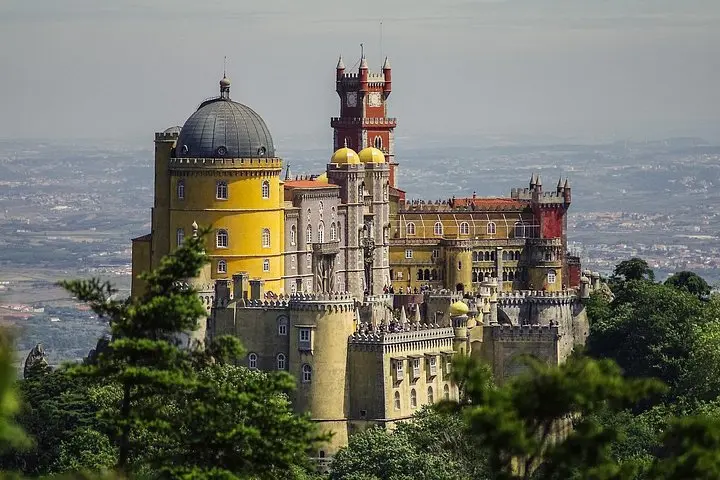
You step out of the air‑conditioned van onto a narrow cobbled lane and the mountain takes the air from you—not by force but by atmosphere. Pines and eucalyptus press close, a cool mist threads the trees, and the first sight of Pena Palace appears like a painted stage set: ochre and crimson roofs against a mossy green ridge. For the next eight to nine hours, this private tour moves like a well-paced story: palaces, ramparts, secret wells and a final spill of sea at Europe’s western edge.
You step out of the air‑conditioned van onto a narrow cobbled lane and the mountain takes the air from you—not by force but by atmosphere. Pines and eucalyptus press close, a cool mist threads the trees, and the first sight of Pena Palace appears like a painted stage set: ochre and crimson roofs against a mossy green ridge. For the next eight to nine hours, this private tour moves like a well-paced story: palaces, ramparts, secret wells and a final spill of sea at Europe’s western edge.
Sintra sits on an isolated granite outcrop where microclimates breed ferns and cloud. The town’s Victorian-era reinvention was driven by Ferdinand II, whose 19th-century restorations turned convents into palaces soaked in Romantic-era theatrics. Before that the Moors strengthened the ridge with Castelo dos Mouros; its rough stone walls still follow the spine of the mountain, offering panoramic views and a direct sense of the site’s strategic geology: granite tors dropping off into coastal schist and cliffs.
Culture here is tactile—cheese tarts sold warm, hand‑hewn stone steps worn smooth by centuries, and neighborhoods where Manueline windows blink like carved shells. Quinta da Regaleira whispers about Masonic symbols and alchemical references carved into gardens; its Initiation Well feels like an inverted tower, a place that encourages curiosity rather than answers. Then, after the forested rides and elevated viewpoints, the tour widens to the Atlantic: Cabo da Roca stands as the dramatic punctuation, where Camões’ line “where the land ends and the sea begins” still reads true.
Practical edge: the tour runs roughly 8–9 hours and covers steep climbs—expect to gain up to about 400–500 meters if you ascend to Pena Palace and the Moorish ramparts. Terrain alternates between packed earth trails, limestone steps, and uneven cobbles. Comfortable, grippy shoes matter more than fashion. The operator provides private transport, onboard Wi‑Fi and bottled water, and most itineraries include guided time at Pena Palace, Castelo dos Mouros, Quinta da Regaleira and a stop at Cabo da Roca. Admissions are often not included—book palace tickets ahead during high season to skip long waits.
Timing is everything: arrive early to catch light on the palace façades and to avoid the midday crush. Bring a lightweight rain shell—the mountain can be foggy even on clear Lisbon days—and keep your camera ready for sudden open views over the Atlantic. A private guide turns the route from checklist to narrative: historical context, architectural detail and the small local notes that make Sintra feel unforgettable rather than merely photographed.