THE ADVENTURE COLLECTIVE® · Independent discovery and booking for outdoor travel

A private seven-hour shore-to-slope loop that pairs Sintra’s palace-studded hills with the raw cliffs of Cabo da Roca and the seaside charm of Cascais. Ideal for travelers who want concentrated history, dramatic coastal geology, and a flexible, small-group pace.
A private seven-hour shore-to-slope loop that pairs Sintra’s palace-studded hills with the raw cliffs of Cabo da Roca and the seaside charm of Cascais. Ideal for travelers who want concentrated history, dramatic coastal geology, and a flexible, small-group pace.
A low sun breaks across the tiled roofs of Sintra and lights the candy-colored turrets of Pena Palace like a stage set. On a clear morning the air tastes faintly of salt and eucalyptus; the driver steers away from the town’s steep lanes and the car slides into a coastline that seems to dare you to look away. This private, seven-hour loop stitches together the best of the Serra de Sintra and the Atlantic edge: royal follies and Moorish ramparts, a sacred well, a windswept cape that marks continental Europe’s westernmost point, and a surf-battered cove where the sea gnashes its teeth at the cliffs.
Verified experiences and guided adventures in the surrounding area.
Operated by Pipefly · Sintra, Lisbon District
A low sun breaks across the tiled roofs of Sintra and lights the candy-colored turrets of Pena Palace like a stage set. On a clear morning the air tastes faintly of salt and eucalyptus; the driver steers away from the town’s steep lanes and the car slides into a coastline that seems to dare you to look away. This private, seven-hour loop stitches together the best of the Serra de Sintra and the Atlantic edge: royal follies and Moorish ramparts, a sacred well, a windswept cape that marks continental Europe’s westernmost point, and a surf-battered cove where the sea gnashes its teeth at the cliffs.
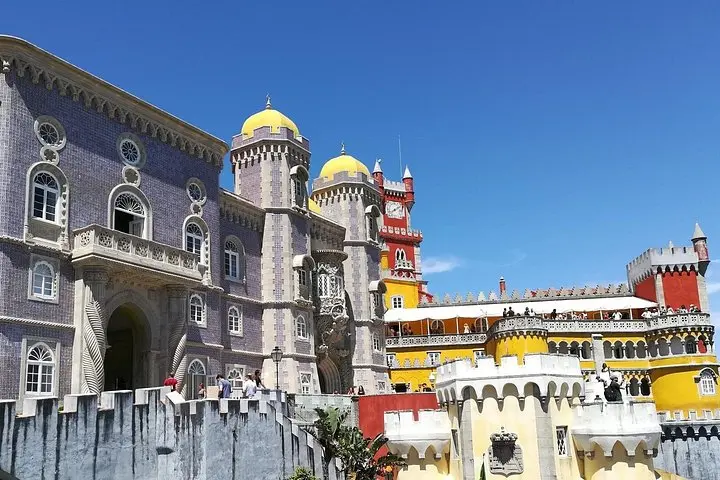
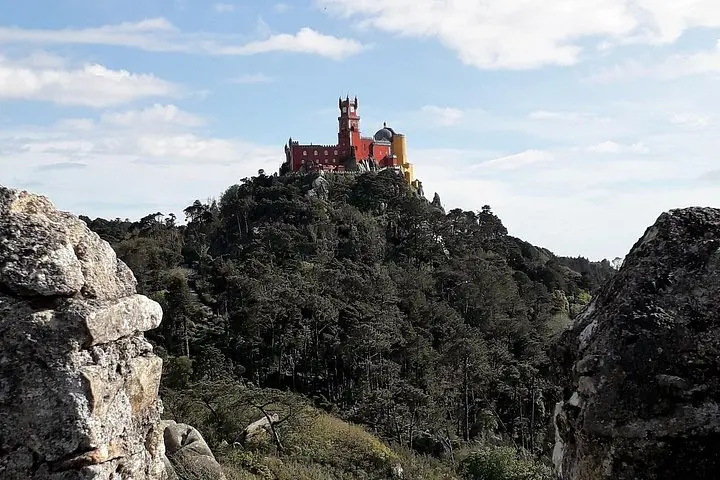
Sintra’s skyline is a 19th-century experiment in Romantic architecture—King Ferdinand II remade a ruined convent into Pena Palace, painting facades and planting exotic gardens on weathered slopes. Earlier layers remain: the rounded stone towers of the Moorish Castle trace medieval defenses, while Quinta da Regaleira’s Initiation Well and tangled grottoes speak to occult societies and the Freemasonic imagination of the early 20th century.
Geologically the route is a story of granite uplift and relentless Atlantic erosion. Cabo da Roca’s black cliffs are granite bones held against a battering ocean; waves bite at joints and produce the dramatic sea-sculpted platforms and blowholes you’ll see at Boca do Inferno. Cascais grew from a fishing village into an elegant coastal town, where a marina slips between cliffs and a fortress watches the harbor.
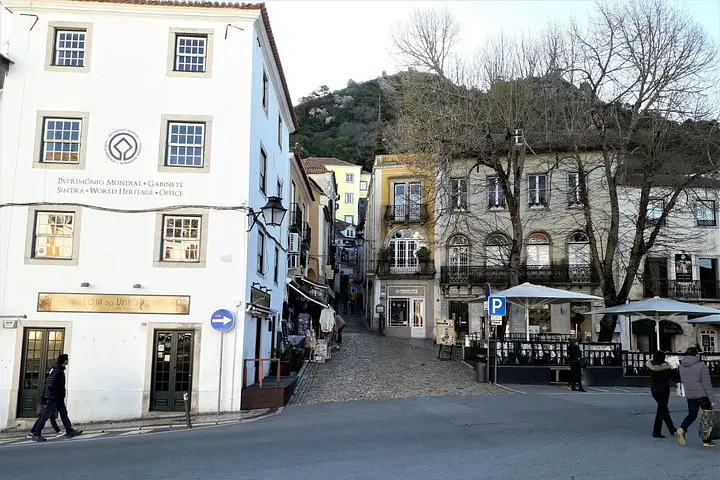
Local life peeks through the itinerary: pastelarias selling queijadas and travesseiros in Sintra’s old town, vine terraces in Colares, and fishermen hauling nets in Cascais. Guides provide historical context and practical timings; monument admissions and lunch are paid on your own, making the tour flexible.
Practical guide: the tour runs about seven hours with two full monument stops (Pena Palace and Quinta da Regaleira) plus multiple scenic pullovers. Expect stairs and some uneven paths—comfortable walking shoes are essential. Start early to dodge tour-bus crowds at Pena, and budget roughly €20–€25 per person for the two entrance fees if you plan to enter both sites. Bring a windproof layer for Cabo da Roca and Guincho Beach; the Atlantic can turn brisk without warning. For small groups (1–4 people) the private format means you can adjust the pace—ask your guide to linger on a view or swap a stop for extra time in Sintra’s old town.
Logistics: pickup and drop-off are available in Lisbon, Cascais, Sintra, or Oeiras; monument fees and lunch are not included. If your interest is architecture, history, or dramatic coastal geology, this route delivers concentrated highlights with the ease of private transport and a local guide.
No—admission to Pena Palace and Quinta da Regaleira is not included; expect to pay roughly €14 for Pena and up to €6 for Regaleira per person.
Pickup and drop-off are offered in Lisbon, Cascais, Sintra, or Oeiras—provide your accommodation address when booking.
This private option is for groups of 1–4 people; larger groups should book the per-person group tour offered separately.
Vehicle transport is provided, but many sites have stairs and uneven ground; infants in strollers can be accommodated, while visitors with reduced mobility may find some stops challenging.
Guides typically operate in English and Portuguese; confirm preferred language at booking if you need another language.
Lunch is not included—bring cash or a card to eat in Sintra or Cascais; many travelers opt for a quick meal in Sintra’s old town to sample local pastries.
Pipefly operates guided outdoor trips and adventures with an emphasis on safety, stewardship, and memorable experiences.
A low sun breaks across the tiled roofs of Sintra and lights the candy-colored turrets of Pena Palace like a stage set. On a clear morning the air tastes faintly of salt and eucalyptus; the driver steers away from the town’s steep lanes and the car slides into a coastline that seems to dare you to look away. This private, seven-hour loop stitches together the best of the Serra de Sintra and the Atlantic edge: royal follies and Moorish ramparts, a sacred well, a windswept cape that marks continental Europe’s westernmost point, and a surf-battered cove where the sea gnashes its teeth at the cliffs.
A low sun breaks across the tiled roofs of Sintra and lights the candy-colored turrets of Pena Palace like a stage set. On a clear morning the air tastes faintly of salt and eucalyptus; the driver steers away from the town’s steep lanes and the car slides into a coastline that seems to dare you to look away. This private, seven-hour loop stitches together the best of the Serra de Sintra and the Atlantic edge: royal follies and Moorish ramparts, a sacred well, a windswept cape that marks continental Europe’s westernmost point, and a surf-battered cove where the sea gnashes its teeth at the cliffs.
Sintra’s skyline is a 19th-century experiment in Romantic architecture—King Ferdinand II remade a ruined convent into Pena Palace, painting facades and planting exotic gardens on weathered slopes. Earlier layers remain: the rounded stone towers of the Moorish Castle trace medieval defenses, while Quinta da Regaleira’s Initiation Well and tangled grottoes speak to occult societies and the Freemasonic imagination of the early 20th century.
Geologically the route is a story of granite uplift and relentless Atlantic erosion. Cabo da Roca’s black cliffs are granite bones held against a battering ocean; waves bite at joints and produce the dramatic sea-sculpted platforms and blowholes you’ll see at Boca do Inferno. Cascais grew from a fishing village into an elegant coastal town, where a marina slips between cliffs and a fortress watches the harbor.
Local life peeks through the itinerary: pastelarias selling queijadas and travesseiros in Sintra’s old town, vine terraces in Colares, and fishermen hauling nets in Cascais. Guides provide historical context and practical timings; monument admissions and lunch are paid on your own, making the tour flexible.
Practical guide: the tour runs about seven hours with two full monument stops (Pena Palace and Quinta da Regaleira) plus multiple scenic pullovers. Expect stairs and some uneven paths—comfortable walking shoes are essential. Start early to dodge tour-bus crowds at Pena, and budget roughly €20–€25 per person for the two entrance fees if you plan to enter both sites. Bring a windproof layer for Cabo da Roca and Guincho Beach; the Atlantic can turn brisk without warning. For small groups (1–4 people) the private format means you can adjust the pace—ask your guide to linger on a view or swap a stop for extra time in Sintra’s old town.
Logistics: pickup and drop-off are available in Lisbon, Cascais, Sintra, or Oeiras; monument fees and lunch are not included. If your interest is architecture, history, or dramatic coastal geology, this route delivers concentrated highlights with the ease of private transport and a local guide.