THE ADVENTURE COLLECTIVE® · Independent discovery and booking for outdoor travel

A three-day journey from Cairo into Siwa Oasis that pairs dune-running in the Great Sand Sea with therapeutic swims at Cleopatra's Pool and nights under a high Saharan sky. Expect 4x4 drives, sandboarding, cultural sites like Shali Fort, and salt lakes that buoy even casual swimmers.
A three-day journey from Cairo into Siwa Oasis that pairs dune-running in the Great Sand Sea with therapeutic swims at Cleopatra's Pool and nights under a high Saharan sky. Expect 4x4 drives, sandboarding, cultural sites like Shali Fort, and salt lakes that buoy even casual swimmers.
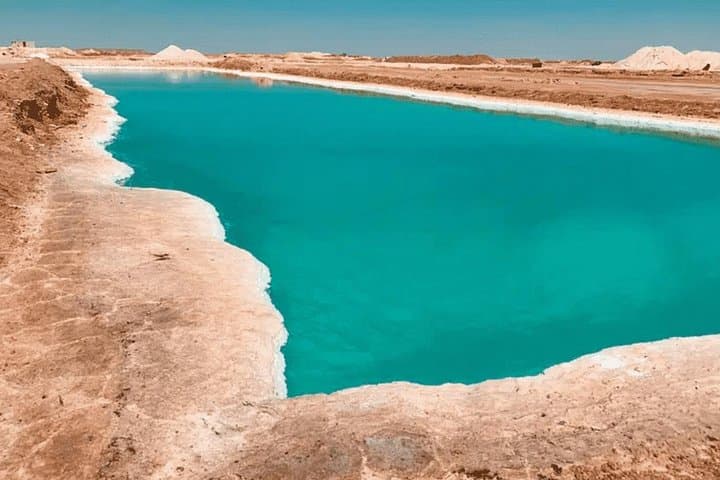
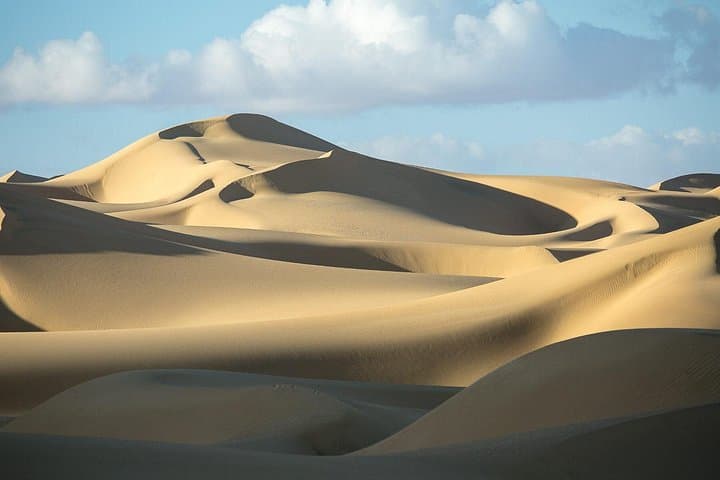
The sun slants low over a field of sand and the wind writes fresh ridges across the Great Sand Sea. On arrival to Siwa after a long coastal-and-desert transfer, the dunes loom like a living map—soft slopes that dare you to climb, horizon-to-horizon pale under a dome of stars. Fatnas Lake catches the last light; the salt flats glitter and the air smells faintly of brine and olives.
Verified experiences and guided adventures in the surrounding area.
Operated by Egipto Excursiones · Siwa, Matruh Governorate
The sun slants low over a field of sand and the wind writes fresh ridges across the Great Sand Sea. On arrival to Siwa after a long coastal-and-desert transfer, the dunes loom like a living map—soft slopes that dare you to climb, horizon-to-horizon pale under a dome of stars. Fatnas Lake catches the last light; the salt flats glitter and the air smells faintly of brine and olives.
Siwa sits on an ancient crossroads: Greco-Roman ruins, the Shali mud-brick fortress, and tombs cut into Gebel al-Mawta record Pharaonic, Ptolemaic and Roman presences and the island-like oasis culture that once sheltered oracles and travelers. Geologically the area is a Saharan depression ringed by limestone and wind-swept silica dunes—some ridges here reach tens of meters—while the salt-fed lakes and freshwater springs create microhabitats for birds and halophyte plants.
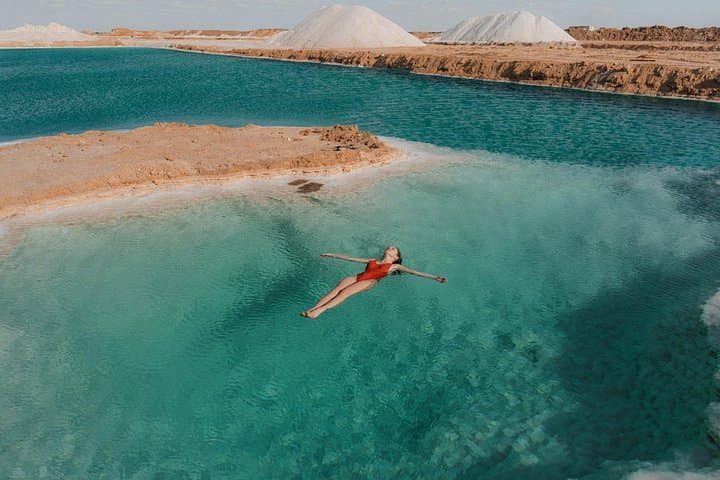
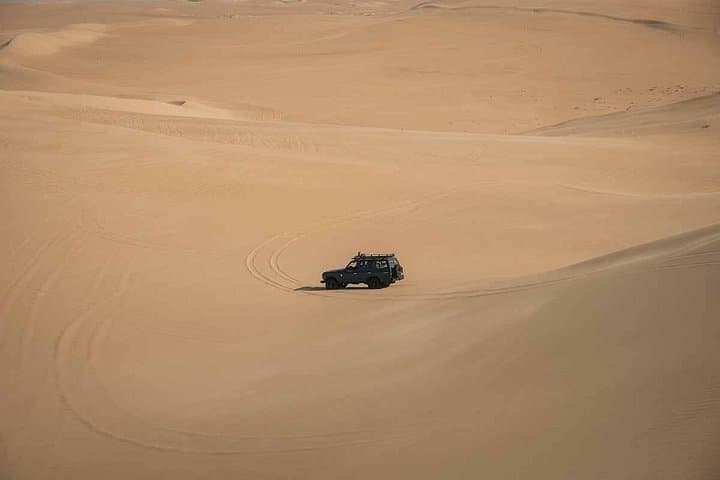
Culturally, Siwa is Berber-influenced with distinct architecture, olive groves, and local cuisine—try the Siwan dates and goat dishes served at village restaurants. The tour pairs quiet desert time with active elements: a 4x4 dune run, sandboarding, swims in high-salinity lakes (bring water for rinsing), and visits to Shali and Gebel al-Mawta tombs.
Practical guidance: travel light but layered—days on the dunes are hot, nights cool; carry 3–4 L of water per person, sturdy shoes for salt-crusted paths, and cash for small vendors. Plan to time dune activity for morning or late afternoon to avoid peak heat and preserve energy for walking on yielding sand.
Yes—many lakes allow floating in high-salinity water; avoid getting salt in your eyes and rinse with fresh water afterward.
The transfer is long—most itineraries include early departure and stops; expect several hours on paved roads followed by desert tracks, with breaks en route.
No—guides typically choose gentle slopes and provide instruction; balance on soft sand is easier than on packed snow but requires core control.
Services are limited—bring cash for small purchases and tips; major cards and ATMs are scarce compared with Cairo.
Egipto Excursiones operates guided outdoor trips and adventures with an emphasis on safety, stewardship, and memorable experiences.
The sun slants low over a field of sand and the wind writes fresh ridges across the Great Sand Sea. On arrival to Siwa after a long coastal-and-desert transfer, the dunes loom like a living map—soft slopes that dare you to climb, horizon-to-horizon pale under a dome of stars. Fatnas Lake catches the last light; the salt flats glitter and the air smells faintly of brine and olives.
The sun slants low over a field of sand and the wind writes fresh ridges across the Great Sand Sea. On arrival to Siwa after a long coastal-and-desert transfer, the dunes loom like a living map—soft slopes that dare you to climb, horizon-to-horizon pale under a dome of stars. Fatnas Lake catches the last light; the salt flats glitter and the air smells faintly of brine and olives.
Siwa sits on an ancient crossroads: Greco-Roman ruins, the Shali mud-brick fortress, and tombs cut into Gebel al-Mawta record Pharaonic, Ptolemaic and Roman presences and the island-like oasis culture that once sheltered oracles and travelers. Geologically the area is a Saharan depression ringed by limestone and wind-swept silica dunes—some ridges here reach tens of meters—while the salt-fed lakes and freshwater springs create microhabitats for birds and halophyte plants.
Culturally, Siwa is Berber-influenced with distinct architecture, olive groves, and local cuisine—try the Siwan dates and goat dishes served at village restaurants. The tour pairs quiet desert time with active elements: a 4x4 dune run, sandboarding, swims in high-salinity lakes (bring water for rinsing), and visits to Shali and Gebel al-Mawta tombs.
Practical guidance: travel light but layered—days on the dunes are hot, nights cool; carry 3–4 L of water per person, sturdy shoes for salt-crusted paths, and cash for small vendors. Plan to time dune activity for morning or late afternoon to avoid peak heat and preserve energy for walking on yielding sand.