THE ADVENTURE COLLECTIVE® · Independent discovery and booking for outdoor travel

A private 3-day escape into Siwa’s palm groves, salt lakes and the Mountain of the Dead. Expect buoyant salt‑lake dips, a 4x4 desert safari, and time in old-market bazaars for Berber crafts.
A private 3-day escape into Siwa’s palm groves, salt lakes and the Mountain of the Dead. Expect buoyant salt‑lake dips, a 4x4 desert safari, and time in old-market bazaars for Berber crafts.
Dawn breaks over palms and salt flats; a pale ribbon of road unwinds from the Mediterranean and carries you deep into Egypt’s western desert. By mid-afternoon the air shifts—sea wind gives way to dry, sun-baked stillness—and the palms of Siwa become an island of green in a gold ocean of dunes.
Verified experiences and guided adventures in the surrounding area.
Operated by Narmer Tours · Siwa, Matrouh Governorate
Dawn breaks over palms and salt flats; a pale ribbon of road unwinds from the Mediterranean and carries you deep into Egypt’s western desert. By mid-afternoon the air shifts—sea wind gives way to dry, sun-baked stillness—and the palms of Siwa become an island of green in a gold ocean of dunes.
This private 3-day itinerary threads natural wonders and living history. Siwa’s Oracle Temple, where Alexander the Great is said to have been declared a pharaoh, sits near sandstone necropolises on the plateau called the Mountain of the Dead. The surrounding geology is a study in wind-sculpted sand and compacted salt basins—hyper-saline lakes that buoy you like a natural spa. The 13th‑century Shali Fortress, built from kershef (salt-and-clay), recalls a town shaped by scarce water and resilient people; today, local olive presses and Berber crafts keep those traditions alive.
Expect short, sandy walks (10–45 minutes) to viewpoints and springs, a 4x4 traverse across dune fields where vehicles climb and descend soft ridgelines, and multiple swims in low-elevation, mineral-rich water. Terrain is predominantly flat oasis and sandy desert; dune faces can reach 50–200 m in height for those who choose to climb them.
Practical edge: travel in a sunproof hat and breathable layers, carry 2–3 liters of water per day, and time outdoor activity for early morning or late afternoon to avoid peak heat. Bring cash for local markets and modest tipping; respect local customs in dress and photography. With an experienced local guide and an air‑conditioned vehicle, this trip balances relaxed cultural immersion with short bursts of desert adventure.
Expect roughly 8–10 hours each way depending on route and stops; the itinerary follows the North Coast with a lunch stop in Marsa Matruh.
Yes—these are natural, shallow, mineral-rich waters; avoid swallowing water, rinse off after salt swims, and check for posted local advisories.
The trip is family-friendly and the operator lists wheelchair-accessible options; contact the provider about specific mobility needs and pickup logistics.
Yes—the private format allows adjustments such as extra photography stops, longer market time, or alternate accommodations on request.
Narmer Tours operates guided outdoor trips and adventures with an emphasis on safety, stewardship, and memorable experiences.

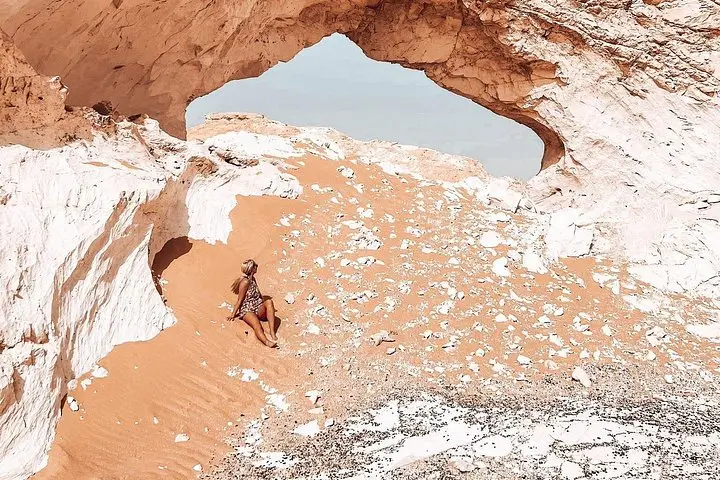


Dawn breaks over palms and salt flats; a pale ribbon of road unwinds from the Mediterranean and carries you deep into Egypt’s western desert. By mid-afternoon the air shifts—sea wind gives way to dry, sun-baked stillness—and the palms of Siwa become an island of green in a gold ocean of dunes.
Dawn breaks over palms and salt flats; a pale ribbon of road unwinds from the Mediterranean and carries you deep into Egypt’s western desert. By mid-afternoon the air shifts—sea wind gives way to dry, sun-baked stillness—and the palms of Siwa become an island of green in a gold ocean of dunes.
This private 3-day itinerary threads natural wonders and living history. Siwa’s Oracle Temple, where Alexander the Great is said to have been declared a pharaoh, sits near sandstone necropolises on the plateau called the Mountain of the Dead. The surrounding geology is a study in wind-sculpted sand and compacted salt basins—hyper-saline lakes that buoy you like a natural spa. The 13th‑century Shali Fortress, built from kershef (salt-and-clay), recalls a town shaped by scarce water and resilient people; today, local olive presses and Berber crafts keep those traditions alive.
Expect short, sandy walks (10–45 minutes) to viewpoints and springs, a 4x4 traverse across dune fields where vehicles climb and descend soft ridgelines, and multiple swims in low-elevation, mineral-rich water. Terrain is predominantly flat oasis and sandy desert; dune faces can reach 50–200 m in height for those who choose to climb them.
Practical edge: travel in a sunproof hat and breathable layers, carry 2–3 liters of water per day, and time outdoor activity for early morning or late afternoon to avoid peak heat. Bring cash for local markets and modest tipping; respect local customs in dress and photography. With an experienced local guide and an air‑conditioned vehicle, this trip balances relaxed cultural immersion with short bursts of desert adventure.