THE ADVENTURE COLLECTIVE® · Independent discovery and booking for outdoor travel

Leave Cairo behind for three days in Siwa: ancient springs, salt-built Shali ruins, and a private jeep crossing of the Western Desert. This compact itinerary pairs cultural sites with dune sunsets and Bedouin hospitality.
Leave Cairo behind for three days in Siwa: ancient springs, salt-built Shali ruins, and a private jeep crossing of the Western Desert. This compact itinerary pairs cultural sites with dune sunsets and Bedouin hospitality.
The sun lifts slow and wide over the Great Sand Sea as your convoy leaves Cairo’s pavements behind—an hour by hour retreat into a desert that presses its pale horizons close. By late afternoon the salt-built ruins of Shali appear, walls sunburnt ochre, and palms cluster around living springs where water still insists on returning life to the sand.
Verified experiences and guided adventures in the surrounding area.
Operated by This is Egypt Tours · Siwa Oasis, Matrouh Governorate
The sun lifts slow and wide over the Great Sand Sea as your convoy leaves Cairo’s pavements behind—an hour by hour retreat into a desert that presses its pale horizons close. By late afternoon the salt-built ruins of Shali appear, walls sunburnt ochre, and palms cluster around living springs where water still insists on returning life to the sand.
Siwa sits roughly 17 meters below sea level and has been a crossroads for Berber-speaking Siwan people and ancient Egyptians for millennia. The Temple of Amun (where Alexander the Great reportedly sought an oracle) and Cleopatra’s spring speak to layered histories; the Dead Mountain’s dark volcanic ridges tell a different, harder geological story.
Expect easy cultural walks through crumbling mudbrick alleys, short climbs to dune ridges for sunset, and a jeep safari across flat, wind-sculpted desert. The tour blends hotel nights with a Bedouin-style dinner and pockets of genuine solitude at Bir Wahed and Cleopatra’s Spring.
Practical edge: the sun is relentless—cover skin, carry 3–4 liters of water per day, and plan active exploration for morning or late afternoon. Footwear should handle both packed sand and loose dunes; a light wind layer helps when temperatures tumble after dusk. Bring a soft copy of passports as permits are required for desert travel.
This three-day loop is low on technical challenge but rich in space: the desert will test patience and reward quiet attention. Travel responsibly—leave no tracks by water sources and treat Siwa’s fragile salt architecture with care.
Yes—organizers require a soft copy of passports at least 24 hours before departure to issue desert permits.
No—most travel is by private vehicle with short, easy walks; suitable for travelers of average fitness.
The itinerary includes 4-star hotel nights in Siwa and a Bedouin-style dinner experience; hotels may be substituted with similar-category alternatives.
Yes—families can join, but keep children well-hydrated and supervised around springs, dunes, and any vehicle transfers.
This is Egypt Tours operates guided outdoor trips and adventures with an emphasis on safety, stewardship, and memorable experiences.
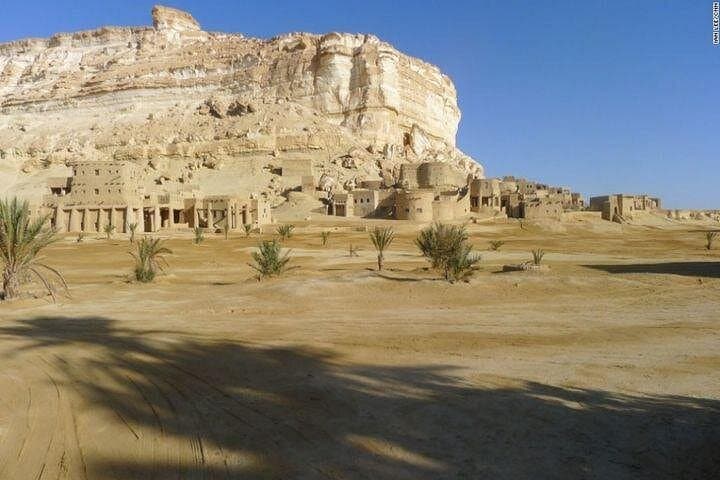


The sun lifts slow and wide over the Great Sand Sea as your convoy leaves Cairo’s pavements behind—an hour by hour retreat into a desert that presses its pale horizons close. By late afternoon the salt-built ruins of Shali appear, walls sunburnt ochre, and palms cluster around living springs where water still insists on returning life to the sand.
The sun lifts slow and wide over the Great Sand Sea as your convoy leaves Cairo’s pavements behind—an hour by hour retreat into a desert that presses its pale horizons close. By late afternoon the salt-built ruins of Shali appear, walls sunburnt ochre, and palms cluster around living springs where water still insists on returning life to the sand.
Siwa sits roughly 17 meters below sea level and has been a crossroads for Berber-speaking Siwan people and ancient Egyptians for millennia. The Temple of Amun (where Alexander the Great reportedly sought an oracle) and Cleopatra’s spring speak to layered histories; the Dead Mountain’s dark volcanic ridges tell a different, harder geological story.
Expect easy cultural walks through crumbling mudbrick alleys, short climbs to dune ridges for sunset, and a jeep safari across flat, wind-sculpted desert. The tour blends hotel nights with a Bedouin-style dinner and pockets of genuine solitude at Bir Wahed and Cleopatra’s Spring.
Practical edge: the sun is relentless—cover skin, carry 3–4 liters of water per day, and plan active exploration for morning or late afternoon. Footwear should handle both packed sand and loose dunes; a light wind layer helps when temperatures tumble after dusk. Bring a soft copy of passports as permits are required for desert travel.
This three-day loop is low on technical challenge but rich in space: the desert will test patience and reward quiet attention. Travel responsibly—leave no tracks by water sources and treat Siwa’s fragile salt architecture with care.