THE ADVENTURE COLLECTIVE® · Independent discovery and booking for outdoor travel

Cross volcanic plateaus, climb the Djenia pass and walk long golden dunes on this six-day private camel trek from Ouarzazate. Live with a Berber family, sleep under desert stars, and hike 15–18 km a day across diverse Sahara terrain.
Cross volcanic plateaus, climb the Djenia pass and walk long golden dunes on this six-day private camel trek from Ouarzazate. Live with a Berber family, sleep under desert stars, and hike 15–18 km a day across diverse Sahara terrain.
You step out of the jeep into a wide, dry noon that makes every color sharper—the ochre dunes, the black volcanic streaks of the Fajia plateau, a line of camels silhouetted against the horizon. The caravan packs slowly; the guides move with practiced ease. Over six days you follow tracks that have served caravans for centuries, sleeping in tents or under an expansive sky and sharing mint tea beside low campfires.
Verified experiences and guided adventures in the surrounding area.
Operated by Explore Morocco Travel SARL · Ouarzazate, Drâa-Tafilalet
You step out of the jeep into a wide, dry noon that makes every color sharper—the ochre dunes, the black volcanic streaks of the Fajia plateau, a line of camels silhouetted against the horizon. The caravan packs slowly; the guides move with practiced ease. Over six days you follow tracks that have served caravans for centuries, sleeping in tents or under an expansive sky and sharing mint tea beside low campfires.
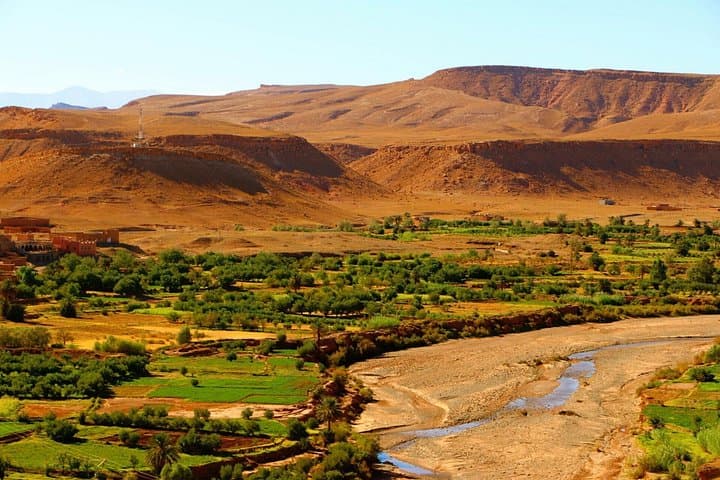
This route threads the Draa Valley’s date groves, crosses the Bani Mountains via the Djenia pass and spills into long dune fields like El Mariar and Erg Bartam. Geologically, the landscape shifts from fluvial terraces and volcanic plateaus to mobile sand, so hiking alternates between flat, compact ground and soft, energy-sapping dunes. Culturally, the trip centers on staying with a Berber family in Zagora—an opportunity to learn bread-baking, local songs and the rhythms of a pastoral life that grew along old trans-Saharan routes.
Expect daily walking of roughly 15–18 km on mixed terrain, morning starts to avoid heat, and nights that reveal a dense starfield. Practical points: bring high-SPF sun protection, gaiters or lightweight sand-proof shoes for dune sections, and a hydration system with at least 3 liters capacity. Respect local customs—ask before photographing people—and pack out non-biodegradable waste. The experience balances raw desert silence with the hospitality of hosts and guides; it’s demanding but deeply instructive, best for travelers prepared for long days on sand, simple camps, and an intimate look at southern Morocco’s desert life.
Expect 15–18 km most days over mixed terrain including sand; a moderate to strong fitness level is recommended and the guides set a steady pace with camel support for luggage.
Nights alternate between staying with a local Berber family in Zagora, simple desert camping in tents (or sleeping under the stars), and a rustic bungalow in Ouled Driss; facilities are basic.
No—camels are managed by experienced local drivers who carry luggage and lead the animals; passengers typically walk alongside or ride short stretches if offered.
Meals are provided (traditional Berber dishes, breakfasts, lunches and dinners); notify dietary restrictions at booking so guides can accommodate when possible.
Explore Morocco Travel SARL operates guided outdoor trips and adventures with an emphasis on safety, stewardship, and memorable experiences.
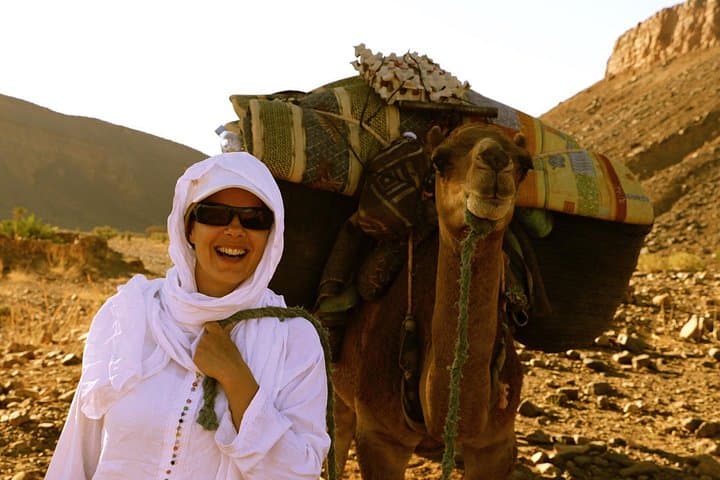
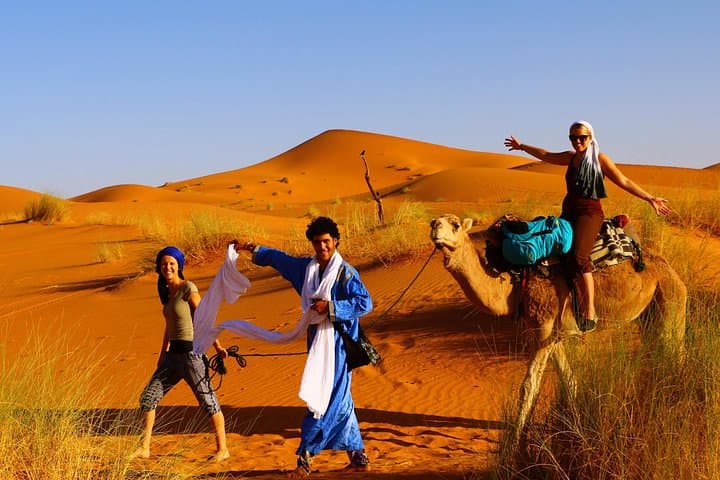
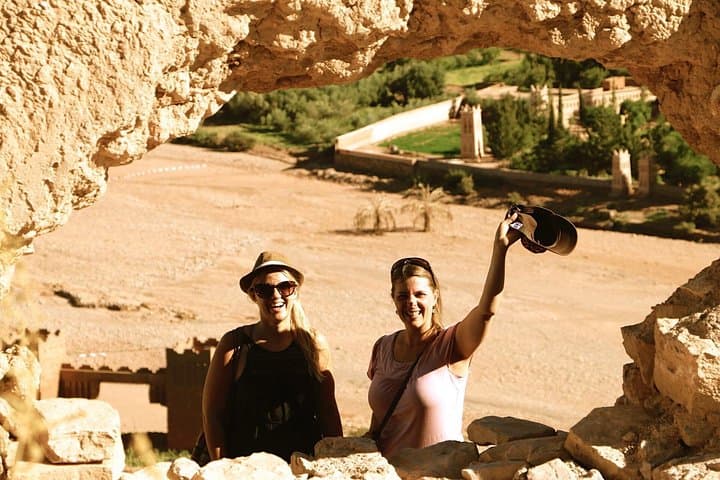
You step out of the jeep into a wide, dry noon that makes every color sharper—the ochre dunes, the black volcanic streaks of the Fajia plateau, a line of camels silhouetted against the horizon. The caravan packs slowly; the guides move with practiced ease. Over six days you follow tracks that have served caravans for centuries, sleeping in tents or under an expansive sky and sharing mint tea beside low campfires.
You step out of the jeep into a wide, dry noon that makes every color sharper—the ochre dunes, the black volcanic streaks of the Fajia plateau, a line of camels silhouetted against the horizon. The caravan packs slowly; the guides move with practiced ease. Over six days you follow tracks that have served caravans for centuries, sleeping in tents or under an expansive sky and sharing mint tea beside low campfires.
This route threads the Draa Valley’s date groves, crosses the Bani Mountains via the Djenia pass and spills into long dune fields like El Mariar and Erg Bartam. Geologically, the landscape shifts from fluvial terraces and volcanic plateaus to mobile sand, so hiking alternates between flat, compact ground and soft, energy-sapping dunes. Culturally, the trip centers on staying with a Berber family in Zagora—an opportunity to learn bread-baking, local songs and the rhythms of a pastoral life that grew along old trans-Saharan routes.
Expect daily walking of roughly 15–18 km on mixed terrain, morning starts to avoid heat, and nights that reveal a dense starfield. Practical points: bring high-SPF sun protection, gaiters or lightweight sand-proof shoes for dune sections, and a hydration system with at least 3 liters capacity. Respect local customs—ask before photographing people—and pack out non-biodegradable waste. The experience balances raw desert silence with the hospitality of hosts and guides; it’s demanding but deeply instructive, best for travelers prepared for long days on sand, simple camps, and an intimate look at southern Morocco’s desert life.