THE ADVENTURE COLLECTIVE® · Independent discovery and booking for outdoor travel
A concentrated, guided glacier hike across Falljökull—an outlet of Vatnajökull—offers three-plus hours walking on ice, close-up crevasses, and wide panoramas over Skaftafell National Park. Expect technical gear provided by guides, variable weather, and strict safety protocols.
A concentrated, guided glacier hike across Falljökull—an outlet of Vatnajökull—offers three-plus hours walking on ice, close-up crevasses, and wide panoramas over Skaftafell National Park. Expect technical gear provided by guides, variable weather, and strict safety protocols.
You step off the short Tröll bus and cold air from the ice reaches for your face—Falljökull glares ahead like a moving city of blue and white. Guides fit you with crampons and a helmet, and then the glacier begins to assert itself: deep crevasses yawn, pale moulins spiral like wells, and ice sculptures rearrange with each step. The field of hard, ancient ice pushes and pulls at the landscape, daring you to read its contours.
Verified experiences and guided adventures in the surrounding area.
Operated by Troll Expeditions · Skaftafell, Southern Region
You step off the short Tröll bus and cold air from the ice reaches for your face—Falljökull glares ahead like a moving city of blue and white. Guides fit you with crampons and a helmet, and then the glacier begins to assert itself: deep crevasses yawn, pale moulins spiral like wells, and ice sculptures rearrange with each step. The field of hard, ancient ice pushes and pulls at the landscape, daring you to read its contours.
Geology here is immediate. Falljökull is an outlet tongue of Vatnajökull, Europe’s largest ice cap; its forms are carved by centuries of flow and sudden summer melt. Skaftafell’s human story is compact—the area was protected as Skaftafell National Park in 1967 and folded into Vatnajökull National Park in 2008—so you’re walking where early conservation met living ice. The region’s sparse settlements and long coastal roads reflect a culture forged around sheep, sea, and shifting glaciers.
Practically: expect a 5‑hour excursion with roughly 3–3.5 hours on the ice, groups kept small and led by experienced guides. Dress in layers, bring water and snacks (the operator provides coffee and chocolate), and be ready for rapidly changing weather. Footwear should be stiff, waterproof hiking boots—the guides supply crampons and ropes. Photography windows open on ridges above the outlet and in sheltered crevasse-lit chambers; the light is often sharp, so fast shutter speeds help.
Safety is the guide’s domain—listen closely, move deliberately, and keep to instructed lines. If you want a true glacier experience with clear logistics and maximum exposure to Vatnajökull’s textures, this five‑hour outing delivers a concentrated, hands‑on education in cold, slow motion.
Travelers should have at least a moderate level of fitness: steady footing for several hours and the ability to follow a guide over uneven, icy terrain.
Yes—guides supply helmets, crampons, and any rope systems needed; they also brief you on safe glacier travel techniques.
Tours may be canceled for safety; operators usually refund full amount if canceled at least 24 hours before departure or in unsafe conditions.
Age and size restrictions vary by operator; check with the provider—children must be able to walk the required distance and follow safety instructions.
Troll Expeditions operates guided outdoor trips and adventures with an emphasis on safety, stewardship, and memorable experiences.
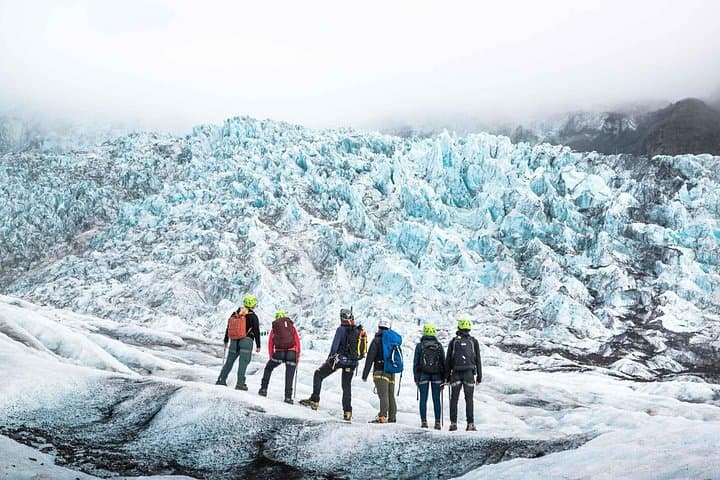


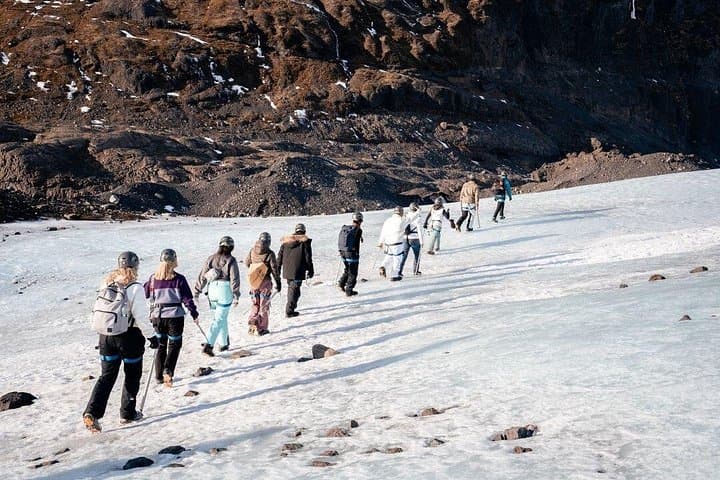
You step off the short Tröll bus and cold air from the ice reaches for your face—Falljökull glares ahead like a moving city of blue and white. Guides fit you with crampons and a helmet, and then the glacier begins to assert itself: deep crevasses yawn, pale moulins spiral like wells, and ice sculptures rearrange with each step. The field of hard, ancient ice pushes and pulls at the landscape, daring you to read its contours.
You step off the short Tröll bus and cold air from the ice reaches for your face—Falljökull glares ahead like a moving city of blue and white. Guides fit you with crampons and a helmet, and then the glacier begins to assert itself: deep crevasses yawn, pale moulins spiral like wells, and ice sculptures rearrange with each step. The field of hard, ancient ice pushes and pulls at the landscape, daring you to read its contours.
Geology here is immediate. Falljökull is an outlet tongue of Vatnajökull, Europe’s largest ice cap; its forms are carved by centuries of flow and sudden summer melt. Skaftafell’s human story is compact—the area was protected as Skaftafell National Park in 1967 and folded into Vatnajökull National Park in 2008—so you’re walking where early conservation met living ice. The region’s sparse settlements and long coastal roads reflect a culture forged around sheep, sea, and shifting glaciers.
Practically: expect a 5‑hour excursion with roughly 3–3.5 hours on the ice, groups kept small and led by experienced guides. Dress in layers, bring water and snacks (the operator provides coffee and chocolate), and be ready for rapidly changing weather. Footwear should be stiff, waterproof hiking boots—the guides supply crampons and ropes. Photography windows open on ridges above the outlet and in sheltered crevasse-lit chambers; the light is often sharp, so fast shutter speeds help.
Safety is the guide’s domain—listen closely, move deliberately, and keep to instructed lines. If you want a true glacier experience with clear logistics and maximum exposure to Vatnajökull’s textures, this five‑hour outing delivers a concentrated, hands‑on education in cold, slow motion.
