THE ADVENTURE COLLECTIVE® · Independent discovery and booking for outdoor travel

A full-day loop from Seattle that pairs the Skagit Valley’s famed tulip fields with La Conner’s waterfront charm and the cliff-and-bridge drama of Deception Pass. Ideal for photographers, birders, and anyone looking for an accessible day in Northwest landscapes.
A full-day loop from Seattle that pairs the Skagit Valley’s famed tulip fields with La Conner’s waterfront charm and the cliff-and-bridge drama of Deception Pass. Ideal for photographers, birders, and anyone looking for an accessible day in Northwest landscapes.
You step out of the minivan and a ribbon of color opens across the valley—endless rows of tulips reaching toward Mount Baker’s snowy cone while gulls wheel over the Swinomish Channel. The air smells faintly of earth and salt; the road hums with spring traffic, but in the fields you feel the landscape breathing.
Verified experiences and guided adventures in the surrounding area.
Operated by BARBIL TOURS · La Conner, Washington
You step out of the minivan and a ribbon of color opens across the valley—endless rows of tulips reaching toward Mount Baker’s snowy cone while gulls wheel over the Swinomish Channel. The air smells faintly of earth and salt; the road hums with spring traffic, but in the fields you feel the landscape breathing.
The Skagit Valley rose to fame through its bulb industry; Dutch growers and local farms transformed glacial plains into a seasonal economy that peaks March–May. La Conner sits on pilings above the channel, its waterfront buildings echoing a fishing-and-trade past and the living culture of the Swinomish people nearby. Geologically, the area is a mix of glacial outwash plains and steep Puget Sound shorelines—Deception Pass cuts where glaciers and tidal currents met, creating the dramatic bridge and whirlpools below.
On a day tour you’ll alternate short walks and scenic drives: tulip field viewpoints, a stroll through the Kukutali Preserve’s tidal edge, and a stop at Deception Pass with its hair-raising bridge overlook. Expect light walking on farm tracks, mixed paved boardwalks, and a few bluff viewpoints—nothing technical but bring steady shoes.
Practical tips: travel light, layer for wind and sun, and plan for photo stops. Peak bloom varies year to year—mid-April is usually reliable. The tour packs a lot into a 10-hour day, so hydrate, carry binoculars for birding in the river sloughs, and keep an eye on tide times if you want the dramatic water flows at Deception Pass. This is a sensory day: color, salt spray, and the steady rhythm of a working rural landscape.
Peak bloom generally falls between late March and mid‑April; exact timing varies by weather, so local bloom maps and growers’ reports are useful.
Yes—this is marketed as easy with short walks; the tour accommodates strollers and has minimal technical hiking.
Most itineraries include a waterfront lunch stop in La Conner with time to walk the historic downtown and shoreline.
Yes—seals, porpoises, and shorebirds are commonly seen; whales are possible but not guaranteed.
BARBIL TOURS operates guided outdoor trips and adventures with an emphasis on safety, stewardship, and memorable experiences.

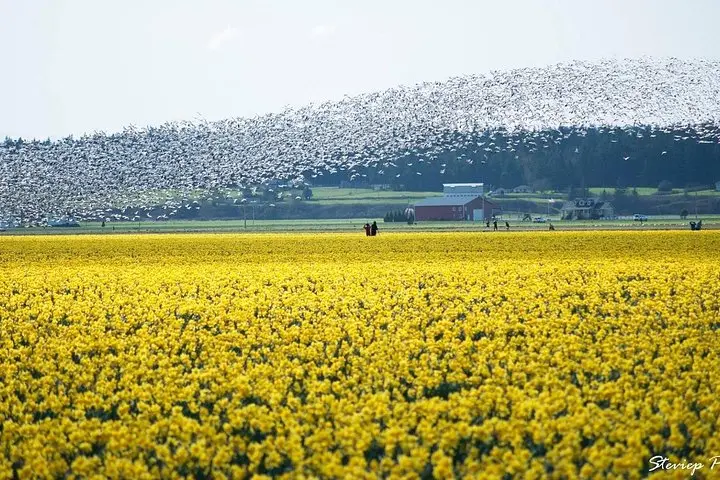


You step out of the minivan and a ribbon of color opens across the valley—endless rows of tulips reaching toward Mount Baker’s snowy cone while gulls wheel over the Swinomish Channel. The air smells faintly of earth and salt; the road hums with spring traffic, but in the fields you feel the landscape breathing.
You step out of the minivan and a ribbon of color opens across the valley—endless rows of tulips reaching toward Mount Baker’s snowy cone while gulls wheel over the Swinomish Channel. The air smells faintly of earth and salt; the road hums with spring traffic, but in the fields you feel the landscape breathing.
The Skagit Valley rose to fame through its bulb industry; Dutch growers and local farms transformed glacial plains into a seasonal economy that peaks March–May. La Conner sits on pilings above the channel, its waterfront buildings echoing a fishing-and-trade past and the living culture of the Swinomish people nearby. Geologically, the area is a mix of glacial outwash plains and steep Puget Sound shorelines—Deception Pass cuts where glaciers and tidal currents met, creating the dramatic bridge and whirlpools below.
On a day tour you’ll alternate short walks and scenic drives: tulip field viewpoints, a stroll through the Kukutali Preserve’s tidal edge, and a stop at Deception Pass with its hair-raising bridge overlook. Expect light walking on farm tracks, mixed paved boardwalks, and a few bluff viewpoints—nothing technical but bring steady shoes.
Practical tips: travel light, layer for wind and sun, and plan for photo stops. Peak bloom varies year to year—mid-April is usually reliable. The tour packs a lot into a 10-hour day, so hydrate, carry binoculars for birding in the river sloughs, and keep an eye on tide times if you want the dramatic water flows at Deception Pass. This is a sensory day: color, salt spray, and the steady rhythm of a working rural landscape.