THE ADVENTURE COLLECTIVE® · Independent discovery and booking for outdoor travel

Drive the raw, fog-lashed coast from Swakopmund to Cape Cross and stand beside one of the world’s largest Cape fur seal rookeries. This four-hour tour mixes wildlife viewing, shipwreck history and desert ecology with easy walks and guided interpretation.
Drive the raw, fog-lashed coast from Swakopmund to Cape Cross and stand beside one of the world’s largest Cape fur seal rookeries. This four-hour tour mixes wildlife viewing, shipwreck history and desert ecology with easy walks and guided interpretation.
The wind on Namibia’s Skeleton Coast carries salt and sand like a blunt instrument; you feel it before you see the colony — a carpet of black-and-silver bodies rolling and jostling on ochre sand. Drive north from Swakopmund, the Atlantic on your left and an expanse of desert on your right, until the boardwalks at Cape Cross bring you within arm’s reach of thousands of Cape fur seals.
Verified experiences and guided adventures in the surrounding area.
Operated by Sandwichharbourtours.com · Cape Cross, Erongo
The wind on Namibia’s Skeleton Coast carries salt and sand like a blunt instrument; you feel it before you see the colony — a carpet of black-and-silver bodies rolling and jostling on ochre sand. Drive north from Swakopmund, the Atlantic on your left and an expanse of desert on your right, until the boardwalks at Cape Cross bring you within arm’s reach of thousands of Cape fur seals.
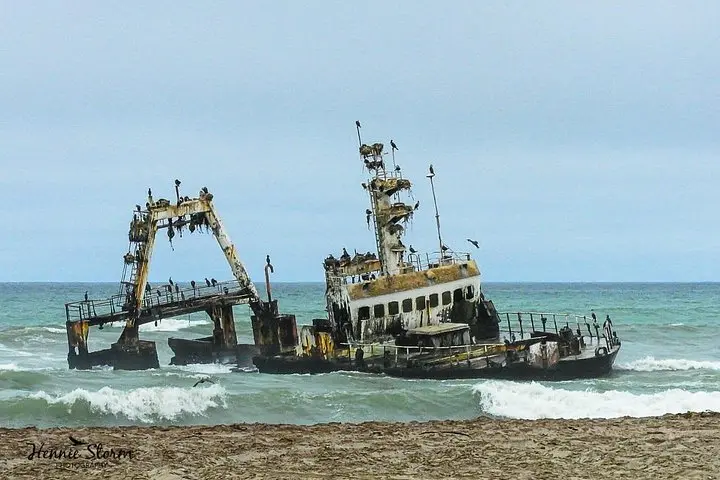
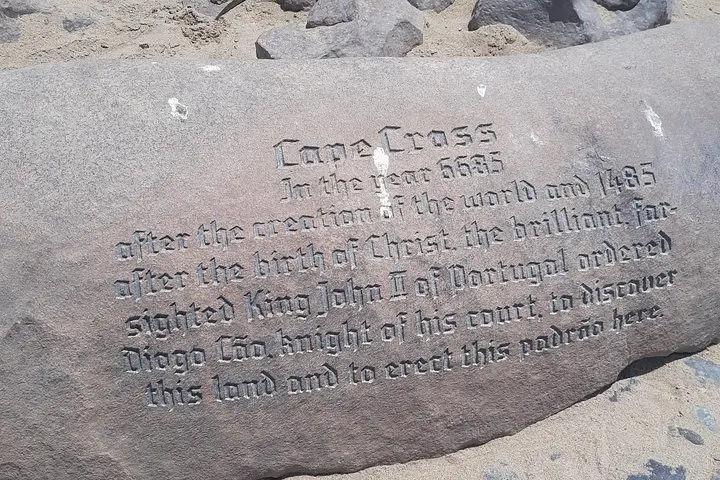
This stretch of coast preserves maritime history and stark geology: shipwreck hulks pockmark the shoreline where fog and currents meet, and lone monuments record early European landings — including the marble cross Diego erected on his 1493 voyage. The desert here is driven by fog; lichens and low succulents scrape out an existence on wind-scoured dunes, taught by a climate that rarely yields rain.
The tour blends short interpretive walks (lichen fields, a shipwreck stop) with time on the viewing platform at the seal reserve. Expect close photographic opportunities, loud vocalizations and an active rookery depending on season. Guides explain local ecology, past salvage and the region’s role in coastal fisheries.
Practical edge: dress windproof and sun-smart, bring water and binoculars, and keep distance from pups — seals are fast and the colony’s scent is memorable. The round-trip is about four hours with short walks on uneven sand and boardwalks; moderate fitness and stable footwear make it painless. If you want more shipwrecks and remoter desert, consider the full-day Skeleton Coast extension.
This is a roughly 4-hour round trip from Swakopmund with stops at a shipwreck, lichen field and the Cape Cross seal colony; light lunch, bottled water and transport in an air-conditioned vehicle are included.
There are boardwalks and viewing platforms that bring you near the colony; you must stay on paths and follow your guide to avoid disturbing animals.
Infants must sit on laps; the operator does not recommend the tour for pregnant travelers or those with serious spinal or heart conditions due to bumpy driving and outdoor conditions.
Seals are present year-round; breeding peaks vary, but calmer weather and clearer light in the dry winter months (May–September) often offer better photography conditions.
Sandwichharbourtours.com operates guided outdoor trips and adventures with an emphasis on safety, stewardship, and memorable experiences.
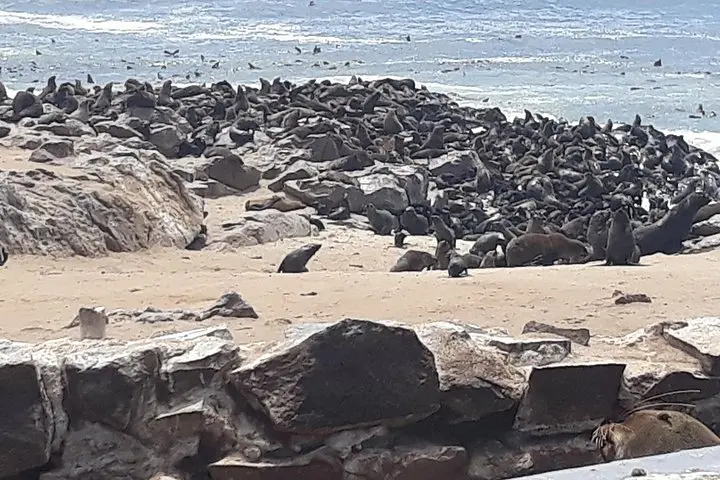
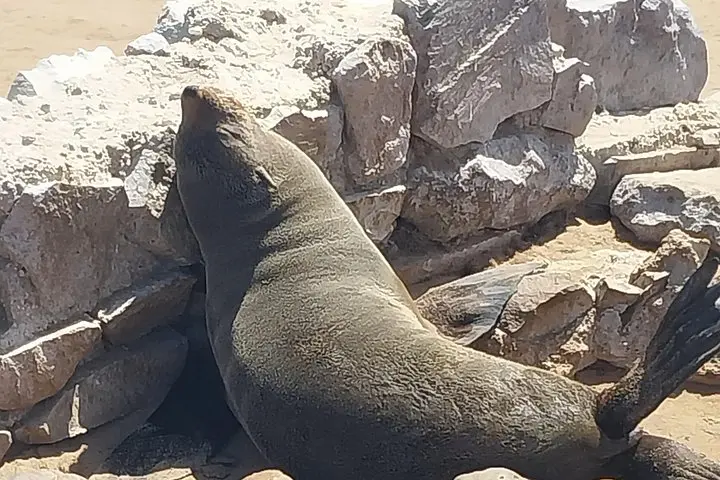
The wind on Namibia’s Skeleton Coast carries salt and sand like a blunt instrument; you feel it before you see the colony — a carpet of black-and-silver bodies rolling and jostling on ochre sand. Drive north from Swakopmund, the Atlantic on your left and an expanse of desert on your right, until the boardwalks at Cape Cross bring you within arm’s reach of thousands of Cape fur seals.
The wind on Namibia’s Skeleton Coast carries salt and sand like a blunt instrument; you feel it before you see the colony — a carpet of black-and-silver bodies rolling and jostling on ochre sand. Drive north from Swakopmund, the Atlantic on your left and an expanse of desert on your right, until the boardwalks at Cape Cross bring you within arm’s reach of thousands of Cape fur seals.
This stretch of coast preserves maritime history and stark geology: shipwreck hulks pockmark the shoreline where fog and currents meet, and lone monuments record early European landings — including the marble cross Diego erected on his 1493 voyage. The desert here is driven by fog; lichens and low succulents scrape out an existence on wind-scoured dunes, taught by a climate that rarely yields rain.
The tour blends short interpretive walks (lichen fields, a shipwreck stop) with time on the viewing platform at the seal reserve. Expect close photographic opportunities, loud vocalizations and an active rookery depending on season. Guides explain local ecology, past salvage and the region’s role in coastal fisheries.
Practical edge: dress windproof and sun-smart, bring water and binoculars, and keep distance from pups — seals are fast and the colony’s scent is memorable. The round-trip is about four hours with short walks on uneven sand and boardwalks; moderate fitness and stable footwear make it painless. If you want more shipwrecks and remoter desert, consider the full-day Skeleton Coast extension.