THE ADVENTURE COLLECTIVE® · Independent discovery and booking for outdoor travel

Stand inches from Michelangelo’s David with a licensed art historian, then choose a combo—Duomo terraces, wine-window tasting, or an Arno boat ride—to broaden your Florence story. Expect skip‑the‑line access, focused interpretation, and practical logistics like bag checks and accessibility.
Stand inches from Michelangelo’s David with a licensed art historian, then choose a combo—Duomo terraces, wine-window tasting, or an Arno boat ride—to broaden your Florence story. Expect skip‑the‑line access, focused interpretation, and practical logistics like bag checks and accessibility.
A narrow Florentine street opens onto a squat stone façade; stepping through the museum doors, the city’s heat gives way to cool air and hushed footsteps. Ahead, Michelangelo’s David dominates the room—tall, lit from above, every tendon and thought carved into Carrara marble. The guide’s voice threads context through the quiet: a sculptor’s defiant apprenticeship, patronage that rewrote civic identity, and a block of stone that traveled from the quarries to the heart of Renaissance Florence.
Verified experiences and guided adventures in the surrounding area.
Operated by Towns of Italy · Florence, Tuscany
A narrow Florentine street opens onto a squat stone façade; stepping through the museum doors, the city’s heat gives way to cool air and hushed footsteps. Ahead, Michelangelo’s David dominates the room—tall, lit from above, every tendon and thought carved into Carrara marble. The guide’s voice threads context through the quiet: a sculptor’s defiant apprenticeship, patronage that rewrote civic identity, and a block of stone that traveled from the quarries to the heart of Renaissance Florence.
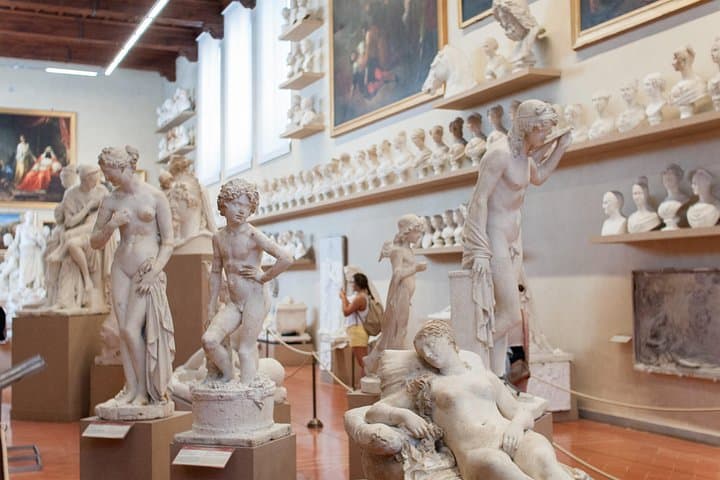
The Galleria dell’Accademia traces its roots to the late 18th century as a school collection that became a public gallery. The Davids and the unfinished Prisoners are part artistic showpiece, part technical manual—teaching students about form, proportion, and marble’s behavior. Geologically, much of the gallery’s star material is Carrara marble, quarried in the nearby Apuan Alps; culturally, the Accademia sits amid Florence’s compact weave of markets, chapels, and narrow alleys where Medici power and artisan guilds once intersected.
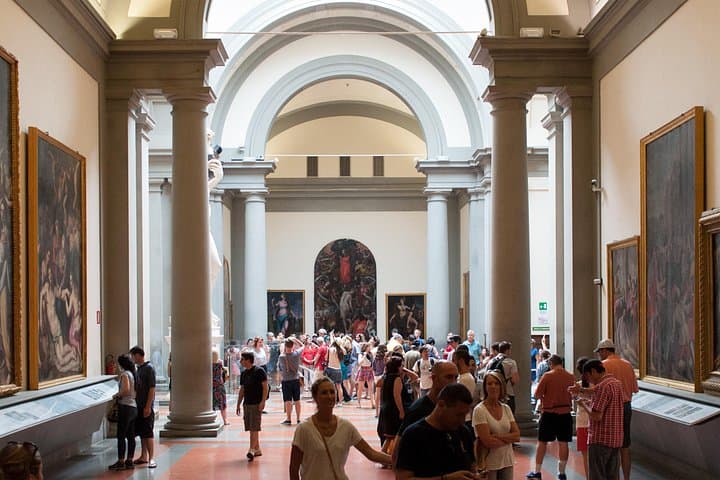
Practical navigation matters: this is an indoor museum with bag checks and restrictions—no large backpacks or liquids inside. Tours commonly run 90 minutes and come with skip-the-line entry; combo options link the visit to walking tours, Duomo terraces, wine-windows, or an Arno boat ride for a fuller city read.
Prepare by arriving 15 minutes early, dressing in light layers for temperature shifts, and planning time afterward if you want to linger. Phones are fine for photos without flash; bring a reusable water bottle to refill between stops and expect intermittent standing and short walks—this is as much about attention as endurance.
Yes—skip-the-line entrance to the Accademia Gallery is included with the guided tour.
The tour listing notes wheelchair accessibility; confirm accessibility details when booking and at meeting points.
Non-flash photography is typically allowed in the Accademia, but follow the guide and museum staff directions on restrictions.
Combo options pair the Accademia visit with walking tours, Duomo terraces, wine-window tastings, Uffizi masterclasses, or an Arno boat ride—each has specific start times and secondary meeting points listed at booking.
Towns of Italy operates guided outdoor trips and adventures with an emphasis on safety, stewardship, and memorable experiences.
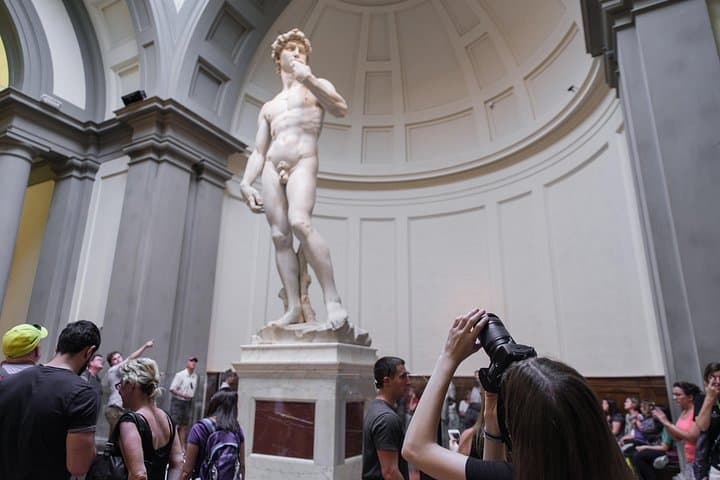
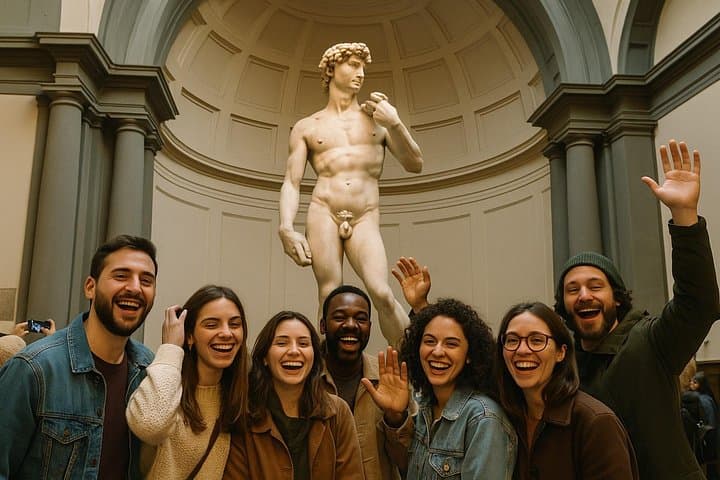
A narrow Florentine street opens onto a squat stone façade; stepping through the museum doors, the city’s heat gives way to cool air and hushed footsteps. Ahead, Michelangelo’s David dominates the room—tall, lit from above, every tendon and thought carved into Carrara marble. The guide’s voice threads context through the quiet: a sculptor’s defiant apprenticeship, patronage that rewrote civic identity, and a block of stone that traveled from the quarries to the heart of Renaissance Florence.
A narrow Florentine street opens onto a squat stone façade; stepping through the museum doors, the city’s heat gives way to cool air and hushed footsteps. Ahead, Michelangelo’s David dominates the room—tall, lit from above, every tendon and thought carved into Carrara marble. The guide’s voice threads context through the quiet: a sculptor’s defiant apprenticeship, patronage that rewrote civic identity, and a block of stone that traveled from the quarries to the heart of Renaissance Florence.
The Galleria dell’Accademia traces its roots to the late 18th century as a school collection that became a public gallery. The Davids and the unfinished Prisoners are part artistic showpiece, part technical manual—teaching students about form, proportion, and marble’s behavior. Geologically, much of the gallery’s star material is Carrara marble, quarried in the nearby Apuan Alps; culturally, the Accademia sits amid Florence’s compact weave of markets, chapels, and narrow alleys where Medici power and artisan guilds once intersected.
Practical navigation matters: this is an indoor museum with bag checks and restrictions—no large backpacks or liquids inside. Tours commonly run 90 minutes and come with skip-the-line entry; combo options link the visit to walking tours, Duomo terraces, wine-windows, or an Arno boat ride for a fuller city read.
Prepare by arriving 15 minutes early, dressing in light layers for temperature shifts, and planning time afterward if you want to linger. Phones are fine for photos without flash; bring a reusable water bottle to refill between stops and expect intermittent standing and short walks—this is as much about attention as endurance.