THE ADVENTURE COLLECTIVE® · Independent discovery and booking for outdoor travel

Skip the queue and move straight into Louvre Abu Dhabi’s luminous dome and cross-cultural galleries. This self-guided visit highlights the museum’s architectural drama, core collections, and practical tips for making the most of a 2–3 hour visit.
Skip the queue and move straight into Louvre Abu Dhabi’s luminous dome and cross-cultural galleries. This self-guided visit highlights the museum’s architectural drama, core collections, and practical tips for making the most of a 2–3 hour visit.
You step across the walkway and the dome takes over the sky: a geometric lattice of silver that fractures sunlight into a slow, falling rain of light.
Verified experiences and guided adventures in the surrounding area.
Operated by Vivatrek · Abu Dhabi, Abu Dhabi
You step across the walkway and the dome takes over the sky: a geometric lattice of silver that fractures sunlight into a slow, falling rain of light.
On Saadiyat Island the museum reads like a compact atlas—galleries arranged as rooms of conversation between civilizations. The galleries move from prehistory and Islamic art to European masters and contemporary installations, so each room feels like a new dialect. Outside, the museum’s low-slung white buildings float against the Arabian Gulf; inside, controlled light and cool stone let works from across millennia breathe.
The Louvre Abu Dhabi opened in 2017 as a cultural collaboration between France and the UAE. Its architecture by Jean Nouvel deliberately blurs indoor and outdoor, referencing traditional Arabic courtyard plans while using modern engineering to hold that iconic dome. Expect Egyptian antiquities, Islamic calligraphy, and rotating special exhibitions that redraw the narrative with each visit.
Plan on 2–3 hours for a focused self-guided visit; audio guides in Arabic and English add context without slowing your flow. The skip-the-line ticket smooths entry but not the decision-making—map your must-sees before you arrive. Cafés overlook the water and make a good pause between wings. Accessibility is strong: ramps and level paths mean minimal barriers for most visitors.
Practical: arrive in the morning or late afternoon to avoid peak heat and school groups, hydrate well before you enter, and leave time to stroll the waterfront collection. The museum rewards attention—stand still in a gallery and the city’s noise falls away, letting the works speak.
A timed skip-the-line ticket grants priority entry at your selected slot but you should arrive 15 minutes early to clear security screenings.
This ticket covers admission only; guided tours and special-program access may require separate booking or an on-site fee.
Yes—ramps, elevators, and accessible routes are provided, and most public areas and restrooms are designed for wheelchair access.
Small bags are permitted but security may inspect them; outside food is discouraged though cafés and seating areas are available for dining.
Vivatrek operates guided outdoor trips and adventures with an emphasis on safety, stewardship, and memorable experiences.

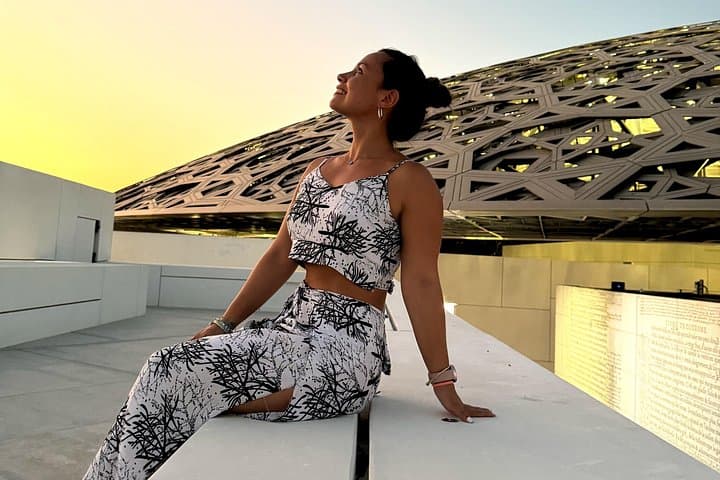


You step across the walkway and the dome takes over the sky: a geometric lattice of silver that fractures sunlight into a slow, falling rain of light.
You step across the walkway and the dome takes over the sky: a geometric lattice of silver that fractures sunlight into a slow, falling rain of light.
On Saadiyat Island the museum reads like a compact atlas—galleries arranged as rooms of conversation between civilizations. The galleries move from prehistory and Islamic art to European masters and contemporary installations, so each room feels like a new dialect. Outside, the museum’s low-slung white buildings float against the Arabian Gulf; inside, controlled light and cool stone let works from across millennia breathe.
The Louvre Abu Dhabi opened in 2017 as a cultural collaboration between France and the UAE. Its architecture by Jean Nouvel deliberately blurs indoor and outdoor, referencing traditional Arabic courtyard plans while using modern engineering to hold that iconic dome. Expect Egyptian antiquities, Islamic calligraphy, and rotating special exhibitions that redraw the narrative with each visit.
Plan on 2–3 hours for a focused self-guided visit; audio guides in Arabic and English add context without slowing your flow. The skip-the-line ticket smooths entry but not the decision-making—map your must-sees before you arrive. Cafés overlook the water and make a good pause between wings. Accessibility is strong: ramps and level paths mean minimal barriers for most visitors.
Practical: arrive in the morning or late afternoon to avoid peak heat and school groups, hydrate well before you enter, and leave time to stroll the waterfront collection. The museum rewards attention—stand still in a gallery and the city’s noise falls away, letting the works speak.