THE ADVENTURE COLLECTIVE® · Independent discovery and booking for outdoor travel

Step through the cobalt gate into Majorelle Garden and move on to the Berber and Yves Saint Laurent museums with a single timed ticket. This skip-the-line entry pairs botanical calm with cultural depth—ideal for a focused morning in Marrakech.
Step through the cobalt gate into Majorelle Garden and move on to the Berber and Yves Saint Laurent museums with a single timed ticket. This skip-the-line entry pairs botanical calm with cultural depth—ideal for a focused morning in Marrakech.
Walking through the cobalt gate of Majorelle Garden, you step from Marrakech’s heat into a deliberate oasis where planted palms, towering cacti and lily ponds set a calm pace. Pathways wind between blue-painted villas and fragrant beds; the sound of fountains punctuates the city’s distant hum and birds pick at figs overhead.
Verified experiences and guided adventures in the surrounding area.
Operated by Sunny Morocco · Marrakech, Marrakech-Safi
Walking through the cobalt gate of Majorelle Garden, you step from Marrakech’s heat into a deliberate oasis where planted palms, towering cacti and lily ponds set a calm pace. Pathways wind between blue-painted villas and fragrant beds; the sound of fountains punctuates the city’s distant hum and birds pick at figs overhead.
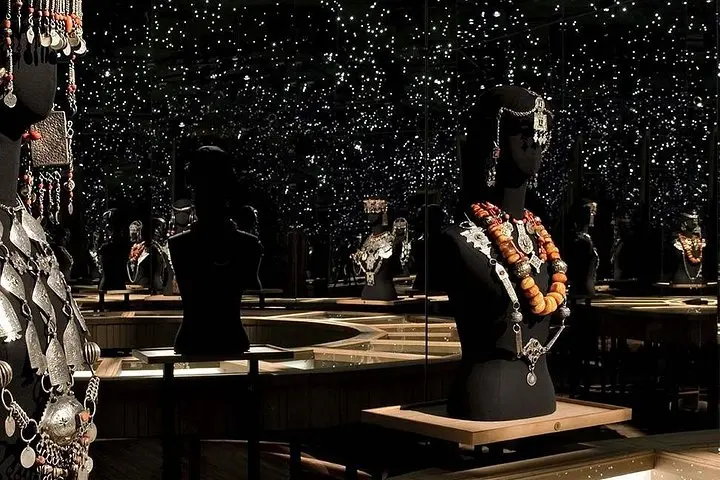
The garden began as painter Jacques Majorelle’s private botanical collection in the 1920s and later became a public refuge after Yves Saint Laurent and Pierre Bergé purchased and restored it in the 1980s. The adjacent Berber Museum presents crafted textiles, jewelry and household objects that trace Amazigh history across Morocco’s Atlas and Rif regions, while the Yves Saint Laurent Museum documents the designer’s relationship with Marrakech and displays sketches and garments in a modern, glass-fronted gallery.
Geology here is indirect—the garden’s succulents and cactus beds speak to arid-adapted plant communities typical of North Africa; the stonework channels seasonal rain into planted basins. Culturally, the site bridges colonial-era European design and living Moroccan craft traditions found inside the Berber Museum.
Practical guidance: reserve a timed ticket to avoid queues and arrive early morning for softer light and cooler temperatures. Wear comfortable shoes for paved and compacted paths, bring water and sun protection, and allow 60–120 minutes to see garden and museums. Photography is permitted but respect exhibit signage. Accessibility is good for strollers and wheelchairs, but some interior spaces have limited circulation. This entry provides a compact, polished cultural stop in the heart of the Red City.
Allow 60–120 minutes to see the Majorelle Garden, the Berber Museum and a brief tour of the Yves Saint Laurent Museum at a relaxed pace.
Yes—the ticket includes a confirmed time; arriving within your slot minimizes waiting and helps manage visitor counts.
Most outdoor paths and museums are accessible, with ramps and paved surfaces; some interior galleries may have tighter circulation—check onsite staff for assistance.
Timed entries can sell out; this offering lets you skip lines, but limited on-site tickets may still be available depending on the day.
Sunny Morocco operates guided outdoor trips and adventures with an emphasis on safety, stewardship, and memorable experiences.
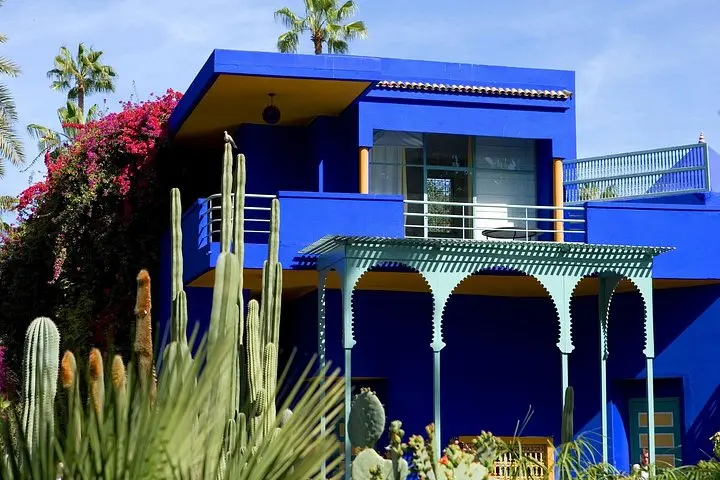
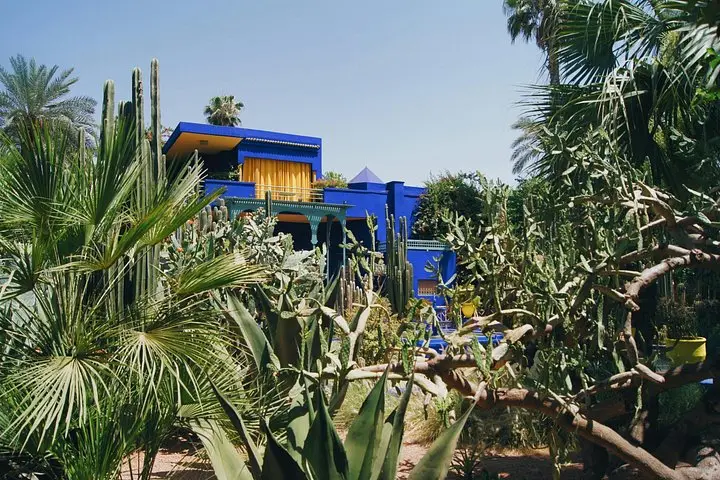
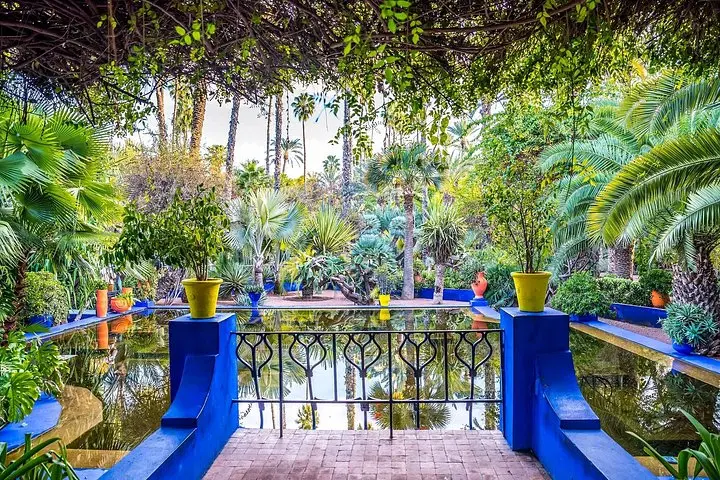
Walking through the cobalt gate of Majorelle Garden, you step from Marrakech’s heat into a deliberate oasis where planted palms, towering cacti and lily ponds set a calm pace. Pathways wind between blue-painted villas and fragrant beds; the sound of fountains punctuates the city’s distant hum and birds pick at figs overhead.
Walking through the cobalt gate of Majorelle Garden, you step from Marrakech’s heat into a deliberate oasis where planted palms, towering cacti and lily ponds set a calm pace. Pathways wind between blue-painted villas and fragrant beds; the sound of fountains punctuates the city’s distant hum and birds pick at figs overhead.
The garden began as painter Jacques Majorelle’s private botanical collection in the 1920s and later became a public refuge after Yves Saint Laurent and Pierre Bergé purchased and restored it in the 1980s. The adjacent Berber Museum presents crafted textiles, jewelry and household objects that trace Amazigh history across Morocco’s Atlas and Rif regions, while the Yves Saint Laurent Museum documents the designer’s relationship with Marrakech and displays sketches and garments in a modern, glass-fronted gallery.
Geology here is indirect—the garden’s succulents and cactus beds speak to arid-adapted plant communities typical of North Africa; the stonework channels seasonal rain into planted basins. Culturally, the site bridges colonial-era European design and living Moroccan craft traditions found inside the Berber Museum.
Practical guidance: reserve a timed ticket to avoid queues and arrive early morning for softer light and cooler temperatures. Wear comfortable shoes for paved and compacted paths, bring water and sun protection, and allow 60–120 minutes to see garden and museums. Photography is permitted but respect exhibit signage. Accessibility is good for strollers and wheelchairs, but some interior spaces have limited circulation. This entry provides a compact, polished cultural stop in the heart of the Red City.