THE ADVENTURE COLLECTIVE® · Independent discovery and booking for outdoor travel

Spend a relaxed half-day exploring Jacques Majorelle’s cobalt garden and then trade pathways for the slow rhythm of a camel in the Palmeraie. This skip-the-line combo pairs readable history with hands-on desert experience.
Spend a relaxed half-day exploring Jacques Majorelle’s cobalt garden and then trade pathways for the slow rhythm of a camel in the Palmeraie. This skip-the-line combo pairs readable history with hands-on desert experience.
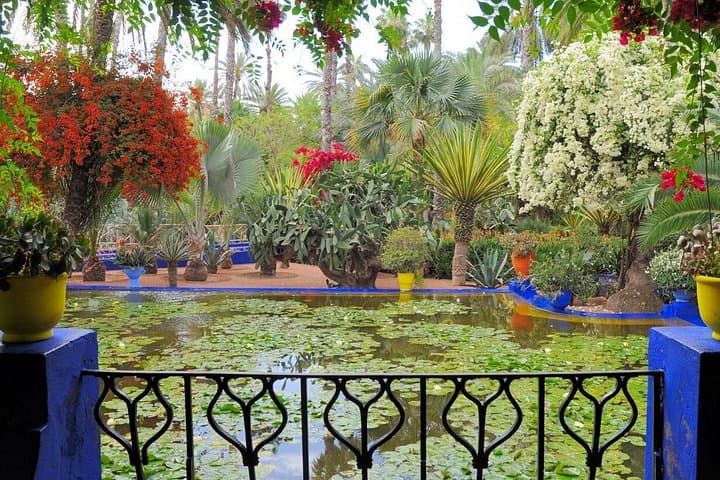
You step off the minivan into a sudden pocket of blue and green—walls painted that deep Majorelle blue, fountains sighing, and succulents fanning in organized clumps. The paths of Jardin Majorelle carve a cool route through palms, cactus beds and paved alleys, the noise of Marrakech falling away behind you.
Verified experiences and guided adventures in the surrounding area.
Operated by Le jardin secret · Marrakech, Marrakech-Safi
You step off the minivan into a sudden pocket of blue and green—walls painted that deep Majorelle blue, fountains sighing, and succulents fanning in organized clumps. The paths of Jardin Majorelle carve a cool route through palms, cactus beds and paved alleys, the noise of Marrakech falling away behind you.
Designed by French painter Jacques Majorelle in the 1920s and later restored by Yves Saint Laurent and Pierre Bergé, the garden is an exercise in contrast: irrigated lawns and exotic plants arranged against ochre city light. The attached Berber Museum offers a compact look at North African craft traditions while the plantings reveal the region’s efforts to sustain green oases in an arid landscape.
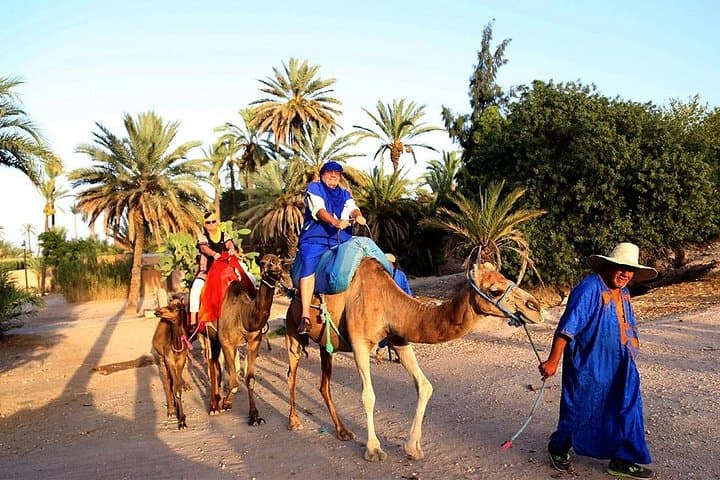
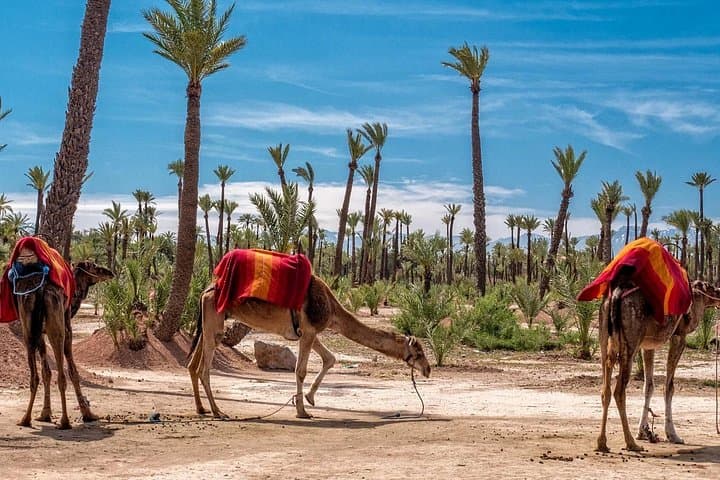
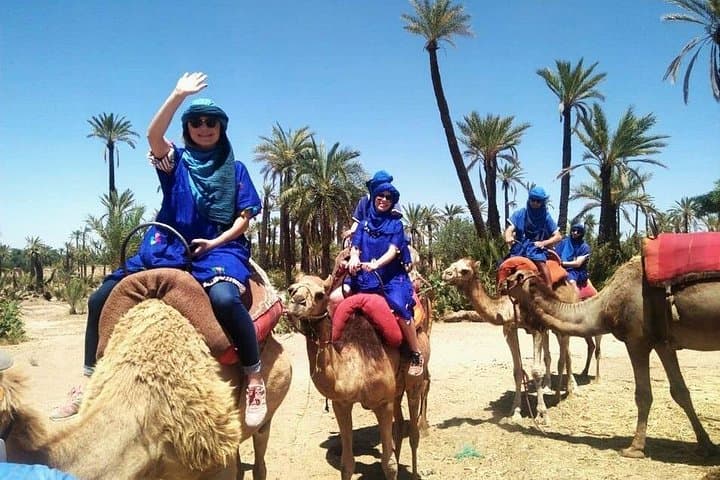
From the measured calm of the garden the tour moves to the Palmeraie, Marrakech’s sprawling palm grove. Here camels—long used for transport across Morocco’s plains—offer a slow, rhythmic ride amid sand, villas and scattered olive stands. The Palmeraie feels both cultivated and wild: palms flexing above, occasional desert scrub pushing through.
Plan practicalities: the half-day runs about 3–4 hours with hotel pickup; carry sun protection, comfortable shoes for garden paths and a light scarf for dust on the camel track. Photography is excellent early or late in the day when light slants across blue walls and between trunks. Respect planting beds, follow guide instructions when mounting camels, and leave no trace—these managed green spaces are sustained by careful water use and visitor limits. For a short window into Marrakech’s artistic history and its desert margin, this combo delivers vivid contrast with minimal exertion.
Yes — the tour includes admission to Jardin Majorelle and the Berber Museum as stated in the inclusions.
The camel segment typically lasts 30–60 minutes and includes a tea stop in the Palmeraie.
Pickup and the vehicle are listed as wheelchair accessible; however, the camel ride and some garden paths may be uneven—check specific accessibility needs with the operator.
Yes — the tour includes hotel pickup and drop-off from Marrakech riads and hotels; confirm your pickup point when booking.
Le jardin secret operates guided outdoor trips and adventures with an emphasis on safety, stewardship, and memorable experiences.
You step off the minivan into a sudden pocket of blue and green—walls painted that deep Majorelle blue, fountains sighing, and succulents fanning in organized clumps. The paths of Jardin Majorelle carve a cool route through palms, cactus beds and paved alleys, the noise of Marrakech falling away behind you.
You step off the minivan into a sudden pocket of blue and green—walls painted that deep Majorelle blue, fountains sighing, and succulents fanning in organized clumps. The paths of Jardin Majorelle carve a cool route through palms, cactus beds and paved alleys, the noise of Marrakech falling away behind you.
Designed by French painter Jacques Majorelle in the 1920s and later restored by Yves Saint Laurent and Pierre Bergé, the garden is an exercise in contrast: irrigated lawns and exotic plants arranged against ochre city light. The attached Berber Museum offers a compact look at North African craft traditions while the plantings reveal the region’s efforts to sustain green oases in an arid landscape.
From the measured calm of the garden the tour moves to the Palmeraie, Marrakech’s sprawling palm grove. Here camels—long used for transport across Morocco’s plains—offer a slow, rhythmic ride amid sand, villas and scattered olive stands. The Palmeraie feels both cultivated and wild: palms flexing above, occasional desert scrub pushing through.
Plan practicalities: the half-day runs about 3–4 hours with hotel pickup; carry sun protection, comfortable shoes for garden paths and a light scarf for dust on the camel track. Photography is excellent early or late in the day when light slants across blue walls and between trunks. Respect planting beds, follow guide instructions when mounting camels, and leave no trace—these managed green spaces are sustained by careful water use and visitor limits. For a short window into Marrakech’s artistic history and its desert margin, this combo delivers vivid contrast with minimal exertion.