THE ADVENTURE COLLECTIVE® · Independent discovery and booking for outdoor travel

Skip the long queues at Park Güell and spend 75 minutes with a certified guide exploring Gaudí’s inventive park, tilework, and sweeping city views. Practical route guidance and priority entry make this a focused urban outing for curious walkers.
Skip the long queues at Park Güell and spend 75 minutes with a certified guide exploring Gaudí’s inventive park, tilework, and sweeping city views. Practical route guidance and priority entry make this a focused urban outing for curious walkers.
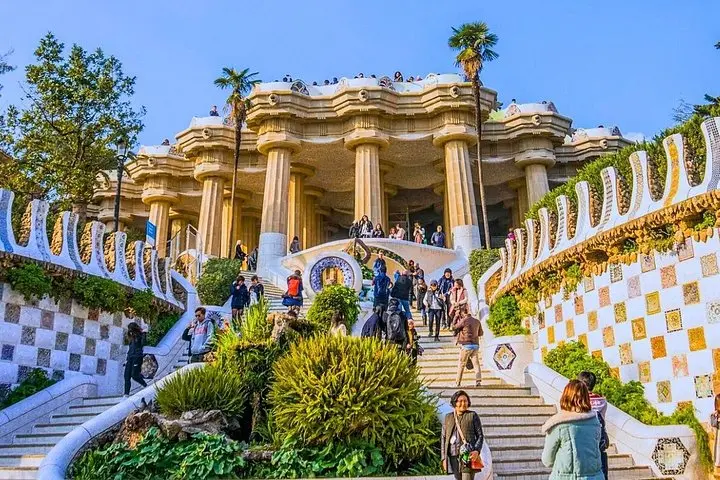
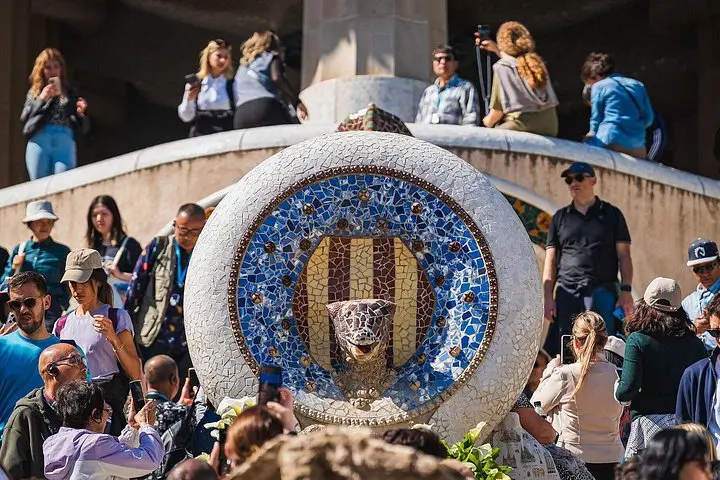
You step off the narrow Carmel road and the city opens: a sunlit terrace of ceramic scales, curving benches and stone viaducts that push you toward the skyline. Park Güell is less a single place than a sequence of encounters—mosaic lizards that grin at passersby, colonnaded pathways that funnel the walker's view toward Barcelona, and a monumental terrace that frames the sea and city like a living panorama.
Verified experiences and guided adventures in the surrounding area.
Operated by Golden Tour Guide · Barcelona, Catalonia
You step off the narrow Carmel road and the city opens: a sunlit terrace of ceramic scales, curving benches and stone viaducts that push you toward the skyline. Park Güell is less a single place than a sequence of encounters—mosaic lizards that grin at passersby, colonnaded pathways that funnel the walker's view toward Barcelona, and a monumental terrace that frames the sea and city like a living panorama.
Originally conceived by Antoni Gaudí as a private housing project in the early 1900s, the park evolved into a public garden complex and was later designated a UNESCO World Heritage site. The site’s sandstone outcrops and reworked slopes reflect local geology and Gaudí’s use of local materials; look for the park’s integrated viaducts and stairways, where architecture and natural rock blur. Cultural context is immediate: modernist motifs, Catalan symbolism, and the Gaudí House Museum—visible from the route—offer compact lessons in design and daily life of the period.
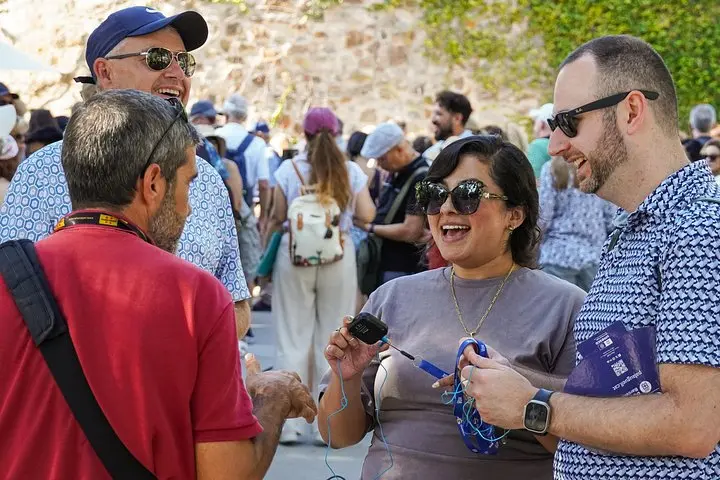
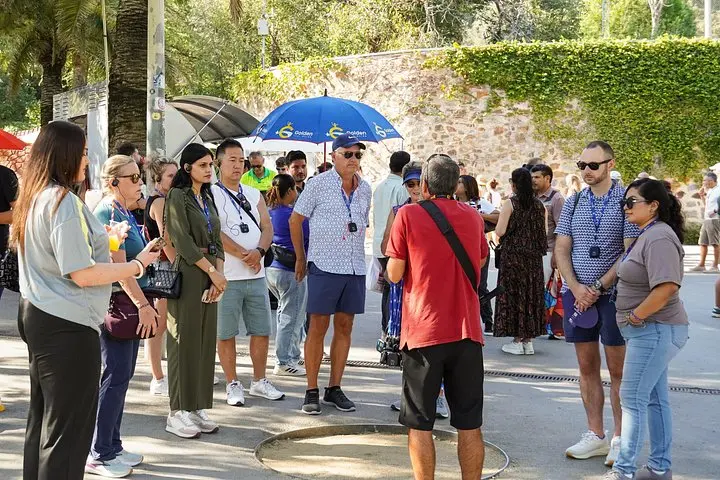
Practically, this guided, 75-minute skip-the-line tour moves at a steady walking pace across uneven stone and steps; headsets keep stories audible in a crowd. Guides explain design choices and point to quieter corners—the Austrian Gardens and a northern viaduct—where the city’s hum drops away. Bring sturdy shoes, sun protection in summer, and arrive early to find the meeting point on Ctra. del Carmel 23. Tickets regulate numbers; late arrivals can lose entry. Expect photographic vantage points, interpretive history, and a concentrated taste of Gaudí’s imagination—accessible, urban, and unmistakably Catalan.
The ticket grants priority entry through the designated monument zone at the scheduled time, but you must arrive and check in at least 15 minutes before the tour begins.
Parts of Park Güell include steep ramps and uneven stone; some areas have limited accessibility—contact the tour operator for specific accommodations and alternative routes.
No; the guide will stop outside the Gaudí House Museum to explain its history, but interior admission requires a separate ticket purchased independently.
Guides commonly offer the tour in English, Spanish, French, and German; confirm language availability when booking.
Golden Tour Guide operates guided outdoor trips and adventures with an emphasis on safety, stewardship, and memorable experiences.
You step off the narrow Carmel road and the city opens: a sunlit terrace of ceramic scales, curving benches and stone viaducts that push you toward the skyline. Park Güell is less a single place than a sequence of encounters—mosaic lizards that grin at passersby, colonnaded pathways that funnel the walker's view toward Barcelona, and a monumental terrace that frames the sea and city like a living panorama.
You step off the narrow Carmel road and the city opens: a sunlit terrace of ceramic scales, curving benches and stone viaducts that push you toward the skyline. Park Güell is less a single place than a sequence of encounters—mosaic lizards that grin at passersby, colonnaded pathways that funnel the walker's view toward Barcelona, and a monumental terrace that frames the sea and city like a living panorama.
Originally conceived by Antoni Gaudí as a private housing project in the early 1900s, the park evolved into a public garden complex and was later designated a UNESCO World Heritage site. The site’s sandstone outcrops and reworked slopes reflect local geology and Gaudí’s use of local materials; look for the park’s integrated viaducts and stairways, where architecture and natural rock blur. Cultural context is immediate: modernist motifs, Catalan symbolism, and the Gaudí House Museum—visible from the route—offer compact lessons in design and daily life of the period.
Practically, this guided, 75-minute skip-the-line tour moves at a steady walking pace across uneven stone and steps; headsets keep stories audible in a crowd. Guides explain design choices and point to quieter corners—the Austrian Gardens and a northern viaduct—where the city’s hum drops away. Bring sturdy shoes, sun protection in summer, and arrive early to find the meeting point on Ctra. del Carmel 23. Tickets regulate numbers; late arrivals can lose entry. Expect photographic vantage points, interpretive history, and a concentrated taste of Gaudí’s imagination—accessible, urban, and unmistakably Catalan.