THE ADVENTURE COLLECTIVE® · Independent discovery and booking for outdoor travel

Walk through streets frozen by ash and climb the black slopes of Vesuvius on a full-day tour from Naples. Guided visits to Pompeii’s highlights plus a geology-led hike to the crater rim make for a compact, immersive day of history and volcanic terrain.
Walk through streets frozen by ash and climb the black slopes of Vesuvius on a full-day tour from Naples. Guided visits to Pompeii’s highlights plus a geology-led hike to the crater rim make for a compact, immersive day of history and volcanic terrain.
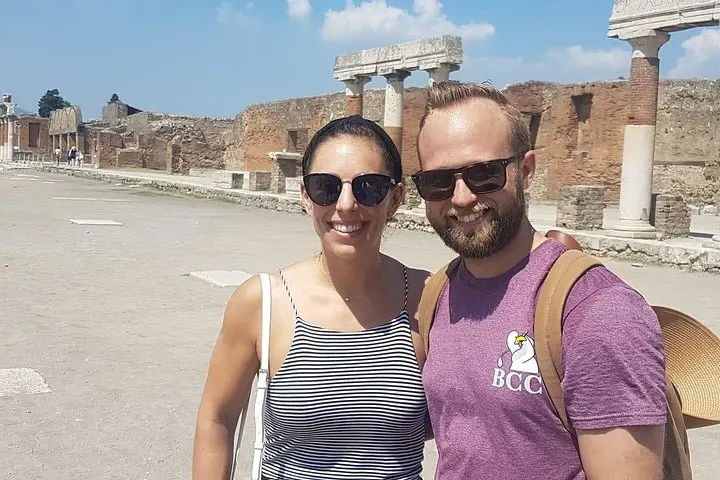
You step from an air-conditioned minivan into a cratered, sun-dry landscape where dust and history mix under the same light. Narrow streets open into a long forum and the plaster and stone of houses that stopped mid-life when ash from Vesuvius buried this city in 79 A.D. The guide leads you past bakeries and baths, pausing where fresco color still holds against time.
Verified experiences and guided adventures in the surrounding area.
Operated by Tours of Pompeii with Lello & Co. · Pompeii, Campania
You step from an air-conditioned minivan into a cratered, sun-dry landscape where dust and history mix under the same light. Narrow streets open into a long forum and the plaster and stone of houses that stopped mid-life when ash from Vesuvius buried this city in 79 A.D. The guide leads you past bakeries and baths, pausing where fresco color still holds against time.
Pompeii is a compact archaeological map of Roman urban life — theatres, the House of Menander, the Lupanaria and complex water systems reveal daily routines and social structures. Geologically, Vesuvius is a stratovolcano whose layered eruptions shaped the bay below; the trail up its eastern flank shows fresh scoria and hardened ash that speak to recent activity and deep magma processes. Local culture blends small-town Campanian rhythms with flavors you’ll smell at street food stands — sfogliatella and espresso.
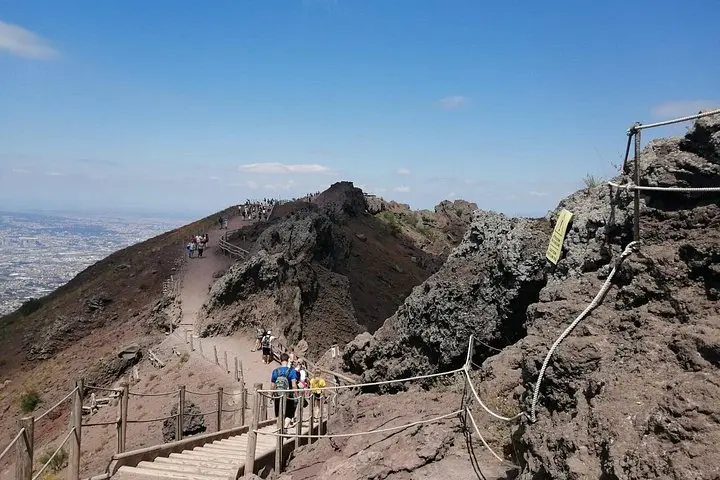
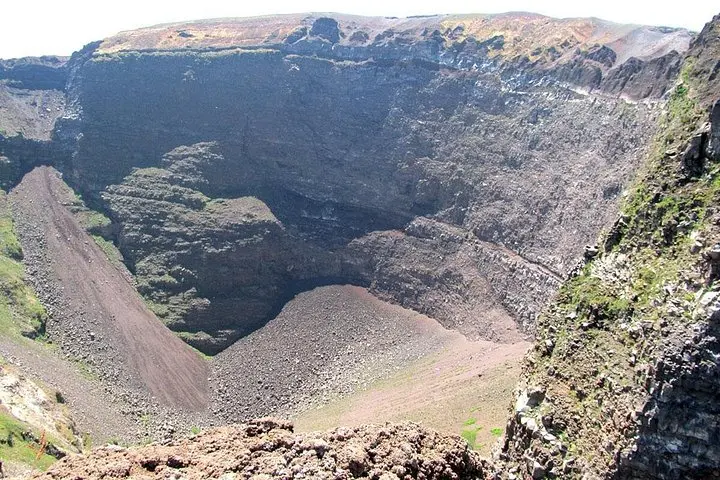
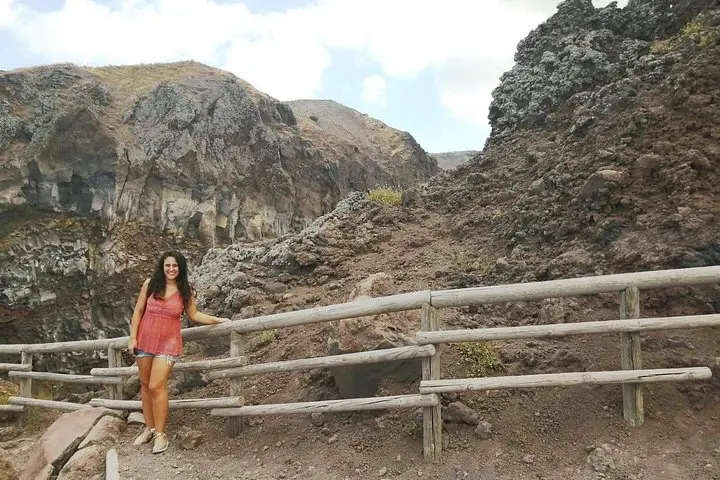
After Pompeii the van drives up the volcano to a trailhead where a geology expert joins the group for a 1.5-hour ascent to the crater rim. The path is steep, volcanic scree that forces attention to each step; the crater itself is an abrupt, black bowl with sweeping views over the Gulf of Naples and the city below.
Practical guidance: wear sturdy shoes, bring water and sun protection, and expect 6–8 hours total including transfers. Weather can close the national park; check forecasts and plan an alternative for wet days. Travel light, respect fragile structures, and allow time to read interpretive panels — they put the ruins in human scale.
Expect about 6–8 hours total: roughly 2.5 hours exploring Pompeii on paved and dirt surfaces, plus a 1–1.5 hour hike on the Vesuvius trail with transfers between sites.
The hike is moderate and involves uneven, steep sections; children and older adults who can manage 1–1.5 hours of uphill walking and loose terrain can usually participate, but check with the operator about fitness needs.
If heavy rain or unsafe volcanic conditions close the national park, the operator will suggest alternative sites; closures are announced by park authorities and are based on safety.
Yes — the tour includes skip-the-line entry to Pompeii, national park fees for Vesuvius, and transport by private air-conditioned minivan with hotel or port pickup.
Tours of Pompeii with Lello & Co. operates guided outdoor trips and adventures with an emphasis on safety, stewardship, and memorable experiences.
You step from an air-conditioned minivan into a cratered, sun-dry landscape where dust and history mix under the same light. Narrow streets open into a long forum and the plaster and stone of houses that stopped mid-life when ash from Vesuvius buried this city in 79 A.D. The guide leads you past bakeries and baths, pausing where fresco color still holds against time.
You step from an air-conditioned minivan into a cratered, sun-dry landscape where dust and history mix under the same light. Narrow streets open into a long forum and the plaster and stone of houses that stopped mid-life when ash from Vesuvius buried this city in 79 A.D. The guide leads you past bakeries and baths, pausing where fresco color still holds against time.
Pompeii is a compact archaeological map of Roman urban life — theatres, the House of Menander, the Lupanaria and complex water systems reveal daily routines and social structures. Geologically, Vesuvius is a stratovolcano whose layered eruptions shaped the bay below; the trail up its eastern flank shows fresh scoria and hardened ash that speak to recent activity and deep magma processes. Local culture blends small-town Campanian rhythms with flavors you’ll smell at street food stands — sfogliatella and espresso.
After Pompeii the van drives up the volcano to a trailhead where a geology expert joins the group for a 1.5-hour ascent to the crater rim. The path is steep, volcanic scree that forces attention to each step; the crater itself is an abrupt, black bowl with sweeping views over the Gulf of Naples and the city below.
Practical guidance: wear sturdy shoes, bring water and sun protection, and expect 6–8 hours total including transfers. Weather can close the national park; check forecasts and plan an alternative for wet days. Travel light, respect fragile structures, and allow time to read interpretive panels — they put the ruins in human scale.