THE ADVENTURE COLLECTIVE® · Independent discovery and booking for outdoor travel

Walk the marble streets where Romans and early Christians once moved. This private, skip-the-line Ephesus tour combines a licensed local guide, private transfer and a full-day itinerary that highlights the Great Theatre, Celsus Library and the House of the Virgin Mary.
Walk the marble streets where Romans and early Christians once moved. This private, skip-the-line Ephesus tour combines a licensed local guide, private transfer and a full-day itinerary that highlights the Great Theatre, Celsus Library and the House of the Virgin Mary.
You step off the luxury vehicle and the air shifts: heat baked into white marble, a faint scent of rosemary on the breeze, and the rough echo of footsteps where Romans once walked.
Verified experiences and guided adventures in the surrounding area.
Operated by Emoji Tourism · Selçuk, İzmir Province
You step off the luxury vehicle and the air shifts: heat baked into white marble, a faint scent of rosemary on the breeze, and the rough echo of footsteps where Romans once walked.
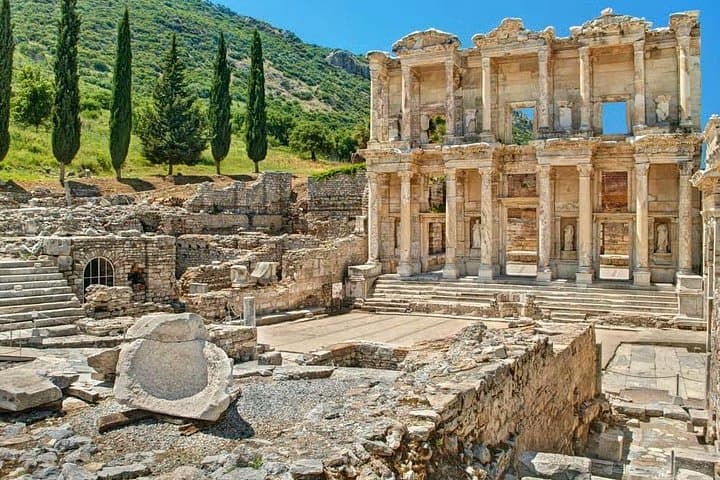
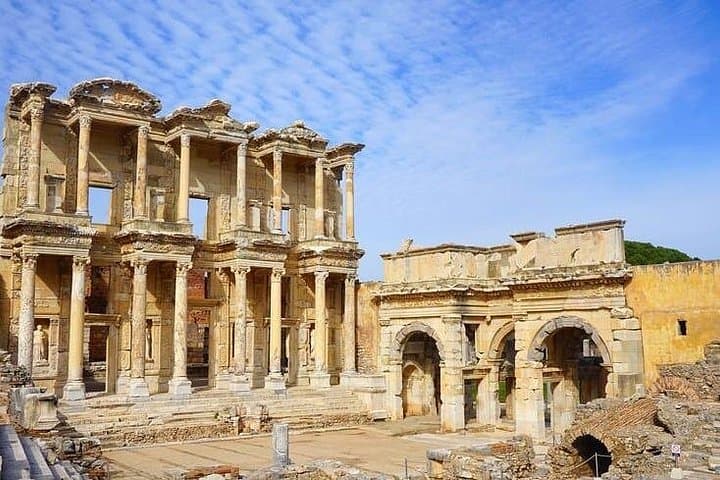
Ephesus opens as a living museum — the Celsus Library’s façade still commands the forum, the Great Theatre lowers like an amphitheater-shaped valley, and narrow marble streets thread between colonnades. Geologically, the site sits on alluvial plains below Ayasoluk Hill; expect compacted marble, worn stone steps and short uphill approaches toward the Terrace Houses. Historically, Ephesus was a Greek port turned Roman metropolis and a crossroads of early Christianity; St. John and, according to tradition, the Virgin Mary left tangible traces here, while the Temple of Artemis marks an even older Anatolian cult center.
Local culture is visible in market stalls in nearby Selçuk and the slow pace of Turkish tea between site visits. Guides bring these layers alive, translating inscriptions and pointing out construction techniques that have survived centuries of earthquakes.
Practical guidance: the tour typically covers 2–3 km of walking over roughly 4–6 hours with intermittent standing; cumulative elevation change is minor but includes several steps and one short slope up to the Terrace Houses. Wear sturdy shoes with good soles, bring sun protection and a refillable bottle — bottled water is usually provided but refill stations are limited. Timing matters: morning or late afternoon visits avoid the harshest heat and busiest cruise-ship windows. If you want the Terrace Houses interior, budget extra for that optional ticket. With a local guide and private transport, plan for an efficient, context-rich day that keeps the ruins as the priority.
Many private tours include skip-the-line access, but some specific sites (like the Terrace Houses) may require an additional ticket—confirm at booking.
The House of the Virgin Mary is about 9 km from Ephesus near Mount Bulbul and is usually included as a separate short stop on full-day tours.
Yes; operators commonly coordinate return times with cruise ship departures and will confirm meeting and return times at booking.
Some parts of the route and the vehicle transfer are wheelchair accessible, but ancient site surfaces and steps limit access to all areas—discuss needs with the operator beforehand.
Emoji Tourism operates guided outdoor trips and adventures with an emphasis on safety, stewardship, and memorable experiences.

You step off the luxury vehicle and the air shifts: heat baked into white marble, a faint scent of rosemary on the breeze, and the rough echo of footsteps where Romans once walked.
You step off the luxury vehicle and the air shifts: heat baked into white marble, a faint scent of rosemary on the breeze, and the rough echo of footsteps where Romans once walked.
Ephesus opens as a living museum — the Celsus Library’s façade still commands the forum, the Great Theatre lowers like an amphitheater-shaped valley, and narrow marble streets thread between colonnades. Geologically, the site sits on alluvial plains below Ayasoluk Hill; expect compacted marble, worn stone steps and short uphill approaches toward the Terrace Houses. Historically, Ephesus was a Greek port turned Roman metropolis and a crossroads of early Christianity; St. John and, according to tradition, the Virgin Mary left tangible traces here, while the Temple of Artemis marks an even older Anatolian cult center.
Local culture is visible in market stalls in nearby Selçuk and the slow pace of Turkish tea between site visits. Guides bring these layers alive, translating inscriptions and pointing out construction techniques that have survived centuries of earthquakes.
Practical guidance: the tour typically covers 2–3 km of walking over roughly 4–6 hours with intermittent standing; cumulative elevation change is minor but includes several steps and one short slope up to the Terrace Houses. Wear sturdy shoes with good soles, bring sun protection and a refillable bottle — bottled water is usually provided but refill stations are limited. Timing matters: morning or late afternoon visits avoid the harshest heat and busiest cruise-ship windows. If you want the Terrace Houses interior, budget extra for that optional ticket. With a local guide and private transport, plan for an efficient, context-rich day that keeps the ruins as the priority.