THE ADVENTURE COLLECTIVE® · Independent discovery and booking for outdoor travel

Browse restored campers, celebrity-owned motorhomes and industry artifacts at the RV/MH Hall of Fame & Museum in Elkhart. This skip-the-line ticket gives quicker entry to a compact, accessible collection that tells the story of North America’s RV industry.
Browse restored campers, celebrity-owned motorhomes and industry artifacts at the RV/MH Hall of Fame & Museum in Elkhart. This skip-the-line ticket gives quicker entry to a compact, accessible collection that tells the story of North America’s RV industry.
You step through a low doorframe and the world of rolling homes opens — aluminum skins gleam under gallery lights, wood-paneled interiors smell faintly of varnish and history, and narrow corridors invite close inspection. The RV/MH Hall of Fame & Museum collects the machines and stories that turned weekend escapes into a North American industry.
Verified experiences and guided adventures in the surrounding area.
Operated by RV/MH Hall of Fame and Museum · Elkhart, Indiana
You step through a low doorframe and the world of rolling homes opens — aluminum skins gleam under gallery lights, wood-paneled interiors smell faintly of varnish and history, and narrow corridors invite close inspection. The RV/MH Hall of Fame & Museum collects the machines and stories that turned weekend escapes into a North American industry.
The collection traces recreational vehicles from early 20th-century trailers to mid-century motorhomes and celebrity-owned units. Elkhart and neighboring communities in northern Indiana became the manufacturing heart of the RV industry because of flat glacial plains that made transport and factory construction straightforward, plus a skilled trades workforce. The museum also records the parallel development of manufactured housing and the social culture of road travel, with exhibits that explain chassis engineering, interior innovations, and aftermarket culture.
Expect a mix of display halls and walk-through units: 60+ vintage campers and motorhomes, interpretive panels, and artifacts ranging from upholstery samples to original sales brochures. A skip-the-line ticket pares waiting time at peak hours, and the accessible layout accommodates visitors with mobility needs.
Practical guide: allow 1–3 hours depending on how deeply you read exhibits; mornings on weekdays are quietest. Photography for personal use is generally permitted—bring a wide-angle lens for interiors. Wear comfortable shoes for standing and ducking into low-ceiling models, and carry a small water bottle; there’s a café and restrooms on site. If you’re an RV aficionado, plan extra time to study construction details and manufacturer exhibits — this is where industry history meets hands-on mechanics.
A skip-the-line ticket shortens or bypasses the general admission queue, letting you enter near the scheduled time with minimal wait.
Yes — the facility is wheelchair accessible and offers accessible restrooms; note that some historic units have narrow doorways that may be hard to enter.
Most visitors spend 1–3 hours; allow more time if you want to study construction details or read all exhibits.
Personal photography is generally permitted for non-commercial use, but flash and tripods may be restricted—check signage or staff for specifics.
RV/MH Hall of Fame and Museum operates guided outdoor trips and adventures with an emphasis on safety, stewardship, and memorable experiences.
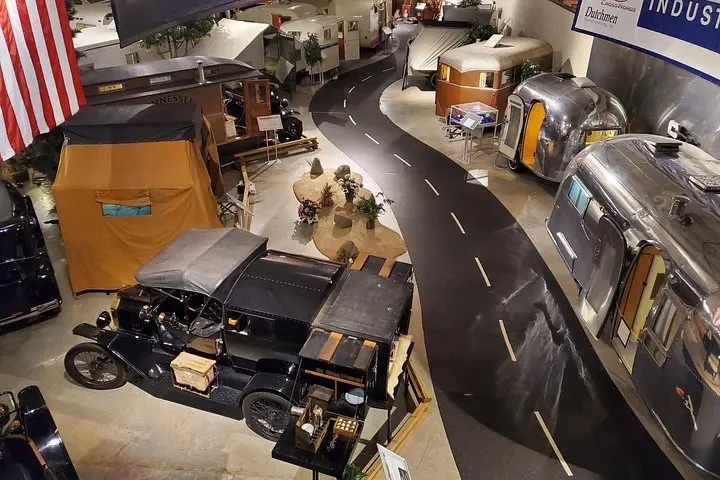
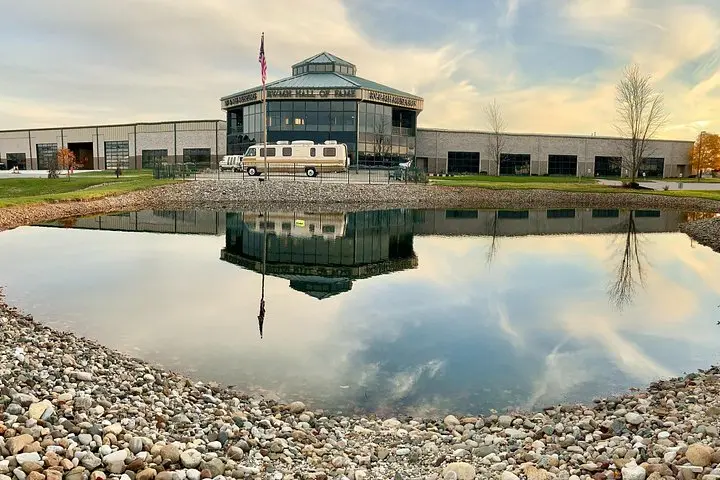
You step through a low doorframe and the world of rolling homes opens — aluminum skins gleam under gallery lights, wood-paneled interiors smell faintly of varnish and history, and narrow corridors invite close inspection. The RV/MH Hall of Fame & Museum collects the machines and stories that turned weekend escapes into a North American industry.
You step through a low doorframe and the world of rolling homes opens — aluminum skins gleam under gallery lights, wood-paneled interiors smell faintly of varnish and history, and narrow corridors invite close inspection. The RV/MH Hall of Fame & Museum collects the machines and stories that turned weekend escapes into a North American industry.
The collection traces recreational vehicles from early 20th-century trailers to mid-century motorhomes and celebrity-owned units. Elkhart and neighboring communities in northern Indiana became the manufacturing heart of the RV industry because of flat glacial plains that made transport and factory construction straightforward, plus a skilled trades workforce. The museum also records the parallel development of manufactured housing and the social culture of road travel, with exhibits that explain chassis engineering, interior innovations, and aftermarket culture.
Expect a mix of display halls and walk-through units: 60+ vintage campers and motorhomes, interpretive panels, and artifacts ranging from upholstery samples to original sales brochures. A skip-the-line ticket pares waiting time at peak hours, and the accessible layout accommodates visitors with mobility needs.
Practical guide: allow 1–3 hours depending on how deeply you read exhibits; mornings on weekdays are quietest. Photography for personal use is generally permitted—bring a wide-angle lens for interiors. Wear comfortable shoes for standing and ducking into low-ceiling models, and carry a small water bottle; there’s a café and restrooms on site. If you’re an RV aficionado, plan extra time to study construction details and manufacturer exhibits — this is where industry history meets hands-on mechanics.