THE ADVENTURE COLLECTIVE® · Independent discovery and booking for outdoor travel

Skip the lines and let a guide unfold the Mughal story across two UNESCO World Heritage sites. This full-ticket tour combines the Taj Mahal’s luminous marble with Agra Fort’s red sandstone for a compact, insightful half-day experience.
Skip the lines and let a guide unfold the Mughal story across two UNESCO World Heritage sites. This full-ticket tour combines the Taj Mahal’s luminous marble with Agra Fort’s red sandstone for a compact, insightful half-day experience.
A pale wash of dawn light softens the Yamuna as travelers meet at the East Gate and step through security into a courtyard of white marble. The guide threads stories through the plaza—architectural notes, courtly rivalries—while the mausoleum’s dome looms, precise and uncompromising. Voices lower naturally here; the gardens seem to hold their breath.
Verified experiences and guided adventures in the surrounding area.
Operated by Yo Tours · Agra, Uttar Pradesh
A pale wash of dawn light softens the Yamuna as travelers meet at the East Gate and step through security into a courtyard of white marble. The guide threads stories through the plaza—architectural notes, courtly rivalries—while the mausoleum’s dome looms, precise and uncompromising. Voices lower naturally here; the gardens seem to hold their breath.
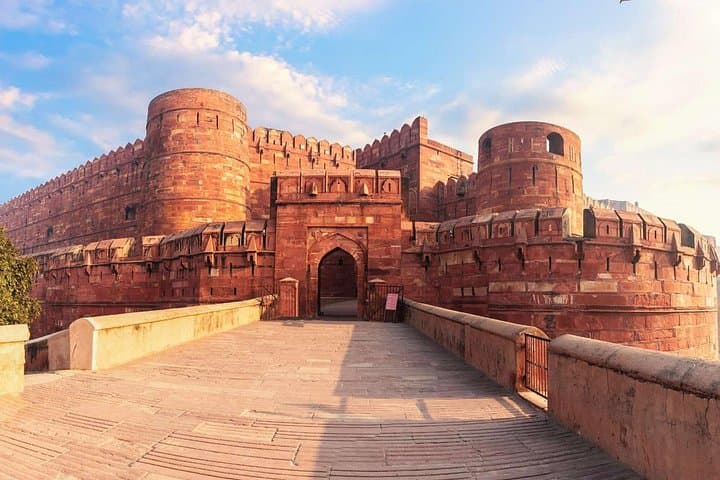
The Taj Mahal and Agra Fort are chapters of the same Mughal story: Shah Jahan’s grief and ambition carved into stone. The Taj’s pietra dura inlays and calligraphy demonstrate craftsmanship brought by artists across the subcontinent, while Agra Fort’s ramparts, built by Akbar and expanded by his grandson, read like a defensive city nested with palaces. Geology plays its part too—local sandstone provides the warm red of the fort; Makrana marble gives the mausoleum its cool resilience.
Culturally, these sites remain active symbols—places of pilgrimage, photography, and daily commerce at their peripheries. Guides translate inscriptions, explain structural geometry, and steer visitors toward vantage points where the Yamuna frames the silhouette.
Practically: this is a mostly paved, low-elevation walk with security checks and modest queueing even with skip-the-line access. Expect 3–4 hours on-site, periods of standing, and brief stair sections inside Agra Fort. Carry water, wear covered shoulders for mausoleum entry if you prefer, and leave large tripods at the hotel—small cameras and phones are fine. Visit early for soft light and cooler air; avoid the midday heat in summer. Respect restricted areas and the sanctity of the mausoleum to get the most from a compact, layered day of Mughal history.
Yes—this full-ticket tour includes skip-the-line tickets for both the Taj Mahal and Agra Fort, reducing wait times at main gates.
Optional mausoleum admission is sometimes included; access rules vary by day and require passing security and modest dress—follow your guide’s instructions.
Both sites have accessible areas and are generally stroller/wheelchair friendly for exterior circuits, but some interior sections have steps; advise operator of needs in advance.
Early morning offers the best light and cooler temperatures; late afternoon can also be pleasant, but mid-day is busiest and hottest in summer.
Yo Tours operates guided outdoor trips and adventures with an emphasis on safety, stewardship, and memorable experiences.


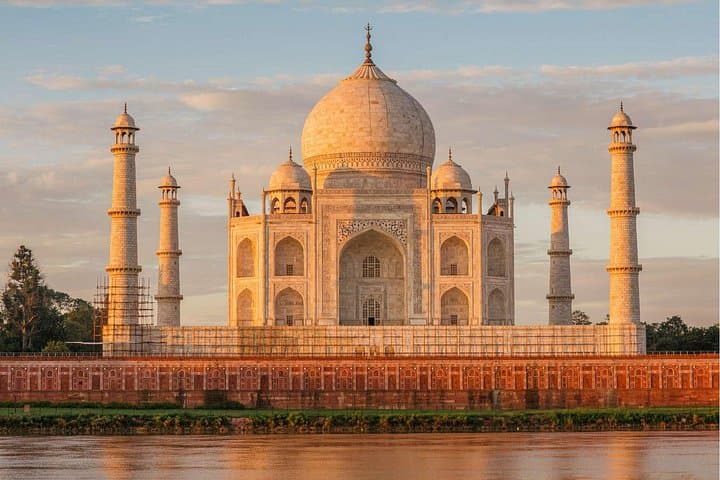
A pale wash of dawn light softens the Yamuna as travelers meet at the East Gate and step through security into a courtyard of white marble. The guide threads stories through the plaza—architectural notes, courtly rivalries—while the mausoleum’s dome looms, precise and uncompromising. Voices lower naturally here; the gardens seem to hold their breath.
A pale wash of dawn light softens the Yamuna as travelers meet at the East Gate and step through security into a courtyard of white marble. The guide threads stories through the plaza—architectural notes, courtly rivalries—while the mausoleum’s dome looms, precise and uncompromising. Voices lower naturally here; the gardens seem to hold their breath.
The Taj Mahal and Agra Fort are chapters of the same Mughal story: Shah Jahan’s grief and ambition carved into stone. The Taj’s pietra dura inlays and calligraphy demonstrate craftsmanship brought by artists across the subcontinent, while Agra Fort’s ramparts, built by Akbar and expanded by his grandson, read like a defensive city nested with palaces. Geology plays its part too—local sandstone provides the warm red of the fort; Makrana marble gives the mausoleum its cool resilience.
Culturally, these sites remain active symbols—places of pilgrimage, photography, and daily commerce at their peripheries. Guides translate inscriptions, explain structural geometry, and steer visitors toward vantage points where the Yamuna frames the silhouette.
Practically: this is a mostly paved, low-elevation walk with security checks and modest queueing even with skip-the-line access. Expect 3–4 hours on-site, periods of standing, and brief stair sections inside Agra Fort. Carry water, wear covered shoulders for mausoleum entry if you prefer, and leave large tripods at the hotel—small cameras and phones are fine. Visit early for soft light and cooler air; avoid the midday heat in summer. Respect restricted areas and the sanctity of the mausoleum to get the most from a compact, layered day of Mughal history.