THE ADVENTURE COLLECTIVE® · Independent discovery and booking for outdoor travel

Walk central Skopje in about 105 minutes: taste Ottoman-era treats, cross the Old Stone Bridge and see Mother Teresa’s birthplace and Kenzo Tange’s post‑earthquake designs. This guide covers what to expect, local history, and practical tips to make the most of the tour.
Walk central Skopje in about 105 minutes: taste Ottoman-era treats, cross the Old Stone Bridge and see Mother Teresa’s birthplace and Kenzo Tange’s post‑earthquake designs. This guide covers what to expect, local history, and practical tips to make the most of the tour.
Morning light hits Macedonia Square and the bronze Alexander monument first; the city exhales steam from bakeries where simit and burek are still shaped by hand. A guided 105-minute loop through central Skopje moves at a steady urban pace—across the Old Stone Bridge, into the Old Bazaar’s narrow lanes, past the Memorial House of Mother Teresa and the clean lines of Kenzo Tange’s post-earthquake buildings.
Verified experiences and guided adventures in the surrounding area.
Operated by Dejan · Skopje, Skopje
Morning light hits Macedonia Square and the bronze Alexander monument first; the city exhales steam from bakeries where simit and burek are still shaped by hand. A guided 105-minute loop through central Skopje moves at a steady urban pace—across the Old Stone Bridge, into the Old Bazaar’s narrow lanes, past the Memorial House of Mother Teresa and the clean lines of Kenzo Tange’s post-earthquake buildings.
Skopje’s streets read like history: Ottoman markets rub shoulders with Socialist-era concrete and new national monuments. Geologically the city sits in a fault-bounded plain carved by the Vardar River, which cuts a defiant current through urban life and frames many of the best views. Culturally the Old Bazaar remains a living marketplace—shops, bakeries and mosques that date back centuries—while newer squares and embassies speak to a city rebuilt after the 1963 quake.
On this walk expect short, flat sections of cobbled and paved streets, frequent stops for stories and tastings (boza, baklava, simit included), and photo opportunities on the Stone Bridge and at Kale Park. The guide points out architectural details and neighborhood quirks, leaving time to sample sweets and ask about local life.
Practical tip: wear supportive shoes for cobbles, carry a refillable water bottle, and plan mornings for cooler temperatures and quieter bazaars. Public transport and taxis are nearby if you want to extend the day—Matka Canyon and local cafes in Debar Maalo are easy follow-ups.
The tour runs approximately 105 minutes and follows a compact route through central Skopje with multiple short stops.
The tour includes small tastings such as simit, burek or baklava and a sample of boza, as noted in the inclusions.
Most of the route is flat but includes cobbled streets and occasional steps; the tour is described as suitable for all fitness levels, but bring mobility considerations to the operator if needed.
Meeting points are typically in central Macedonia Square near the Alexander monument; confirmation details are provided after booking.
Dejan operates guided outdoor trips and adventures with an emphasis on safety, stewardship, and memorable experiences.
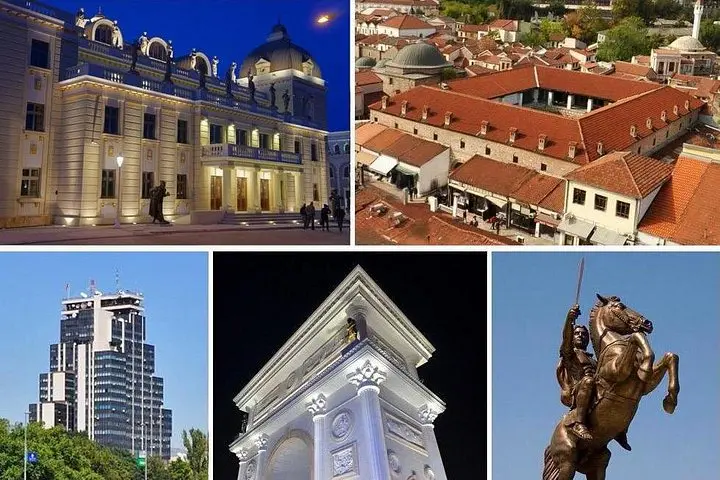
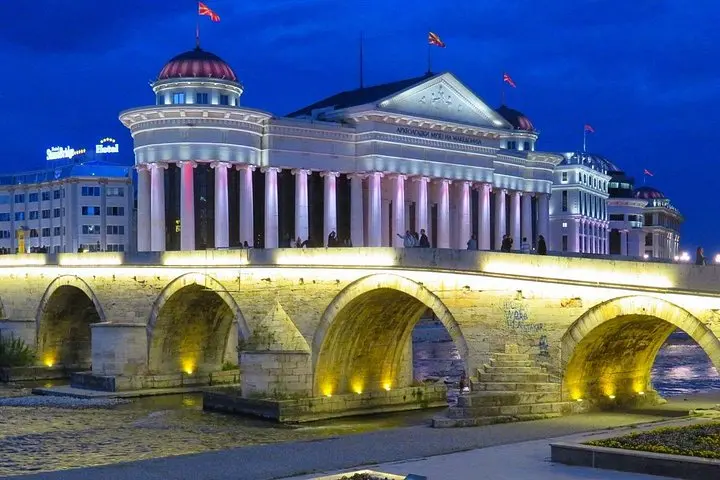
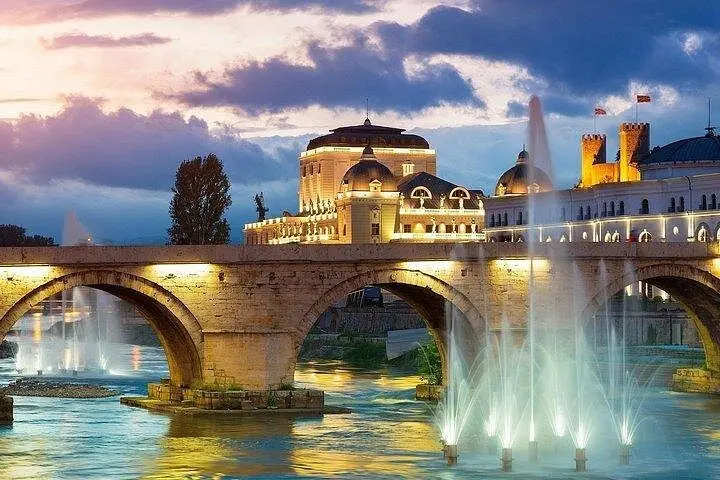
Morning light hits Macedonia Square and the bronze Alexander monument first; the city exhales steam from bakeries where simit and burek are still shaped by hand. A guided 105-minute loop through central Skopje moves at a steady urban pace—across the Old Stone Bridge, into the Old Bazaar’s narrow lanes, past the Memorial House of Mother Teresa and the clean lines of Kenzo Tange’s post-earthquake buildings.
Morning light hits Macedonia Square and the bronze Alexander monument first; the city exhales steam from bakeries where simit and burek are still shaped by hand. A guided 105-minute loop through central Skopje moves at a steady urban pace—across the Old Stone Bridge, into the Old Bazaar’s narrow lanes, past the Memorial House of Mother Teresa and the clean lines of Kenzo Tange’s post-earthquake buildings.
Skopje’s streets read like history: Ottoman markets rub shoulders with Socialist-era concrete and new national monuments. Geologically the city sits in a fault-bounded plain carved by the Vardar River, which cuts a defiant current through urban life and frames many of the best views. Culturally the Old Bazaar remains a living marketplace—shops, bakeries and mosques that date back centuries—while newer squares and embassies speak to a city rebuilt after the 1963 quake.
On this walk expect short, flat sections of cobbled and paved streets, frequent stops for stories and tastings (boza, baklava, simit included), and photo opportunities on the Stone Bridge and at Kale Park. The guide points out architectural details and neighborhood quirks, leaving time to sample sweets and ask about local life.
Practical tip: wear supportive shoes for cobbles, carry a refillable water bottle, and plan mornings for cooler temperatures and quieter bazaars. Public transport and taxis are nearby if you want to extend the day—Matka Canyon and local cafes in Debar Maalo are easy follow-ups.