THE ADVENTURE COLLECTIVE® · Independent discovery and booking for outdoor travel

Ascend to Marina Bay Sands SkyPark for 360-degree panoramas of Singapore’s skyline and waterfront. This guided observatory visit pairs high-altitude views with concise historical context about the city’s rapid development.
Ascend to Marina Bay Sands SkyPark for 360-degree panoramas of Singapore’s skyline and waterfront. This guided observatory visit pairs high-altitude views with concise historical context about the city’s rapid development.
The elevator slips upward and the city unfolds — rooftops and glass façades compress into a geometric map, then spread open beneath the SkyPark’s wide rail. From this height the harbor becomes a moving stage: ferries thread the water, Gardens by the Bay’s Supertrees puncture the low skyline, and the distant airport waits at the city’s edge.
Verified experiences and guided adventures in the surrounding area.
Operated by Pintours · Singapore, Singapore
The elevator slips upward and the city unfolds — rooftops and glass façades compress into a geometric map, then spread open beneath the SkyPark’s wide rail. From this height the harbor becomes a moving stage: ferries thread the water, Gardens by the Bay’s Supertrees puncture the low skyline, and the distant airport waits at the city’s edge.
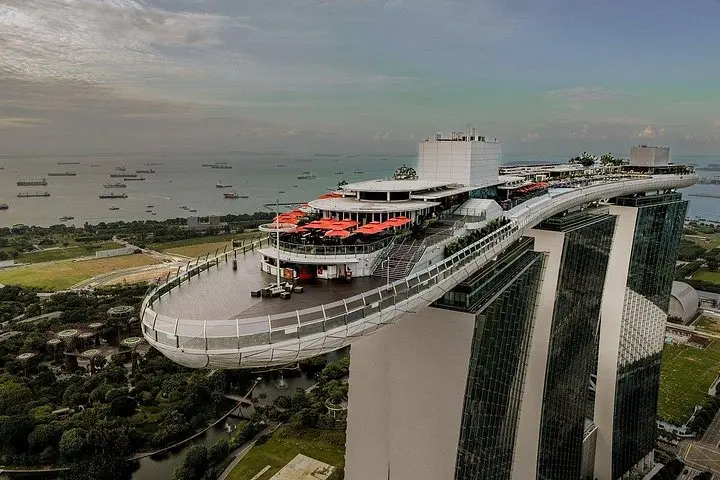
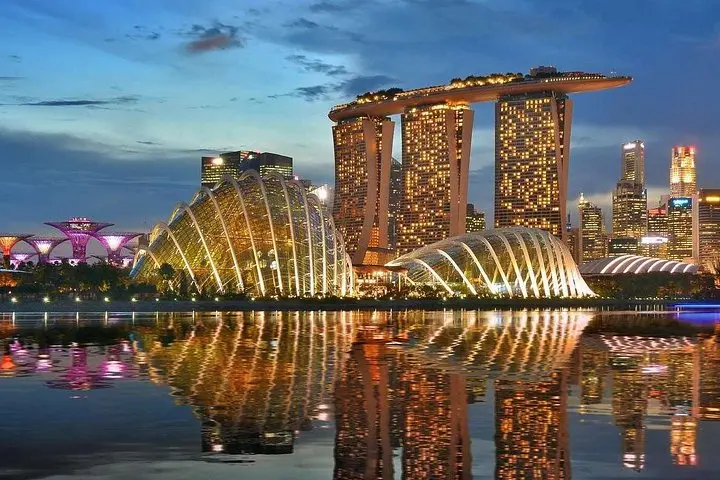
Built as part of the Marina Bay redevelopment and completed in 2010, Marina Bay Sands was designed by Moshe Safdie. The SkyPark rests across three hotel towers and provides one of the clearest vantage points for Singapore’s rapid urban evolution: reclaimed land, high-density planning, and waterfront ambition on display. The geology here is largely reclaimed marine clay and sand — the flatness explains the city’s horizontal sprawl and the emphasis on vertical architecture.
Culturally, the view captures Singapore’s mix: colonial-era rooftops around the Padang, the modern financial center, and horticultural experiments in the adjacent bay. Local guides often frame the skyline as a timeline — port and trade, independence-era building, and the skyline boom of the 21st century.
Practical guidance: allocate about two hours to include the SkyPark deck, photo stops, and a short interpretive talk. Bring sun protection and a light layer for wind at height. Photography is excellent at golden hour; morning visits avoid peak crowds. Note the rooftop infinity pool is for hotel guests only; the public deck provides sweeping, accessible vantage points. Tickets are mobile-friendly and wheelchair access is available. With an easy walk from Bayfront MRT, the SkyPark is a compact, high-reward urban outing for travelers who want context with their views.
No — the rooftop infinity pool is exclusive to Marina Bay Sands hotel guests; the public SkyPark observation deck provides wide views but not pool access.
Yes — there is elevator access and the public observation deck is wheelchair accessible; check operator details for any specific assistance needs.
Early morning and the hour before sunset provide flattering light and often fewer crowds; check local sunset times and book accordingly.
No — mobile tickets are accepted; keep your booking confirmation and a photo ID handy for check-in.
Pintours operates guided outdoor trips and adventures with an emphasis on safety, stewardship, and memorable experiences.
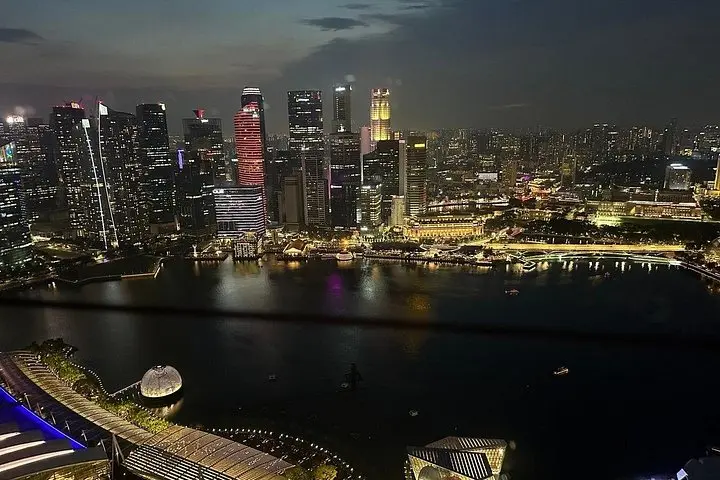
The elevator slips upward and the city unfolds — rooftops and glass façades compress into a geometric map, then spread open beneath the SkyPark’s wide rail. From this height the harbor becomes a moving stage: ferries thread the water, Gardens by the Bay’s Supertrees puncture the low skyline, and the distant airport waits at the city’s edge.
The elevator slips upward and the city unfolds — rooftops and glass façades compress into a geometric map, then spread open beneath the SkyPark’s wide rail. From this height the harbor becomes a moving stage: ferries thread the water, Gardens by the Bay’s Supertrees puncture the low skyline, and the distant airport waits at the city’s edge.
Built as part of the Marina Bay redevelopment and completed in 2010, Marina Bay Sands was designed by Moshe Safdie. The SkyPark rests across three hotel towers and provides one of the clearest vantage points for Singapore’s rapid urban evolution: reclaimed land, high-density planning, and waterfront ambition on display. The geology here is largely reclaimed marine clay and sand — the flatness explains the city’s horizontal sprawl and the emphasis on vertical architecture.
Culturally, the view captures Singapore’s mix: colonial-era rooftops around the Padang, the modern financial center, and horticultural experiments in the adjacent bay. Local guides often frame the skyline as a timeline — port and trade, independence-era building, and the skyline boom of the 21st century.
Practical guidance: allocate about two hours to include the SkyPark deck, photo stops, and a short interpretive talk. Bring sun protection and a light layer for wind at height. Photography is excellent at golden hour; morning visits avoid peak crowds. Note the rooftop infinity pool is for hotel guests only; the public deck provides sweeping, accessible vantage points. Tickets are mobile-friendly and wheelchair access is available. With an easy walk from Bayfront MRT, the SkyPark is a compact, high-reward urban outing for travelers who want context with their views.