THE ADVENTURE COLLECTIVE® · Independent discovery and booking for outdoor travel

A short overland transfer from Kasane leads to the immense white of the Makgadikgadi Pans. Spend an evening by a campfire and sleep beneath vast southern skies on a guided overnight that pairs simple camping with dramatic, otherworldly scenery.
A short overland transfer from Kasane leads to the immense white of the Makgadikgadi Pans. Spend an evening by a campfire and sleep beneath vast southern skies on a guided overnight that pairs simple camping with dramatic, otherworldly scenery.
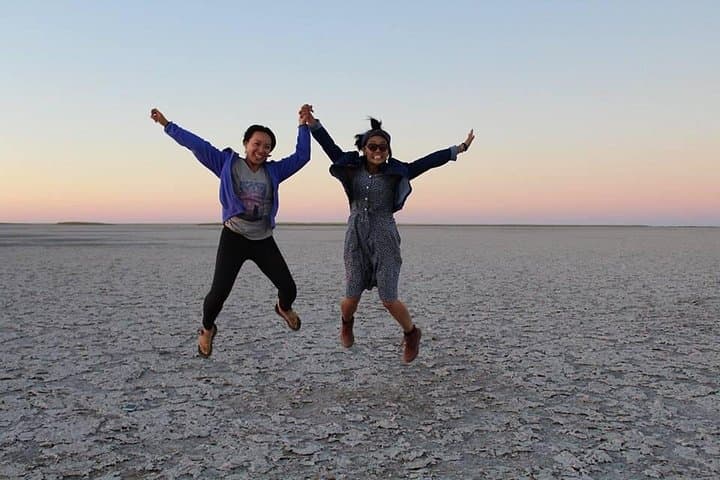
The road from Kasane loosens its shoulders and gives way to a horizon of white: a salt surface so wide it flattens distance and throws light back at you like a quiet, brilliant ocean. After a tarred transfer you climb into a 4x4 and the vehicle becomes part compass, part storyteller as it tracks across a landscape that can feel lunar by midday and crystalline under night skies.
Verified experiences and guided adventures in the surrounding area.
Operated by Afrinature Safaris · Kasane, Chobe
The road from Kasane loosens its shoulders and gives way to a horizon of white: a salt surface so wide it flattens distance and throws light back at you like a quiet, brilliant ocean. After a tarred transfer you climb into a 4x4 and the vehicle becomes part compass, part storyteller as it tracks across a landscape that can feel lunar by midday and crystalline under night skies.
Geologically, the Makgadikgadi are the remains of an ancient superlake — a broad expanse of evaporated water that left behind a hard salt crust punctuated by islands of rock and baobabs. The pans host seasonal dramas: migrating zebras and wildebeest in wet years, and in drier times, vast salt flats with patterns carved by wind and rain. Locally, communities from the San to Tswana and BaYei have long read the land for water, grazing, and shelter; Kubu Island carries sites of cultural significance and solitary baobabs that anchor stories of place.
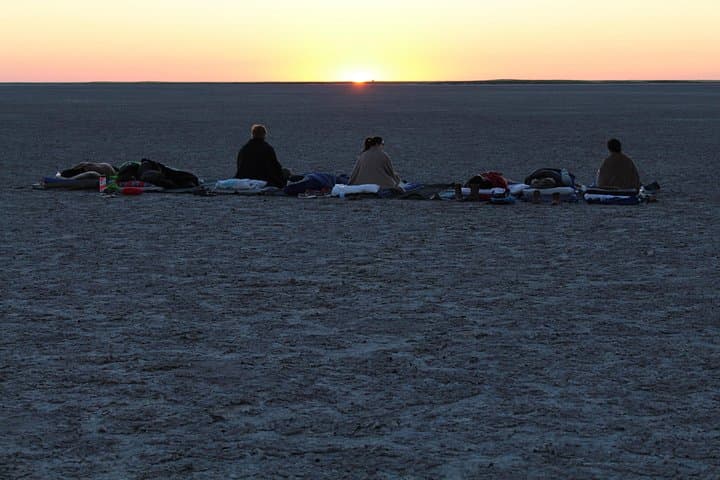
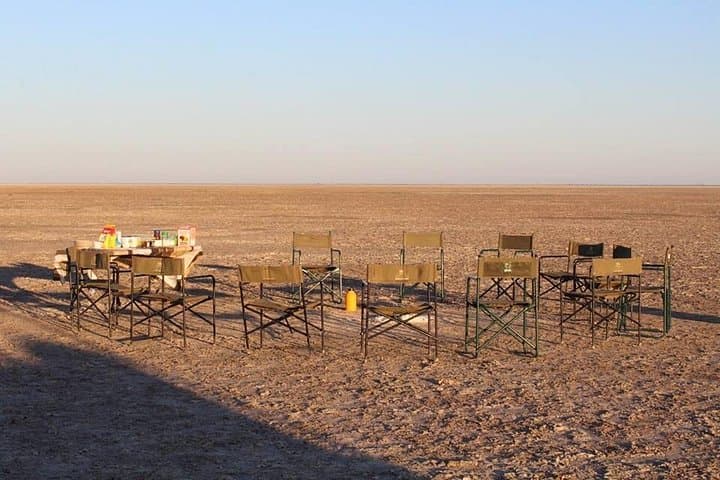
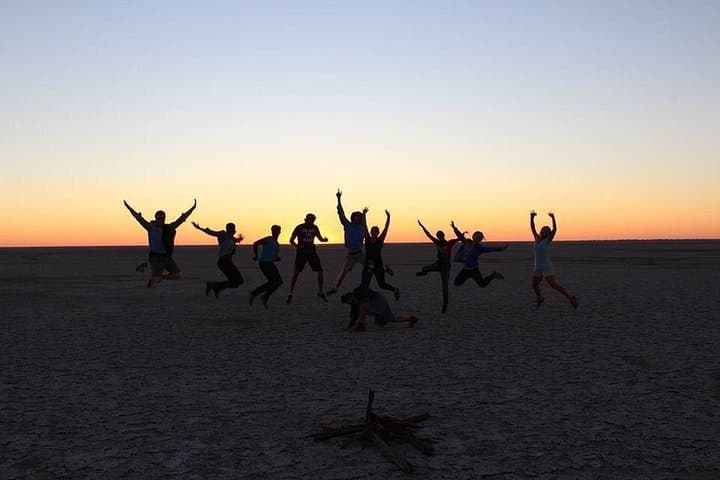
Practically, expect a two-day shared camp: mid-morning pickup in Kasane, a three-hour tarred transfer, then 4x4 exploration and an evening campfire on the pans. Bedding is provided but tents are not — you sleep under open sky. Temperatures swing sharply, so pack warm layers for night and solid sun protection by day. Bring a headlamp and closed-toe shoes — the crust is hard and can be abrasive. Respect local guides: they know the safe routes across fragile salt crust and the best windows for wildlife viewing.
This is straightforward, elemental camping: minimal infrastructure, big sky, and a rare chance to sleep in a place where the land itself feels alive under your feet.
No—this trip sleeps under the stars with bedding provided; guests should expect minimal shelter and bring warm layers for night.
Wet season (Dec–Mar) can trigger seasonal migrations and congregations of zebras and birds, while the dry season concentrates animals around waterholes elsewhere.
Expect about three hours on tarred road to the 4x4 handoff, then additional driving across the pans; the total trip is roughly a two-day round trip.
Facilities are minimal; guides provide basic camp sanitation and carry out waste following leave-no-trace practices.
Afrinature Safaris operates guided outdoor trips and adventures with an emphasis on safety, stewardship, and memorable experiences.
The road from Kasane loosens its shoulders and gives way to a horizon of white: a salt surface so wide it flattens distance and throws light back at you like a quiet, brilliant ocean. After a tarred transfer you climb into a 4x4 and the vehicle becomes part compass, part storyteller as it tracks across a landscape that can feel lunar by midday and crystalline under night skies.
The road from Kasane loosens its shoulders and gives way to a horizon of white: a salt surface so wide it flattens distance and throws light back at you like a quiet, brilliant ocean. After a tarred transfer you climb into a 4x4 and the vehicle becomes part compass, part storyteller as it tracks across a landscape that can feel lunar by midday and crystalline under night skies.
Geologically, the Makgadikgadi are the remains of an ancient superlake — a broad expanse of evaporated water that left behind a hard salt crust punctuated by islands of rock and baobabs. The pans host seasonal dramas: migrating zebras and wildebeest in wet years, and in drier times, vast salt flats with patterns carved by wind and rain. Locally, communities from the San to Tswana and BaYei have long read the land for water, grazing, and shelter; Kubu Island carries sites of cultural significance and solitary baobabs that anchor stories of place.
Practically, expect a two-day shared camp: mid-morning pickup in Kasane, a three-hour tarred transfer, then 4x4 exploration and an evening campfire on the pans. Bedding is provided but tents are not — you sleep under open sky. Temperatures swing sharply, so pack warm layers for night and solid sun protection by day. Bring a headlamp and closed-toe shoes — the crust is hard and can be abrasive. Respect local guides: they know the safe routes across fragile salt crust and the best windows for wildlife viewing.
This is straightforward, elemental camping: minimal infrastructure, big sky, and a rare chance to sleep in a place where the land itself feels alive under your feet.