THE ADVENTURE COLLECTIVE® · Independent discovery and booking for outdoor travel

A private cyclo tour through Hue lets you absorb the imperial city at walking pace—Citadel gates, royal antiques, and the bustle of Dong Ba Market—while your driver navigates the city’s scooter-stitched streets. This guide explains what to expect, how to prepare, and local tips to make the ride smooth.
A private cyclo tour through Hue lets you absorb the imperial city at walking pace—Citadel gates, royal antiques, and the bustle of Dong Ba Market—while your driver navigates the city’s scooter-stitched streets. This guide explains what to expect, how to prepare, and local tips to make the ride smooth.
You slide through a morning of low-slung awnings and scooter wakes as the cyclo pedals, gently rocking, ferry you past lacquered gates and riverside alleys. The city opens in fragments: a tile-roofed market stall hawking fish sauce, the red-orange roofs of the Imperial Citadel, and the steady arc of the Perfume River, which seems to pull the town toward its banks.
Verified experiences and guided adventures in the surrounding area.
Operated by Authentuc PU LUONG · Hue, Thừa Thiên Huế
You slide through a morning of low-slung awnings and scooter wakes as the cyclo pedals, gently rocking, ferry you past lacquered gates and riverside alleys. The city opens in fragments: a tile-roofed market stall hawking fish sauce, the red-orange roofs of the Imperial Citadel, and the steady arc of the Perfume River, which seems to pull the town toward its banks.
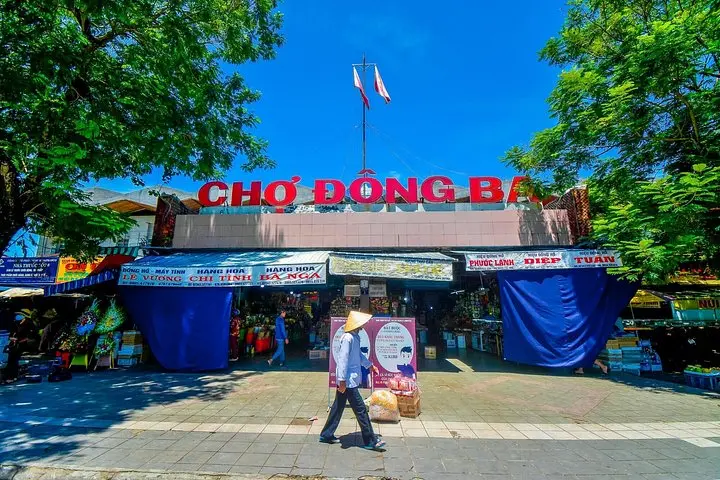
Hue was Vietnam’s imperial capital under the Nguyen Dynasty (1802–1945); its Citadel and royal museums hold carved screens and lacquered robes that speak to court ritual and regional trade. The city's flat coastal plain—sediments deposited by the Perfume River—makes the routes easy and paced; geology here places historic architecture against a low, river-swept backdrop rather than high peaks. Culture arrives in small things: the cadence of vendors in Dong Ba Market, bowls of bun bo Hue sold in doorways, and incense smoke climbing from pagoda roofs.
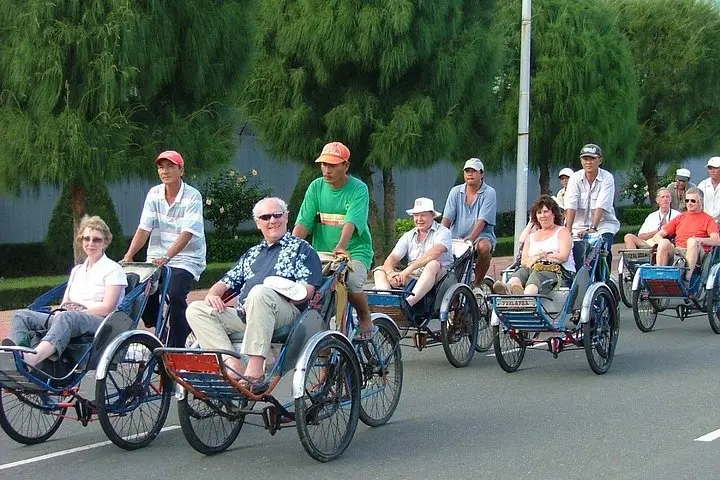
On a private cyclo tour expect 4–5 hours of slow cruising, short walks through ticketed sites, and hotel pickup in Hue city center. The route is flat but can be humid and busy with scooters; drivers know the lanes, but keep a hand on your belongings. Entrance fees and bottled water are included, and the guide narrates history in English. Practical notes: wear breathable clothing, apply sun protection, keep cash for market purchases, and be ready to dismount on cobbled or narrow streets. The pace is conversational—designed to show you Hue’s civic textures rather than test your stamina—making it an ideal introduction to the city’s history and everyday life.
Yes—admission fees for the Imperial Citadel and the Royal Antiques Museum are included in the tour as listed.
The private cyclo driver and guide pick you up at hotels in Hue city center and return you to your accommodation at the end.
Yes—the cyclo is a gentle, seated ride suitable for older travelers, but it is not wheelchair accessible and involves short walks at sites.
Bring small denominations (VND 20,000–200,000) for food and souvenirs; vendors often prefer cash and expect light bargaining.
Authentuc PU LUONG operates guided outdoor trips and adventures with an emphasis on safety, stewardship, and memorable experiences.
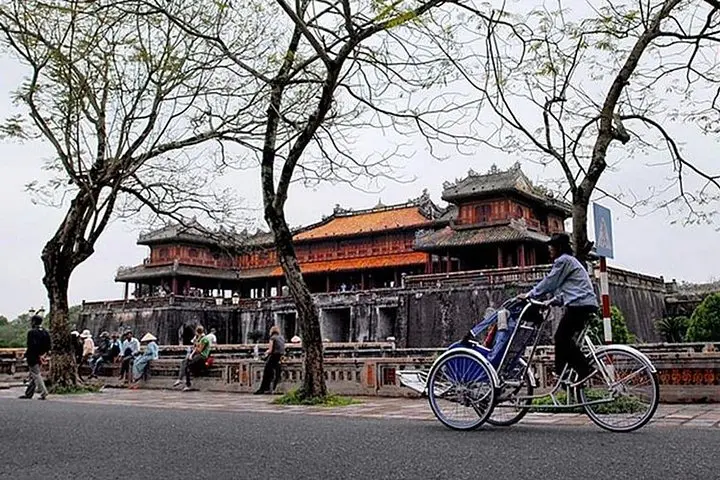

You slide through a morning of low-slung awnings and scooter wakes as the cyclo pedals, gently rocking, ferry you past lacquered gates and riverside alleys. The city opens in fragments: a tile-roofed market stall hawking fish sauce, the red-orange roofs of the Imperial Citadel, and the steady arc of the Perfume River, which seems to pull the town toward its banks.
You slide through a morning of low-slung awnings and scooter wakes as the cyclo pedals, gently rocking, ferry you past lacquered gates and riverside alleys. The city opens in fragments: a tile-roofed market stall hawking fish sauce, the red-orange roofs of the Imperial Citadel, and the steady arc of the Perfume River, which seems to pull the town toward its banks.
Hue was Vietnam’s imperial capital under the Nguyen Dynasty (1802–1945); its Citadel and royal museums hold carved screens and lacquered robes that speak to court ritual and regional trade. The city's flat coastal plain—sediments deposited by the Perfume River—makes the routes easy and paced; geology here places historic architecture against a low, river-swept backdrop rather than high peaks. Culture arrives in small things: the cadence of vendors in Dong Ba Market, bowls of bun bo Hue sold in doorways, and incense smoke climbing from pagoda roofs.
On a private cyclo tour expect 4–5 hours of slow cruising, short walks through ticketed sites, and hotel pickup in Hue city center. The route is flat but can be humid and busy with scooters; drivers know the lanes, but keep a hand on your belongings. Entrance fees and bottled water are included, and the guide narrates history in English. Practical notes: wear breathable clothing, apply sun protection, keep cash for market purchases, and be ready to dismount on cobbled or narrow streets. The pace is conversational—designed to show you Hue’s civic textures rather than test your stamina—making it an ideal introduction to the city’s history and everyday life.