THE ADVENTURE COLLECTIVE® · Independent discovery and booking for outdoor travel

Move quickly through the National Museum of Natural History with an expert guide: from the Hope Diamond to Ocean Hall, this small-group tour highlights the museum’s must-sees while offering practical tips on timing, security, and accessibility.
Move quickly through the National Museum of Natural History with an expert guide: from the Hope Diamond to Ocean Hall, this small-group tour highlights the museum’s must-sees while offering practical tips on timing, security, and accessibility.
The Madison Drive stairs open like a stage curtain: the National Museum of Natural History’s limestone façade looms above the National Mall and the city hums around you. On a two-hour, eight-person tour you move fast and close—through vitrines of gemstones that catch the light like small suns, past silent mummies, and into halls where taxidermy polar bears and elephant mounts seem to judge your progress.
Verified experiences and guided adventures in the surrounding area.
Operated by Babylon Tours DC · Washington, DC
The Madison Drive stairs open like a stage curtain: the National Museum of Natural History’s limestone façade looms above the National Mall and the city hums around you. On a two-hour, eight-person tour you move fast and close—through vitrines of gemstones that catch the light like small suns, past silent mummies, and into halls where taxidermy polar bears and elephant mounts seem to judge your progress.
The museum dates back to the early 20th century and now preserves more than 120 million specimens. Geology fans will note the Dom Pedro aquamarine and an array of crystalline structures that tell a deep-Earth story; cultural displays trace burial rituals and the technology of preservation; Ocean Hall translates currents and deep-sea science into scale and texture with a 45-ton whale replica and live coral exhibits that still pulse with color.
Locals often slip into quieter corners: the Q?rius learning lab for hands-on specimens, and the small Insect Zoo with live arthropods. The building itself is a study in museum history—security and conservation choices shape what you can carry and how close you can get.
Practical guidance: arrive 10 minutes early at the Madison Drive NW steps, bring government-issued ID for entry when requested, and travel light—large bags are not permitted. Expect moderate walking on tiled floors and occasional quiet zones where guides lower their voices. Comfortable shoes, a charged phone for your mobile ticket, and a flexible schedule help—crowds build midday. This small-group format prioritizes close-in storytelling and faster transitions between highlights, making it ideal if you want concentrated context without a full-day museum slog.
Yes; this is a small-group tour with limited spots—book in advance to guarantee your place and receive mobile ticket details.
No, large bags and suitcases are not allowed through security; bring only small backpacks or handbags.
The museum and many exhibits are accessible, but inform the operator of any special requirements when booking so they can accommodate you.
Photography rules vary by gallery—some rooms restrict flash or photography, and guides will advise before entering quiet or sensitive spaces.
Babylon Tours DC operates guided outdoor trips and adventures with an emphasis on safety, stewardship, and memorable experiences.


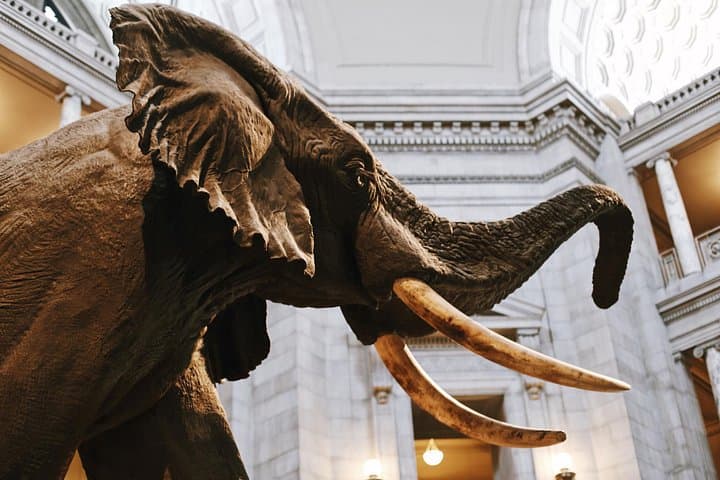
The Madison Drive stairs open like a stage curtain: the National Museum of Natural History’s limestone façade looms above the National Mall and the city hums around you. On a two-hour, eight-person tour you move fast and close—through vitrines of gemstones that catch the light like small suns, past silent mummies, and into halls where taxidermy polar bears and elephant mounts seem to judge your progress.
The Madison Drive stairs open like a stage curtain: the National Museum of Natural History’s limestone façade looms above the National Mall and the city hums around you. On a two-hour, eight-person tour you move fast and close—through vitrines of gemstones that catch the light like small suns, past silent mummies, and into halls where taxidermy polar bears and elephant mounts seem to judge your progress.
The museum dates back to the early 20th century and now preserves more than 120 million specimens. Geology fans will note the Dom Pedro aquamarine and an array of crystalline structures that tell a deep-Earth story; cultural displays trace burial rituals and the technology of preservation; Ocean Hall translates currents and deep-sea science into scale and texture with a 45-ton whale replica and live coral exhibits that still pulse with color.
Locals often slip into quieter corners: the Q?rius learning lab for hands-on specimens, and the small Insect Zoo with live arthropods. The building itself is a study in museum history—security and conservation choices shape what you can carry and how close you can get.
Practical guidance: arrive 10 minutes early at the Madison Drive NW steps, bring government-issued ID for entry when requested, and travel light—large bags are not permitted. Expect moderate walking on tiled floors and occasional quiet zones where guides lower their voices. Comfortable shoes, a charged phone for your mobile ticket, and a flexible schedule help—crowds build midday. This small-group format prioritizes close-in storytelling and faster transitions between highlights, making it ideal if you want concentrated context without a full-day museum slog.