THE ADVENTURE COLLECTIVE® · Independent discovery and booking for outdoor travel

Spend a full day walking the first, wild leg of Kilimanjaro’s Marangu Route. This guided day trip climbs from Marangu Gate through rainforest to Mandara Hut (2,700 m), offering close encounters with monkeys, a view into Maundi Crater, and a practical introduction to climbing Africa’s highest massif.
Spend a full day walking the first, wild leg of Kilimanjaro’s Marangu Route. This guided day trip climbs from Marangu Gate through rainforest to Mandara Hut (2,700 m), offering close encounters with monkeys, a view into Maundi Crater, and a practical introduction to climbing Africa’s highest massif.
You start before dawn in a minivan cutting away from Moshi toward a gate that smells of wet earth and wood smoke. Rainforest closes in fast—ferns bristle, and the trees lean like old climbers listening for you. The trail rises in a steady rhythm: a chorus of birds, the occasional chitter of blue monkeys and, if you're lucky, the slow, deliberate pass of a colobus in high branches. By late morning Mandara Hut appears through a clearing at roughly 2,700 meters, a squat wooden refuge that gives the mountain its first clear view of you.
Verified experiences and guided adventures in the surrounding area.
Operated by Livingstone Safari Tanzania · Marangu, Kilimanjaro Region
You start before dawn in a minivan cutting away from Moshi toward a gate that smells of wet earth and wood smoke. Rainforest closes in fast—ferns bristle, and the trees lean like old climbers listening for you. The trail rises in a steady rhythm: a chorus of birds, the occasional chitter of blue monkeys and, if you're lucky, the slow, deliberate pass of a colobus in high branches. By late morning Mandara Hut appears through a clearing at roughly 2,700 meters, a squat wooden refuge that gives the mountain its first clear view of you.
This is a taste of Kilimanjaro, not an attempt at the summit. The Marangu Route—one of the mountain's historic approaches—was the path many early explorers used in the late 19th and early 20th centuries. The Chagga people who tend the lower slopes have shaped the mountain for generations with terraced farms and coffee plantations; their villages are the cultural foothold for any climb. Geologically, Kilimanjaro is a composite of three volcanic cones; here, on the lower flanks, the mountain still breathes as a weather-maker, pulling cloud and rain into the forest.
The day hike focuses on the forested lower leg: muddy roots, compacted volcanic soil, occasional stone steps and switchbacks. You’ll pass Maundi Crater—a collapsed volcanic bowl turned alpine meadow—and small waterfalls that seem to dare you to linger. The air thins noticeably by Mandara Hut but rarely becomes dangerous on a day outing; still, those unused to elevation will feel the effort in their lungs.
Practically: the route starts at Marangu National Park Gate and gains roughly 800–900 meters in elevation round-trip, with a total walking distance typically between 8 and 12 kilometers depending on path choices. Expect 8–10 hours door-to-door including transfers from Moshi or Arusha, registration time at the gate, a lunch stop at Mandara and time at Maundi Crater.
Tips that matter: wear sturdy, grippy hiking boots and gaiters for muddy sections; pack a breathable insulating layer and a waterproof shell because mountain weather changes fast; carry 2–3 liters of water and snacks; and move slowly on steeper pitches—pace beats speed at altitude.
On the return you step down into warmer air and village life—small coffee plots, children waving, vendors selling roasted beans. The day trip delivers a concentrated Kilimanjaro experience: rainforest intimacy, a brush with highland geology, and a practical sense of what the mountain asks of you should you ever return for more.
No—this is a day hike that reaches Mandara Hut (~2,700 m) and Maundi Crater then returns to the gate; it’s an introductory taste of the mountain.
Expect roughly 8–12 km round-trip with about 800–900 meters of elevation gain from Marangu Gate to Mandara Hut and back.
Less likely than on multi-day ascents, but you may notice light altitude effects (shortness of breath, headache); pace yourself and hydrate.
Lunch and bottled water are included in the tour; bring extra snacks if you have higher calorie needs.
No technical experience required, but being in reasonable cardiovascular shape helps—regular hill walking or stair climbing beforehand is useful.
The operator lists the hike as suitable for all fitness levels, but participants should be able to sustain several hours of uphill walking; discuss mobility or medical concerns with the provider before booking.
Livingstone Safari Tanzania operates guided outdoor trips and adventures with an emphasis on safety, stewardship, and memorable experiences.
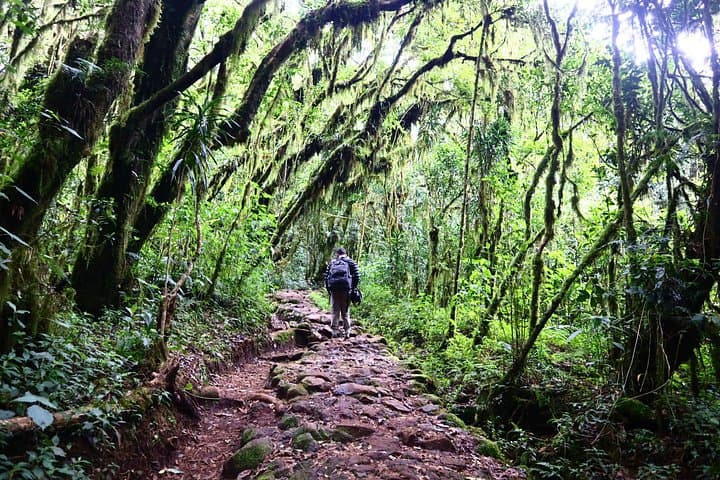
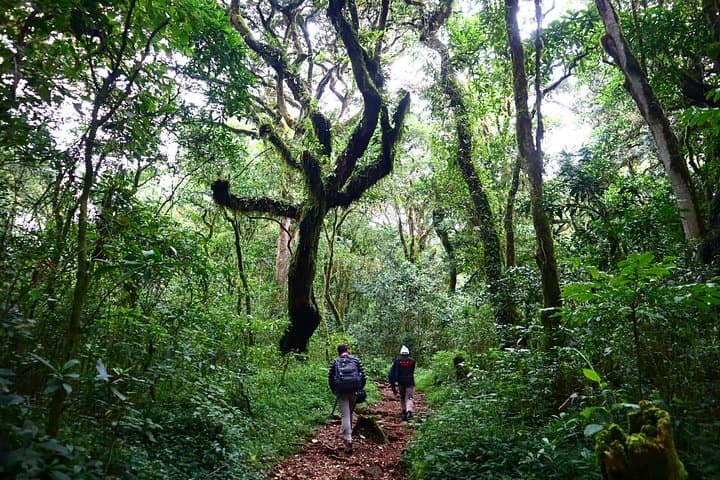
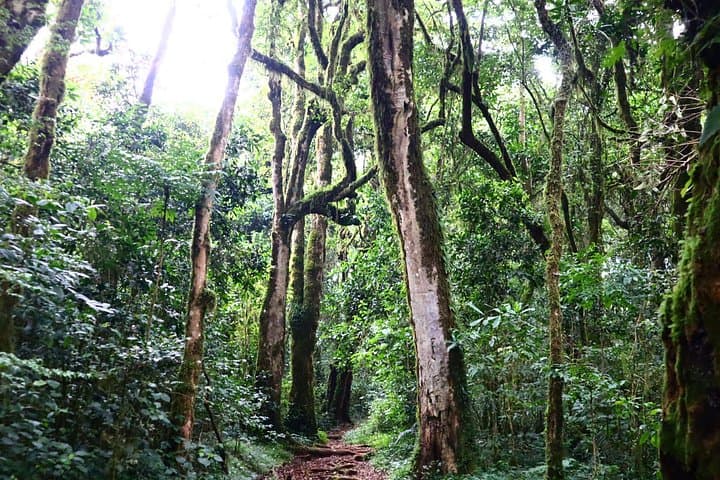
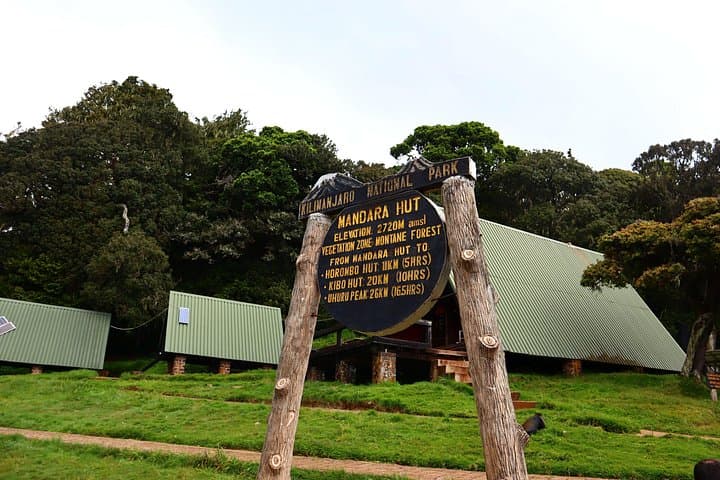
You start before dawn in a minivan cutting away from Moshi toward a gate that smells of wet earth and wood smoke. Rainforest closes in fast—ferns bristle, and the trees lean like old climbers listening for you. The trail rises in a steady rhythm: a chorus of birds, the occasional chitter of blue monkeys and, if you're lucky, the slow, deliberate pass of a colobus in high branches. By late morning Mandara Hut appears through a clearing at roughly 2,700 meters, a squat wooden refuge that gives the mountain its first clear view of you.
You start before dawn in a minivan cutting away from Moshi toward a gate that smells of wet earth and wood smoke. Rainforest closes in fast—ferns bristle, and the trees lean like old climbers listening for you. The trail rises in a steady rhythm: a chorus of birds, the occasional chitter of blue monkeys and, if you're lucky, the slow, deliberate pass of a colobus in high branches. By late morning Mandara Hut appears through a clearing at roughly 2,700 meters, a squat wooden refuge that gives the mountain its first clear view of you.
This is a taste of Kilimanjaro, not an attempt at the summit. The Marangu Route—one of the mountain's historic approaches—was the path many early explorers used in the late 19th and early 20th centuries. The Chagga people who tend the lower slopes have shaped the mountain for generations with terraced farms and coffee plantations; their villages are the cultural foothold for any climb. Geologically, Kilimanjaro is a composite of three volcanic cones; here, on the lower flanks, the mountain still breathes as a weather-maker, pulling cloud and rain into the forest.
The day hike focuses on the forested lower leg: muddy roots, compacted volcanic soil, occasional stone steps and switchbacks. You’ll pass Maundi Crater—a collapsed volcanic bowl turned alpine meadow—and small waterfalls that seem to dare you to linger. The air thins noticeably by Mandara Hut but rarely becomes dangerous on a day outing; still, those unused to elevation will feel the effort in their lungs.
Practically: the route starts at Marangu National Park Gate and gains roughly 800–900 meters in elevation round-trip, with a total walking distance typically between 8 and 12 kilometers depending on path choices. Expect 8–10 hours door-to-door including transfers from Moshi or Arusha, registration time at the gate, a lunch stop at Mandara and time at Maundi Crater.
Tips that matter: wear sturdy, grippy hiking boots and gaiters for muddy sections; pack a breathable insulating layer and a waterproof shell because mountain weather changes fast; carry 2–3 liters of water and snacks; and move slowly on steeper pitches—pace beats speed at altitude.
On the return you step down into warmer air and village life—small coffee plots, children waving, vendors selling roasted beans. The day trip delivers a concentrated Kilimanjaro experience: rainforest intimacy, a brush with highland geology, and a practical sense of what the mountain asks of you should you ever return for more.