THE ADVENTURE COLLECTIVE® · Independent discovery and booking for outdoor travel

A day trip that pairs the thunder of Snoqualmie Falls with tastings in Woodinville’s winery district. Expect a short rainforest walk to the lower deck, tasting-room hopping, and a flexible driver-guide who handles logistics.
A day trip that pairs the thunder of Snoqualmie Falls with tastings in Woodinville’s winery district. Expect a short rainforest walk to the lower deck, tasting-room hopping, and a flexible driver-guide who handles logistics.
The bus eases away from downtown Seattle and the city’s glass towers fall behind you, replaced by a ribbon of highway that crosses Lake Washington. The floating bridges lift and the soundscape shifts—more wind, the distant rush of water—and after an hour you can already feel the landscape change: the river ahead hurries, the air tastes cleaner, and the canyon that holds Snoqualmie Falls begins to reveal itself in a sleeve of fir and alder.
Verified experiences and guided adventures in the surrounding area.
Operated by Oktaytours · Snoqualmie, Washington
The bus eases away from downtown Seattle and the city’s glass towers fall behind you, replaced by a ribbon of highway that crosses Lake Washington. The floating bridges lift and the soundscape shifts—more wind, the distant rush of water—and after an hour you can already feel the landscape change: the river ahead hurries, the air tastes cleaner, and the canyon that holds Snoqualmie Falls begins to reveal itself in a sleeve of fir and alder.
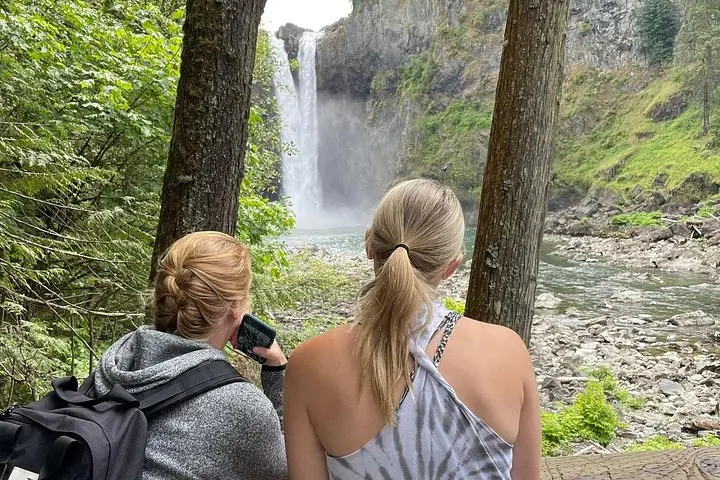
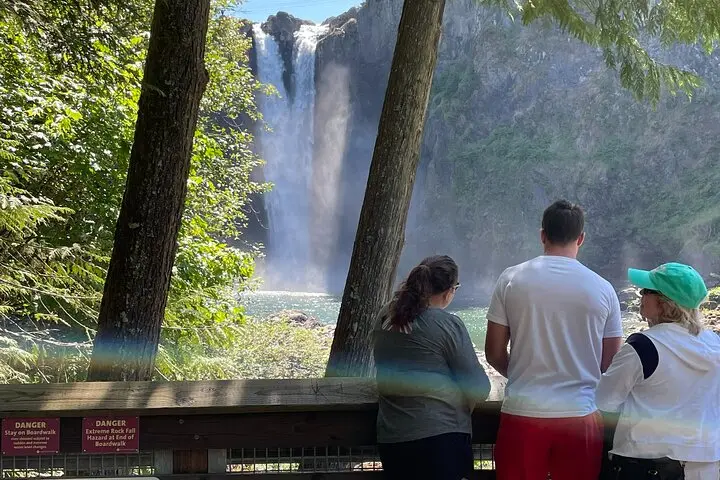
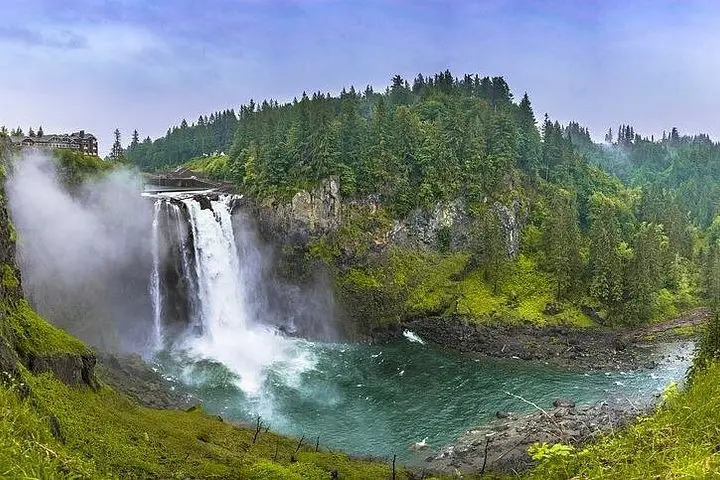
At the upper observation deck the falls demand attention. Water plunges roughly 268 feet, the mist daring you to step closer, the roar filling the air like a living thing. A soft trail descends through a pocket of temperate rainforest to the lower deck, where the Snoqualmie River thunders at eye level and basalt cliffs frame the scene. Geologically, this gorge is the product of volcanic flows and Pleistocene glacial sculpting—hard basalt whittled into a clean vertical fall as water found its fault line.
The area is also steeped in human stories. The falls are sacred to the Snoqualmie Tribe and later became an industrial milestone with an early hydroelectric plant powering Seattle in the late 19th century. Today the valley wears both histories lightly: spiritual reverence and a working, modern landscape.
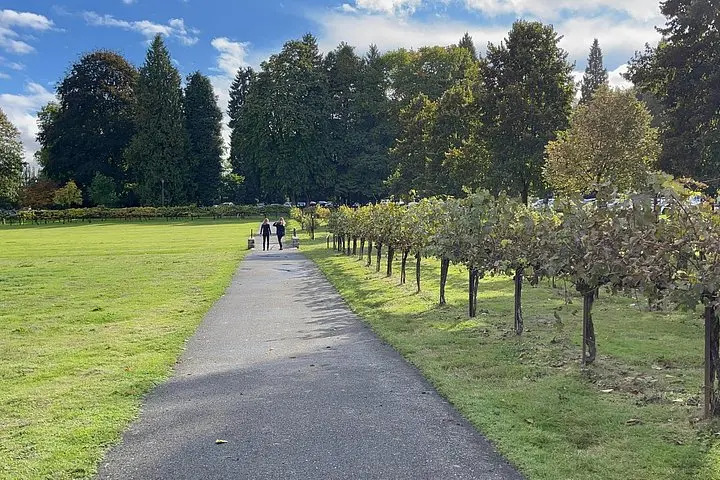
From there the tour pivots to Woodinville, a short drive north where more than 130 small wineries and a handful of larger estates cluster around quiet, rolling vineyards. The contrast is immediate: thunderous water and canyon air give way to sun on vine leaves, tasting rooms with long wood bars, and a regional style that blends Washington Riesling and Cabernet with Pacific Northwest restraint.
Practical note: this is a day tour (about 6–7 hours) running from mid-morning pickup in Seattle to late afternoon return. The operator provides bottled water, snacks, and a driver-guide who ferries you between viewpoints and tasting rooms; tastings and lunches are paid on-site. Chateau Ste. Michelle, the area’s most famous estate, requires pre-reservation during weekends—plan your table in advance if you want to linger there.
For a smooth trip, wear waterproof shoes and layered clothing—the canyon can be damp even on sunny days—carry ID for wine tastings, and bring a small pack for camera gear. Pace your tastings and hydrate between stops; your driver keeps the schedule, but small adjustments for weather or crowding are common.
This is an approachable day outside Seattle that pairs geological spectacle with relaxed viniculture. It’s best for travelers who want big scenery without a long hike and a taste of Washington wine country in the same afternoon.
No—tastings and meals at wineries, including Chateau Ste. Michelle, are paid on-site by guests.
The trail is short—about 0.2–0.3 miles each way—but includes steps and uneven, sometimes slippery surfaces.
Yes—the tour offers hotel and select area pickups (you’ll be provided options at booking); airport-area pickup may require a minimum of four travelers.
The upper observation deck is wheelchair-accessible, but the path to the lower deck and some winery areas may not be fully accessible—check with the operator for specifics.
Guides are flexible and will accommodate requests when possible, but some estates require reservations—notify the operator ahead of time for planning.
Full refunds are available if cancelled at least 24 hours before departure; the operator may cancel for bad weather or insufficient travelers and will offer a refund.
Oktaytours operates guided outdoor trips and adventures with an emphasis on safety, stewardship, and memorable experiences.
The bus eases away from downtown Seattle and the city’s glass towers fall behind you, replaced by a ribbon of highway that crosses Lake Washington. The floating bridges lift and the soundscape shifts—more wind, the distant rush of water—and after an hour you can already feel the landscape change: the river ahead hurries, the air tastes cleaner, and the canyon that holds Snoqualmie Falls begins to reveal itself in a sleeve of fir and alder.
The bus eases away from downtown Seattle and the city’s glass towers fall behind you, replaced by a ribbon of highway that crosses Lake Washington. The floating bridges lift and the soundscape shifts—more wind, the distant rush of water—and after an hour you can already feel the landscape change: the river ahead hurries, the air tastes cleaner, and the canyon that holds Snoqualmie Falls begins to reveal itself in a sleeve of fir and alder.
At the upper observation deck the falls demand attention. Water plunges roughly 268 feet, the mist daring you to step closer, the roar filling the air like a living thing. A soft trail descends through a pocket of temperate rainforest to the lower deck, where the Snoqualmie River thunders at eye level and basalt cliffs frame the scene. Geologically, this gorge is the product of volcanic flows and Pleistocene glacial sculpting—hard basalt whittled into a clean vertical fall as water found its fault line.
The area is also steeped in human stories. The falls are sacred to the Snoqualmie Tribe and later became an industrial milestone with an early hydroelectric plant powering Seattle in the late 19th century. Today the valley wears both histories lightly: spiritual reverence and a working, modern landscape.
From there the tour pivots to Woodinville, a short drive north where more than 130 small wineries and a handful of larger estates cluster around quiet, rolling vineyards. The contrast is immediate: thunderous water and canyon air give way to sun on vine leaves, tasting rooms with long wood bars, and a regional style that blends Washington Riesling and Cabernet with Pacific Northwest restraint.
Practical note: this is a day tour (about 6–7 hours) running from mid-morning pickup in Seattle to late afternoon return. The operator provides bottled water, snacks, and a driver-guide who ferries you between viewpoints and tasting rooms; tastings and lunches are paid on-site. Chateau Ste. Michelle, the area’s most famous estate, requires pre-reservation during weekends—plan your table in advance if you want to linger there.
For a smooth trip, wear waterproof shoes and layered clothing—the canyon can be damp even on sunny days—carry ID for wine tastings, and bring a small pack for camera gear. Pace your tastings and hydrate between stops; your driver keeps the schedule, but small adjustments for weather or crowding are common.
This is an approachable day outside Seattle that pairs geological spectacle with relaxed viniculture. It’s best for travelers who want big scenery without a long hike and a taste of Washington wine country in the same afternoon.