THE ADVENTURE COLLECTIVE® · Independent discovery and booking for outdoor travel

Short bike rides and crystal-clear waters lead you through three distinct cenotes near Chemuyil — a semi-open gem, a dramatic underground cave, and the broad Xunan Ha. Small groups, provided gear, and a traditional Mayan snack make this an accessible half-day adventure.
Short bike rides and crystal-clear waters lead you through three distinct cenotes near Chemuyil — a semi-open gem, a dramatic underground cave, and the broad Xunan Ha. Small groups, provided gear, and a traditional Mayan snack make this an accessible half-day adventure.
You push off from Chemuyil at first light, tires whispering on limestone as the jungle opens into shafts of pale sun. Ten minutes of easy pedaling drops you to a semi-open cenote, its water so clear the submerged rock pillars look painted; the guide points out how groundwater carved these chambers over millennia. From there you cycle a short stretch to an underground cenote where light filters through fissures and stalactites lean like old cathedral ribs. The final stop is Xunan Ha, an open cenote with broad surface water that invites a relaxed float and a last snorkel before a simple Mayan snack.
Verified experiences and guided adventures in the surrounding area.
Operated by Cenotik · Chemuyil, Quintana Roo
You push off from Chemuyil at first light, tires whispering on limestone as the jungle opens into shafts of pale sun. Ten minutes of easy pedaling drops you to a semi-open cenote, its water so clear the submerged rock pillars look painted; the guide points out how groundwater carved these chambers over millennia. From there you cycle a short stretch to an underground cenote where light filters through fissures and stalactites lean like old cathedral ribs. The final stop is Xunan Ha, an open cenote with broad surface water that invites a relaxed float and a last snorkel before a simple Mayan snack.
The Yucatán’s cenotes are sinkholes formed when collapsed limestone revealed the aquifer below; many were sacred to Maya communities who considered them portals to the underworld. Geologically, expect karst formations, clear fresh water, and email-blue visibility in sheltered pools. Culturally, guides often share oral histories and the significance of cenotes to local life.
Practical notes: the tour runs about three hours with short, flat bike transfers (10 minutes between sites) and roughly 40 minutes of time per cenote. Organizers supply bikes, life vests, and snorkel gear; bring reef-safe sunscreen, a quick-dry set, and a reusable water bottle — you’ll refill on site. Wear water shoes for uneven limestone entries and a swimsuit under light clothing for easy changes. If you’re comfortable with basic snorkeling and short bike rides on country roads, this route is approachable; if you have spinal or serious heart issues, leave it to others. Finish with the Mayan snack and a final rinse, carrying away only photos and respect for a fragile underground world.
Transfer distances are short — roughly 10 minutes of easy, flat riding between each cenote, suitable for casual cyclists.
Yes — the tour supplies snorkels, masks, life vests and bicycles; bringing your own mask can improve fit and comfort.
Non-swimmers can participate using a life vest and staying near the edges; consult the guide during the safety briefing.
Children who can follow safety instructions and fit life vests may join; check age limits with the operator when booking.
Cenotik operates guided outdoor trips and adventures with an emphasis on safety, stewardship, and memorable experiences.
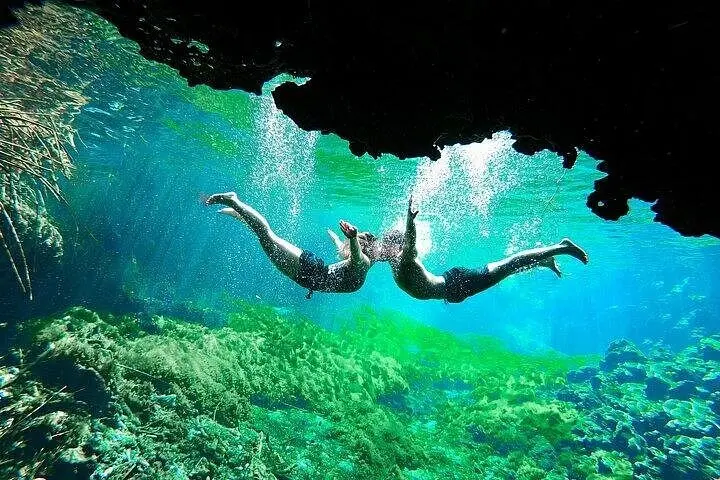
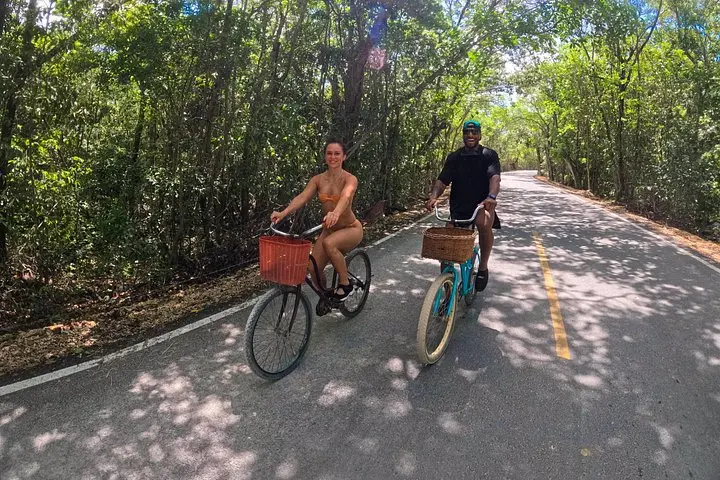
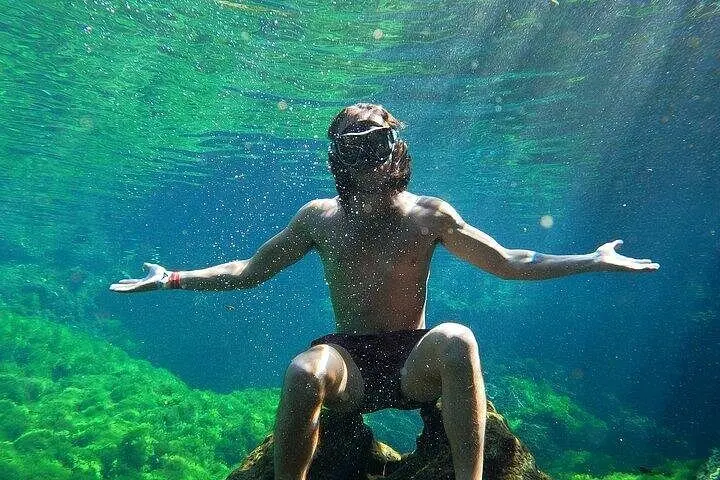
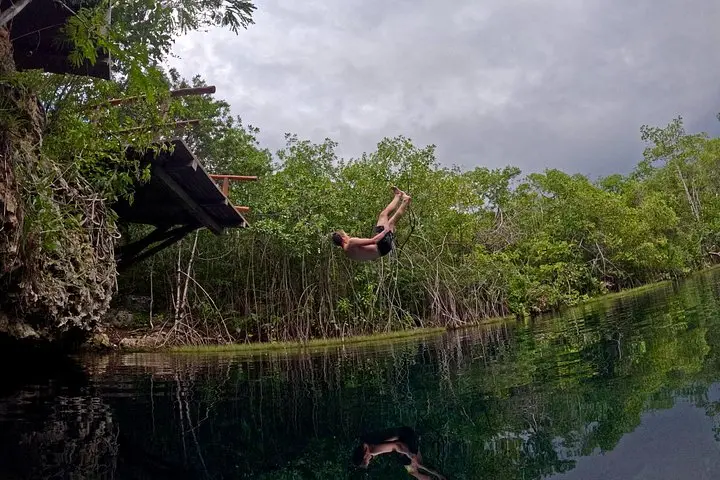
You push off from Chemuyil at first light, tires whispering on limestone as the jungle opens into shafts of pale sun. Ten minutes of easy pedaling drops you to a semi-open cenote, its water so clear the submerged rock pillars look painted; the guide points out how groundwater carved these chambers over millennia. From there you cycle a short stretch to an underground cenote where light filters through fissures and stalactites lean like old cathedral ribs. The final stop is Xunan Ha, an open cenote with broad surface water that invites a relaxed float and a last snorkel before a simple Mayan snack.
You push off from Chemuyil at first light, tires whispering on limestone as the jungle opens into shafts of pale sun. Ten minutes of easy pedaling drops you to a semi-open cenote, its water so clear the submerged rock pillars look painted; the guide points out how groundwater carved these chambers over millennia. From there you cycle a short stretch to an underground cenote where light filters through fissures and stalactites lean like old cathedral ribs. The final stop is Xunan Ha, an open cenote with broad surface water that invites a relaxed float and a last snorkel before a simple Mayan snack.
The Yucatán’s cenotes are sinkholes formed when collapsed limestone revealed the aquifer below; many were sacred to Maya communities who considered them portals to the underworld. Geologically, expect karst formations, clear fresh water, and email-blue visibility in sheltered pools. Culturally, guides often share oral histories and the significance of cenotes to local life.
Practical notes: the tour runs about three hours with short, flat bike transfers (10 minutes between sites) and roughly 40 minutes of time per cenote. Organizers supply bikes, life vests, and snorkel gear; bring reef-safe sunscreen, a quick-dry set, and a reusable water bottle — you’ll refill on site. Wear water shoes for uneven limestone entries and a swimsuit under light clothing for easy changes. If you’re comfortable with basic snorkeling and short bike rides on country roads, this route is approachable; if you have spinal or serious heart issues, leave it to others. Finish with the Mayan snack and a final rinse, carrying away only photos and respect for a fragile underground world.