THE ADVENTURE COLLECTIVE® · Independent discovery and booking for outdoor travel

Float over seagrass beds and watch green sea turtles surface for air on a guided 60-minute snorkel in Akumal Bay. Small groups, local guides, and reef-safe practices make this an accessible, conservation-minded marine encounter.
Float over seagrass beds and watch green sea turtles surface for air on a guided 60-minute snorkel in Akumal Bay. Small groups, local guides, and reef-safe practices make this an accessible, conservation-minded marine encounter.
The water is a clear, flat sheet of blue-green when the guide motions you toward the shallows and points out the protected line 25 meters from shore. You slip a mask on and the world contracts to bubbles and sunlight slicing under the surface. A mottled shell appears, slow and deliberate; a green sea turtle lifts its head for air and the current seems to hold its breath. For an hour, you follow the reef’s edge as fish fan out like living confetti and rays glide by, the bay itself guiding the rhythm of the group.
Verified experiences and guided adventures in the surrounding area.
Operated by WG TOURS · Akumal, Quintana Roo
The water is a clear, flat sheet of blue-green when the guide motions you toward the shallows and points out the protected line 25 meters from shore. You slip a mask on and the world contracts to bubbles and sunlight slicing under the surface. A mottled shell appears, slow and deliberate; a green sea turtle lifts its head for air and the current seems to hold its breath. For an hour, you follow the reef’s edge as fish fan out like living confetti and rays glide by, the bay itself guiding the rhythm of the group.
Akumal — a Maya name that literally means “place of turtles” — has been a feeding ground for Chelonia mydas for generations. The bay’s shallow seagrass beds and coral fingers are a geological shelf carved by limestone and surf; the reef here sits close to shore, which makes marine life unusually accessible but also vulnerable. The modern conservation story is as much about local rules as it is about geology: buoy lines, limited group sizes, and guided swims protect both visitors and the animals that draw them.
The town on the coast keeps a quiet, low-rise profile. Small shops and family-run beach clubs share the sand with volunteer groups that monitor turtle nests and educate visitors. Expect to hear a mix of Spanish and tourist chatter, the rumble of panga boats in the distance, and, if you time it right, the soft chatter of guides explaining how to watch without touching.
Practicalities are straightforward. Tours run about 60 minutes and leave from Akumal beach; groups are capped at six for better visibility and less disturbance. You’ll start roughly 25 meters out where the protected area begins — water depth in the viewing zone is typically waist- to chest-deep, ideal for snorkelers of varying skill. Guides provide masks, fresh snorkel tubes, and life jackets; bring reef-safe sunscreen, a lightweight rash guard, and respect for personal space around wildlife.
Timing matters. Mornings after low tide slice through the water with better visibility and fewer boats; mid-day can be busier and brighter but warmer. Follow the guide’s instructions about keeping distance (usually a couple of meters), staying horizontal to avoid looming over turtles, and not chasing or touching. The experience is gentle by design: the reef and its residents direct the pace.
Whether you’re a confident swimmer or someone who prefers a life jacket, Akumal’s turtle swims deliver close, non-invasive encounters with one of the Caribbean’s most iconic species — an easy, memorable marine outing that pairs natural history with hands-on conservation cues.
No species can be guaranteed, but Akumal’s protected seagrass and reef make turtle sightings highly likely during calm conditions.
Yes—life jackets are provided and guides stay with the group, but basic comfort in the water is recommended.
Guides enforce a respectful distance—generally around two meters—and guests should remain horizontal and still to avoid stressing animals.
Yes—mask, a new snorkel tube, and a life jacket are provided as part of the tour inclusions.
Early morning after sunrise offers the clearest water and fewer other boats; avoid midday when the site is busiest.
Full refunds are available if you cancel at least 24 hours before the scheduled departure; tours may cancel for bad weather.
WG TOURS operates guided outdoor trips and adventures with an emphasis on safety, stewardship, and memorable experiences.
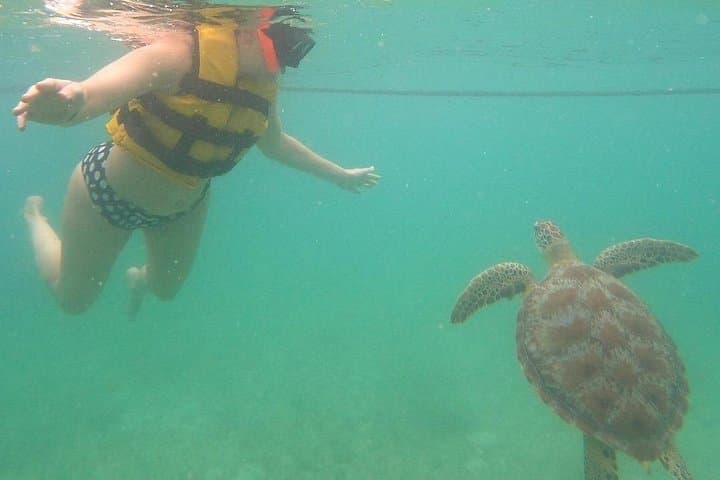


The water is a clear, flat sheet of blue-green when the guide motions you toward the shallows and points out the protected line 25 meters from shore. You slip a mask on and the world contracts to bubbles and sunlight slicing under the surface. A mottled shell appears, slow and deliberate; a green sea turtle lifts its head for air and the current seems to hold its breath. For an hour, you follow the reef’s edge as fish fan out like living confetti and rays glide by, the bay itself guiding the rhythm of the group.
The water is a clear, flat sheet of blue-green when the guide motions you toward the shallows and points out the protected line 25 meters from shore. You slip a mask on and the world contracts to bubbles and sunlight slicing under the surface. A mottled shell appears, slow and deliberate; a green sea turtle lifts its head for air and the current seems to hold its breath. For an hour, you follow the reef’s edge as fish fan out like living confetti and rays glide by, the bay itself guiding the rhythm of the group.
Akumal — a Maya name that literally means “place of turtles” — has been a feeding ground for Chelonia mydas for generations. The bay’s shallow seagrass beds and coral fingers are a geological shelf carved by limestone and surf; the reef here sits close to shore, which makes marine life unusually accessible but also vulnerable. The modern conservation story is as much about local rules as it is about geology: buoy lines, limited group sizes, and guided swims protect both visitors and the animals that draw them.
The town on the coast keeps a quiet, low-rise profile. Small shops and family-run beach clubs share the sand with volunteer groups that monitor turtle nests and educate visitors. Expect to hear a mix of Spanish and tourist chatter, the rumble of panga boats in the distance, and, if you time it right, the soft chatter of guides explaining how to watch without touching.
Practicalities are straightforward. Tours run about 60 minutes and leave from Akumal beach; groups are capped at six for better visibility and less disturbance. You’ll start roughly 25 meters out where the protected area begins — water depth in the viewing zone is typically waist- to chest-deep, ideal for snorkelers of varying skill. Guides provide masks, fresh snorkel tubes, and life jackets; bring reef-safe sunscreen, a lightweight rash guard, and respect for personal space around wildlife.
Timing matters. Mornings after low tide slice through the water with better visibility and fewer boats; mid-day can be busier and brighter but warmer. Follow the guide’s instructions about keeping distance (usually a couple of meters), staying horizontal to avoid looming over turtles, and not chasing or touching. The experience is gentle by design: the reef and its residents direct the pace.
Whether you’re a confident swimmer or someone who prefers a life jacket, Akumal’s turtle swims deliver close, non-invasive encounters with one of the Caribbean’s most iconic species — an easy, memorable marine outing that pairs natural history with hands-on conservation cues.