THE ADVENTURE COLLECTIVE® · Independent discovery and booking for outdoor travel

Power across snowfields and approach Exit Glacier on a guided snowmobile ride from Seward. This two-to-four-hour tour mixes late-model machines, local guides, and hot beverages—ideal for travelers who want big Alaskan scenery with small-group logistics.
Power across snowfields and approach Exit Glacier on a guided snowmobile ride from Seward. This two-to-four-hour tour mixes late-model machines, local guides, and hot beverages—ideal for travelers who want big Alaskan scenery with small-group logistics.
A cold breath of ocean wind follows the group out of Seward and into the white hush. Engines fire, a line of late-model snowmobiles hum to life, and the town shrinks behind a wall of spruce and granite. For the next two to four hours, riders trade pavement for a landscape that feels governed by ice: open snowfields that reflect a thin winter sky, ridgelines that frame the mouth of fjords, and the low, cragged face of Exit Glacier waiting like an old, patient neighbor.
Verified experiences and guided adventures in the surrounding area.
Operated by Kenai Backcountry Adventures · Seward, Alaska
A cold breath of ocean wind follows the group out of Seward and into the white hush. Engines fire, a line of late-model snowmobiles hum to life, and the town shrinks behind a wall of spruce and granite. For the next two to four hours, riders trade pavement for a landscape that feels governed by ice: open snowfields that reflect a thin winter sky, ridgelines that frame the mouth of fjords, and the low, cragged face of Exit Glacier waiting like an old, patient neighbor.
Kenai Fjords National Park is shaped by glaciers that once carved the coastline to the ocean. In winter the park tightens its borders—roads end, trails disappear beneath deep snow, and access becomes a matter of machines and guts. The snowmobile tour follows routes that local guides have used for years to reach viewpoints and moraine benches, bringing riders within striking distance of crevassed ice and avalanche-scoured slopes. The geology reads like a ledger of time: glacial polish on bedrock, téphra bands in distant peaks, and shelves of old moraine that hold stories of advance and retreat.
This is a cultural landscape as much as a physical one. Seward’s identity grew around fishing, maritime trade, and the steel of rails that once connected this harbor to the interior. In winter the town’s rhythms slow, and guides double as storytellers—relaying local lore about homesteads, the park’s creation, and how communities adapted to long, low-sun months.
Practical details matter here. Expect 10–25 miles of riding across rolling snowfields with modest climbing—plan on up to ~800 feet of cumulative elevation gain on exposed terrain. The operator provides insulated outerwear, snow bibs, boots, sanitized helmets, and hot beverages at a stop. Group size is small (max seven), and guides handle navigation and safety. Check-in is 30 minutes before departure at 11724 Seward Hwy; bring a valid photo ID if you plan to drive.
For photographers, the low winter sun gives dramatic side light across the glacier; action shots work best from the rear-facing passenger seat or with a chest harness for drivers. Dress in warm, moisture-wicking layers, protect your face from wind, and keep batteries warm—the cold kills power fast. Be aware of weather cancellations; operators will refund full payment if they cancel 24+ hours in advance. Respect the route: stay with your guide, avoid fragile tundra, and give wildlife wide berth—this is moose and ptarmigan country in winter.
This is not a race but a passage: the machines let you move where roads won’t go, and the silence after the engines cut is the point—an intense, southern-Alaska quiet that makes the glacier’s presence feel immediate and necessary.
No prior experience is required; guides provide instruction and machines are late-model and maintained—first-timers can ride as passengers or learn to drive after orientation.
Dress in moisture-wicking base layers, an insulating mid-layer, and use the provided insulated outerwear and boots; bring goggles and warm gloves.
Yes—sanitized helmets are provided for every rider as part of the tour inclusions.
Rides typically cover 10–25 miles round-trip over rolling snowfields and moraine with modest elevation gain; exact route depends on conditions.
Children can usually ride as passengers; driver age and weight restrictions vary—confirm specifics with the operator when booking.
The tour may be canceled for unsafe weather; the operator requires 24+ hours for a full refund and will notify you if conditions force cancellation.
Kenai Backcountry Adventures operates guided outdoor trips and adventures with an emphasis on safety, stewardship, and memorable experiences.
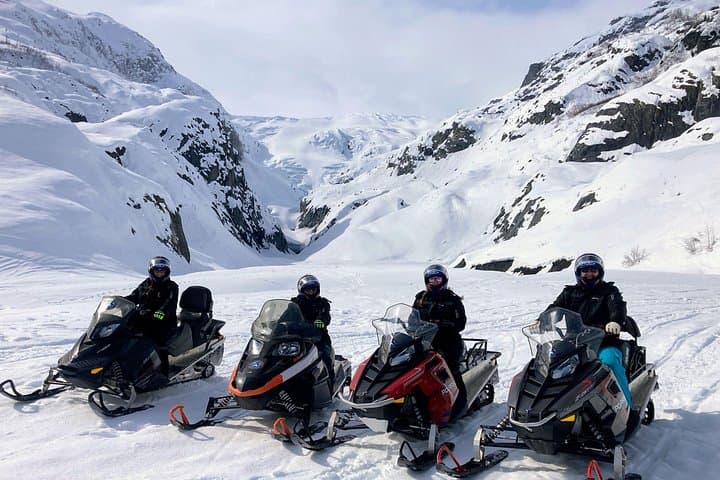
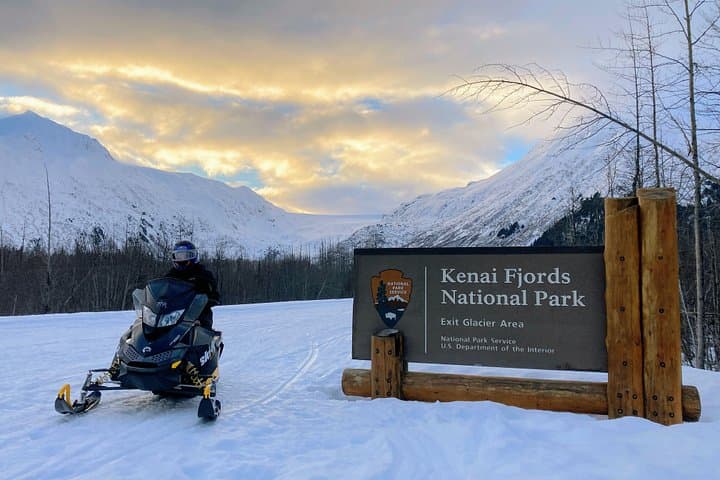
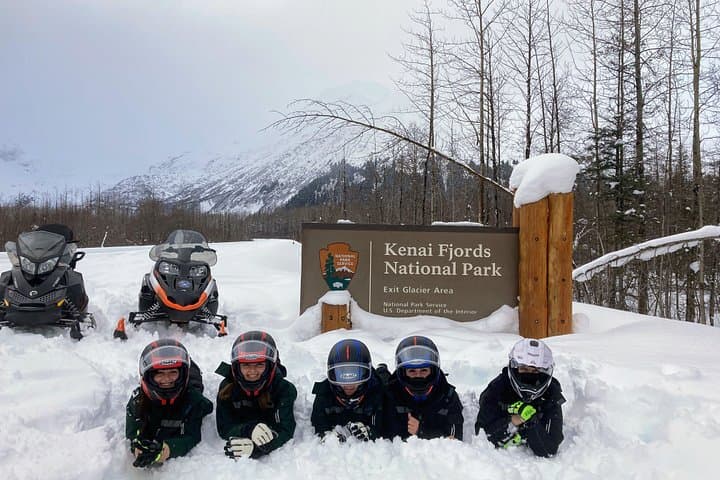
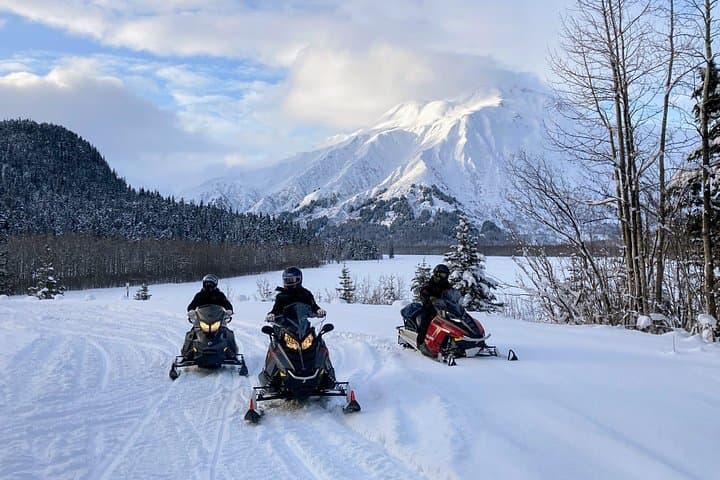
A cold breath of ocean wind follows the group out of Seward and into the white hush. Engines fire, a line of late-model snowmobiles hum to life, and the town shrinks behind a wall of spruce and granite. For the next two to four hours, riders trade pavement for a landscape that feels governed by ice: open snowfields that reflect a thin winter sky, ridgelines that frame the mouth of fjords, and the low, cragged face of Exit Glacier waiting like an old, patient neighbor.
A cold breath of ocean wind follows the group out of Seward and into the white hush. Engines fire, a line of late-model snowmobiles hum to life, and the town shrinks behind a wall of spruce and granite. For the next two to four hours, riders trade pavement for a landscape that feels governed by ice: open snowfields that reflect a thin winter sky, ridgelines that frame the mouth of fjords, and the low, cragged face of Exit Glacier waiting like an old, patient neighbor.
Kenai Fjords National Park is shaped by glaciers that once carved the coastline to the ocean. In winter the park tightens its borders—roads end, trails disappear beneath deep snow, and access becomes a matter of machines and guts. The snowmobile tour follows routes that local guides have used for years to reach viewpoints and moraine benches, bringing riders within striking distance of crevassed ice and avalanche-scoured slopes. The geology reads like a ledger of time: glacial polish on bedrock, téphra bands in distant peaks, and shelves of old moraine that hold stories of advance and retreat.
This is a cultural landscape as much as a physical one. Seward’s identity grew around fishing, maritime trade, and the steel of rails that once connected this harbor to the interior. In winter the town’s rhythms slow, and guides double as storytellers—relaying local lore about homesteads, the park’s creation, and how communities adapted to long, low-sun months.
Practical details matter here. Expect 10–25 miles of riding across rolling snowfields with modest climbing—plan on up to ~800 feet of cumulative elevation gain on exposed terrain. The operator provides insulated outerwear, snow bibs, boots, sanitized helmets, and hot beverages at a stop. Group size is small (max seven), and guides handle navigation and safety. Check-in is 30 minutes before departure at 11724 Seward Hwy; bring a valid photo ID if you plan to drive.
For photographers, the low winter sun gives dramatic side light across the glacier; action shots work best from the rear-facing passenger seat or with a chest harness for drivers. Dress in warm, moisture-wicking layers, protect your face from wind, and keep batteries warm—the cold kills power fast. Be aware of weather cancellations; operators will refund full payment if they cancel 24+ hours in advance. Respect the route: stay with your guide, avoid fragile tundra, and give wildlife wide berth—this is moose and ptarmigan country in winter.
This is not a race but a passage: the machines let you move where roads won’t go, and the silence after the engines cut is the point—an intense, southern-Alaska quiet that makes the glacier’s presence feel immediate and necessary.