THE ADVENTURE COLLECTIVE® · Independent discovery and booking for outdoor travel

Power a snowmobile across Vatnajökull, Europe’s largest glacier, on a three-hour guided ride from the Smyrlabjörg base camp. Expect high-altitude views, glacier geology explained by expert guides, and hands-on snowmobiling across an ancient ice cap.
Power a snowmobile across Vatnajökull, Europe’s largest glacier, on a three-hour guided ride from the Smyrlabjörg base camp. Expect high-altitude views, glacier geology explained by expert guides, and hands-on snowmobiling across an ancient ice cap.
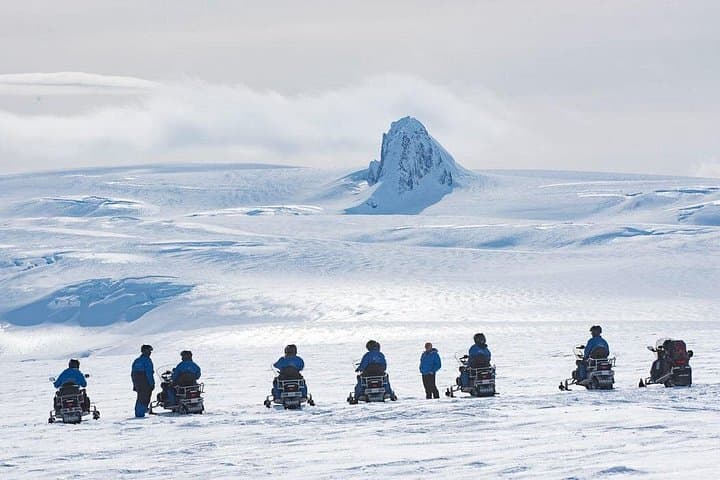
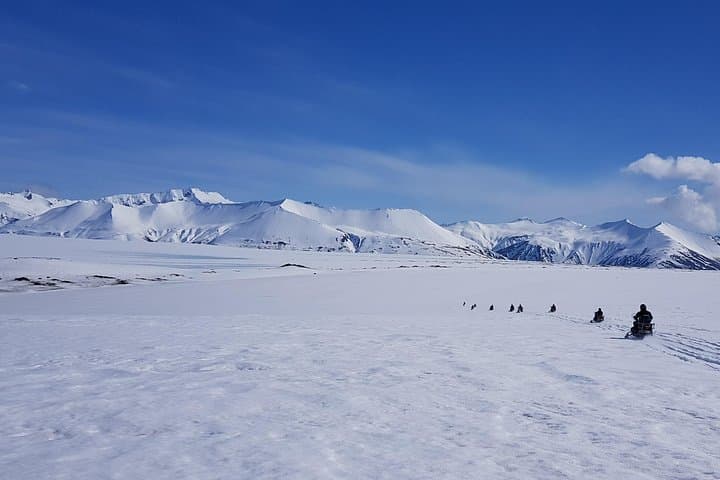
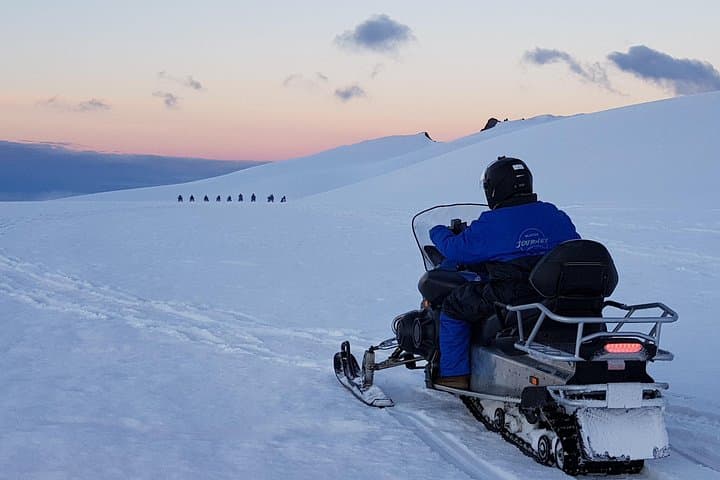
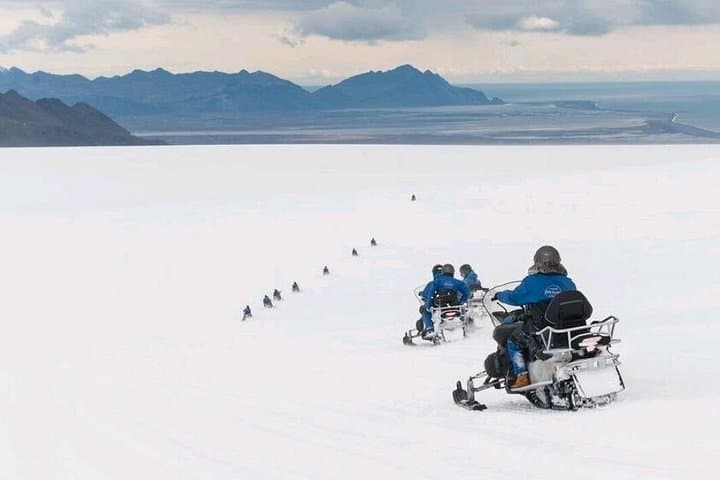
You crest a low ridge and the glacier opens like a white plain that refuses to stay still. Wind scours the ice, sending thin curtains of powder across the track. The snowmobile hum under your hands; your guide taps the throttle and the machine answers, slicing a line across Europe’s largest ice cap.
Verified experiences and guided adventures in the surrounding area.
Operated by Glacier Journey · Höfn, Austurland
You crest a low ridge and the glacier opens like a white plain that refuses to stay still. Wind scours the ice, sending thin curtains of powder across the track. The snowmobile hum under your hands; your guide taps the throttle and the machine answers, slicing a line across Europe’s largest ice cap.
Vatnajökull is not a single frozen sheet but a living massif—thick ice flowing over volcanic peaks, carving bowls and crevasses as it moves. On this three-hour tour from the base camp beside Hotel Smyrlabjörg you’ll climb roughly to 1,000 meters above sea level, where views swing from distant peaks to the flat blue of the ice surface. Guides talk geology as easily as they hand over helmets: they point out volcanic vents that sleep beneath kilometers of ice and explain how outlet glaciers have sculpted the surrounding valleys since the last Ice Age.
The area sits on the edge of Öræfi, where human history is short and weather history long. Viking farmers once grazed coastal pastures here and named the land for its harshness; today small fishing towns like Höfn are the practical hubs for tourists and scientists alike. The glacier’s silence can feel deliberate—ice that “remembers” eruptions and floods—and your guide’s commentary places each ridge in that long timeline.
Practical details matter here. You’ll meet at the operator’s base camp (not the hotel) 46 km west of Höfn and 34 km east of Jökulsárlón; arrive 30 minutes early for gearing and safety briefing. Overalls, helmets, gloves and facemasks are provided—boots are not—so wear waterproof footwear. A valid driver’s license is required to operate a snowmobile, and combined passenger weight limits mean single riders may be necessary (there’s an extra fee for solo machines).
The route is suited to people in average physical condition, but the weather can shift fast: wind, flat light and sudden cold are part of the package. Guides pick trails for safety and spectacle, pausing halfway for photos and to let the glacier’s scale sink in. Listen for instructions on crevasse zones and never stray from the marked route.
For photographers, bring a small, weather-sealed camera and secure straps; batteries drain quickly in cold. If you want to maximize your chance for dramatic skies, book morning tours for crisper light and afternoon tours when the wind often eases. In short: respect the ice, follow the guide, and you’ll come away with a fast-paced slice of Arctic wilderness—thrilling, tangible, and very, very white.
Yes—You must hold a valid driver’s license to operate the snowmobile; passengers do not need a license.
No—Organizers supply overalls, helmets, gloves and facemasks but not boots; bring waterproof footwear.
Combined weight on one snowmobile must be 180kg / 390lbs or less; if exceeded, you must book a single snowmobile (extra fee applies).
Temperatures can be well below freezing with wind chill—wear thermal base layers, an insulated jacket, and windproof outer layers under the provided overalls.
Yes—the operator may cancel due to unsafe weather or insufficient travelers; they require 24-hour cancellation notice for a full refund.
Yes—guides provide instruction and the route is graded for those new to snowmobiling, though basic balance and ability to follow directions are necessary.
Glacier Journey operates guided outdoor trips and adventures with an emphasis on safety, stewardship, and memorable experiences.
You crest a low ridge and the glacier opens like a white plain that refuses to stay still. Wind scours the ice, sending thin curtains of powder across the track. The snowmobile hum under your hands; your guide taps the throttle and the machine answers, slicing a line across Europe’s largest ice cap.
You crest a low ridge and the glacier opens like a white plain that refuses to stay still. Wind scours the ice, sending thin curtains of powder across the track. The snowmobile hum under your hands; your guide taps the throttle and the machine answers, slicing a line across Europe’s largest ice cap.
Vatnajökull is not a single frozen sheet but a living massif—thick ice flowing over volcanic peaks, carving bowls and crevasses as it moves. On this three-hour tour from the base camp beside Hotel Smyrlabjörg you’ll climb roughly to 1,000 meters above sea level, where views swing from distant peaks to the flat blue of the ice surface. Guides talk geology as easily as they hand over helmets: they point out volcanic vents that sleep beneath kilometers of ice and explain how outlet glaciers have sculpted the surrounding valleys since the last Ice Age.
The area sits on the edge of Öræfi, where human history is short and weather history long. Viking farmers once grazed coastal pastures here and named the land for its harshness; today small fishing towns like Höfn are the practical hubs for tourists and scientists alike. The glacier’s silence can feel deliberate—ice that “remembers” eruptions and floods—and your guide’s commentary places each ridge in that long timeline.
Practical details matter here. You’ll meet at the operator’s base camp (not the hotel) 46 km west of Höfn and 34 km east of Jökulsárlón; arrive 30 minutes early for gearing and safety briefing. Overalls, helmets, gloves and facemasks are provided—boots are not—so wear waterproof footwear. A valid driver’s license is required to operate a snowmobile, and combined passenger weight limits mean single riders may be necessary (there’s an extra fee for solo machines).
The route is suited to people in average physical condition, but the weather can shift fast: wind, flat light and sudden cold are part of the package. Guides pick trails for safety and spectacle, pausing halfway for photos and to let the glacier’s scale sink in. Listen for instructions on crevasse zones and never stray from the marked route.
For photographers, bring a small, weather-sealed camera and secure straps; batteries drain quickly in cold. If you want to maximize your chance for dramatic skies, book morning tours for crisper light and afternoon tours when the wind often eases. In short: respect the ice, follow the guide, and you’ll come away with a fast-paced slice of Arctic wilderness—thrilling, tangible, and very, very white.