THE ADVENTURE COLLECTIVE® · Independent discovery and booking for outdoor travel

Learn basic snowshoeing in Pyhä–Luosto National Park with a local guide on a two-hour winter walk. Experience quiet fell ridges, ancient rock, and Sámi-cultural insights while hiking gentle, well-marked routes.
Learn basic snowshoeing in Pyhä–Luosto National Park with a local guide on a two-hour winter walk. Experience quiet fell ridges, ancient rock, and Sámi-cultural insights while hiking gentle, well-marked routes.
A low-angled winter sun slices between bare spruce trunks as the group snaps into snowshoes, the metal teeth promising purchase where boots alone would slip. The guide counts off quietly in Finnish and English, and the first step onto the crusted snow makes a satisfying, hollow sound—the kind of small, precise music the north composes. You walk through a forest that seems to lean toward the light; at each clearing the fells—rounded, old mountains scored in pale quartzite—rise like patient animals watching your progress.
Verified experiences and guided adventures in the surrounding area.
Operated by Kairankutsu Oy · Pyhä / Luosto, Lapland
A low-angled winter sun slices between bare spruce trunks as the group snaps into snowshoes, the metal teeth promising purchase where boots alone would slip. The guide counts off quietly in Finnish and English, and the first step onto the crusted snow makes a satisfying, hollow sound—the kind of small, precise music the north composes. You walk through a forest that seems to lean toward the light; at each clearing the fells—rounded, old mountains scored in pale quartzite—rise like patient animals watching your progress.
Pyhä–Luosto National Park is one of Finland’s older protected areas, created to preserve its unusual fell geology and the old-growth pine that clings to ridge lines. The low, rounded fells are ancient bedrock—quartzite and schist—exposed and polished by long glacial passages. Culturally, the area sits within Sámi lands and a history of reindeer herding; the landscape still carries markers of that life: winter migration routes, wooden corrals, and place names that speak to seasons and travel.
On this guided two-hour outing, the emphasis is slower: learning to swing and lift rather than race, listening for the faint rasp of a grouse in the understory, and pausing to read the land. The guide will point to lichened boulders, explain how the fells were formed, and share stories about the Luosto amethyst mine and the small mountain chapels that marked old pilgrimage routes. Snow here is a sculptor; wind-driven drifts form cornices along the fell edges that dare you to keep your distance.
Practically, the route covers gentle rises—expect short climbs of 50–200 meters in elevation—over packed tracks, forest trails, and open fell meadows. The operator supplies snowshoes and poles and includes light refreshments and national park fees. Transfers from hotels in the Pyhä–Luosto area are typically provided; check pickup times on reconfirmation.
For planning: dress in layers (wool or synthetics, not cotton), bring waterproof boots, sunglasses for glare, and a small daypack with water and snacks. Weather on the fells can turn brisk quickly; a windproof outer layer and a warm hat make the difference between a memorable walk and a lesson in hypothermia avoidance. Respect park rules: stay on marked routes to protect fragile tundra vegetation and avoid disturbing reindeer.
This short, interpretive snowshoe is ideal for beginners and anyone wanting a concentrated introduction to Lapland winter. It offers the luxury of quiet—the kind that arrives when a group moves slowly enough for the landscape to reassert itself—and the practical reassurance of a guide who knows where the trail is safe and where the wind has hidden a drift.
No—this trip is beginner-friendly; the guide provides instruction and adjusts pace for the group.
Operators run tours in typical Lapland winter conditions; extreme cold alerts may prompt rescheduling—confirm with the supplier on the day of travel.
Yes—snowshoes and poles are included, along with light refreshments and national park fees.
Children can participate but must be accompanied by an adult; infant seating and family options are noted by the operator.
Yes—pickup in the Pyhä–Luosto area is available; exact times are provided on reconfirmation.
Stick to marked trails, pack out all waste, avoid disturbing wildlife and reindeer, and follow park signage.
Kairankutsu Oy operates guided outdoor trips and adventures with an emphasis on safety, stewardship, and memorable experiences.
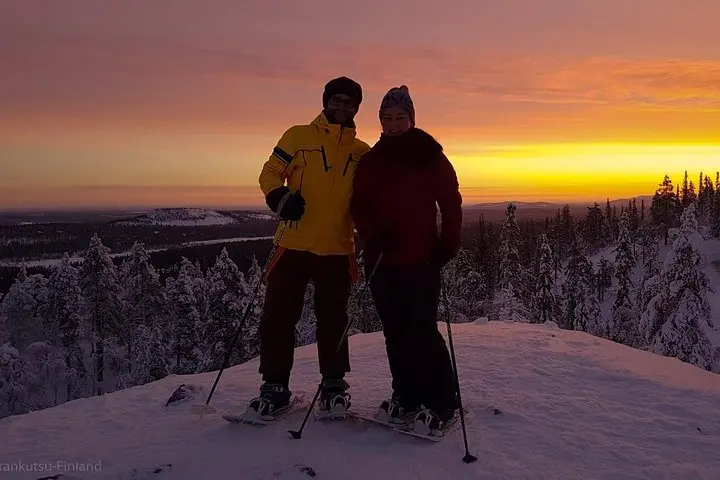
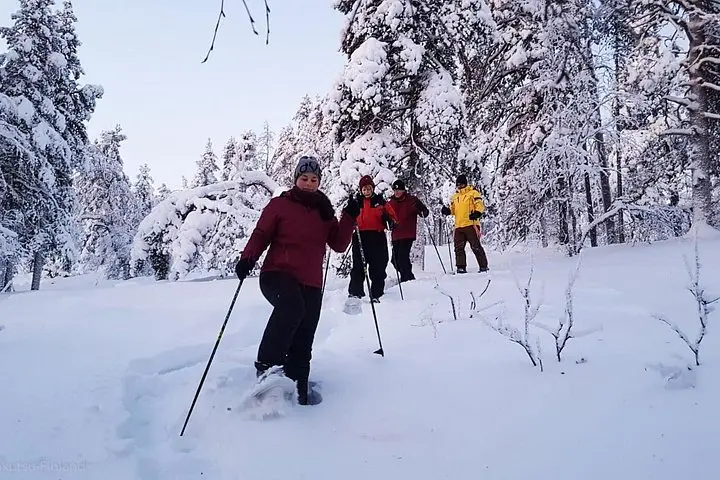
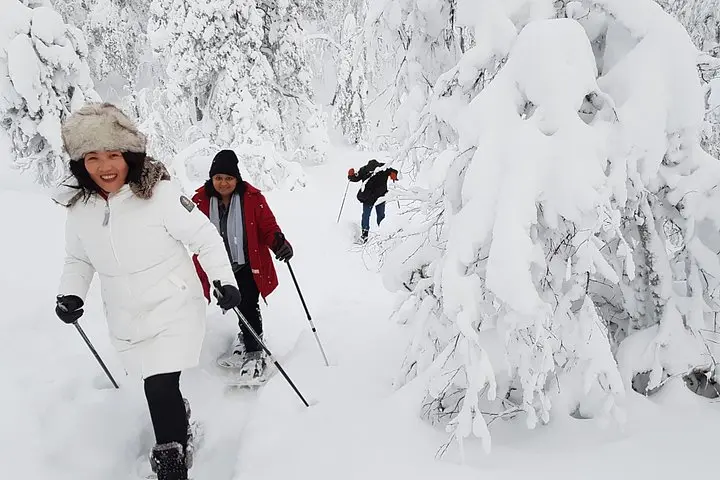
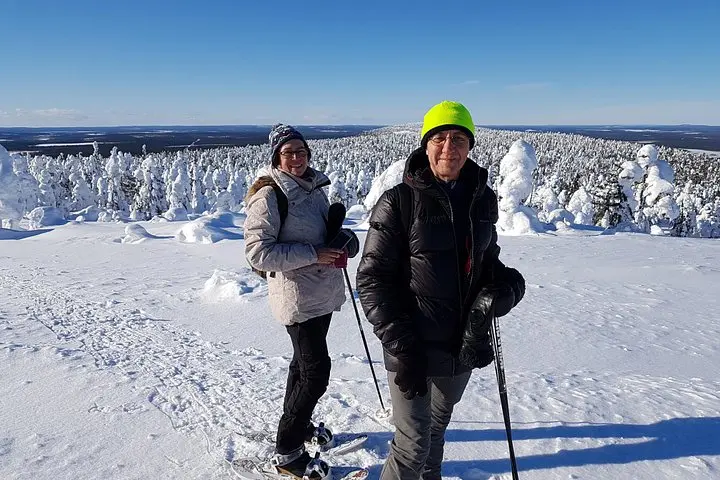
A low-angled winter sun slices between bare spruce trunks as the group snaps into snowshoes, the metal teeth promising purchase where boots alone would slip. The guide counts off quietly in Finnish and English, and the first step onto the crusted snow makes a satisfying, hollow sound—the kind of small, precise music the north composes. You walk through a forest that seems to lean toward the light; at each clearing the fells—rounded, old mountains scored in pale quartzite—rise like patient animals watching your progress.
A low-angled winter sun slices between bare spruce trunks as the group snaps into snowshoes, the metal teeth promising purchase where boots alone would slip. The guide counts off quietly in Finnish and English, and the first step onto the crusted snow makes a satisfying, hollow sound—the kind of small, precise music the north composes. You walk through a forest that seems to lean toward the light; at each clearing the fells—rounded, old mountains scored in pale quartzite—rise like patient animals watching your progress.
Pyhä–Luosto National Park is one of Finland’s older protected areas, created to preserve its unusual fell geology and the old-growth pine that clings to ridge lines. The low, rounded fells are ancient bedrock—quartzite and schist—exposed and polished by long glacial passages. Culturally, the area sits within Sámi lands and a history of reindeer herding; the landscape still carries markers of that life: winter migration routes, wooden corrals, and place names that speak to seasons and travel.
On this guided two-hour outing, the emphasis is slower: learning to swing and lift rather than race, listening for the faint rasp of a grouse in the understory, and pausing to read the land. The guide will point to lichened boulders, explain how the fells were formed, and share stories about the Luosto amethyst mine and the small mountain chapels that marked old pilgrimage routes. Snow here is a sculptor; wind-driven drifts form cornices along the fell edges that dare you to keep your distance.
Practically, the route covers gentle rises—expect short climbs of 50–200 meters in elevation—over packed tracks, forest trails, and open fell meadows. The operator supplies snowshoes and poles and includes light refreshments and national park fees. Transfers from hotels in the Pyhä–Luosto area are typically provided; check pickup times on reconfirmation.
For planning: dress in layers (wool or synthetics, not cotton), bring waterproof boots, sunglasses for glare, and a small daypack with water and snacks. Weather on the fells can turn brisk quickly; a windproof outer layer and a warm hat make the difference between a memorable walk and a lesson in hypothermia avoidance. Respect park rules: stay on marked routes to protect fragile tundra vegetation and avoid disturbing reindeer.
This short, interpretive snowshoe is ideal for beginners and anyone wanting a concentrated introduction to Lapland winter. It offers the luxury of quiet—the kind that arrives when a group moves slowly enough for the landscape to reassert itself—and the practical reassurance of a guide who knows where the trail is safe and where the wind has hidden a drift.