THE ADVENTURE COLLECTIVE® · Independent discovery and booking for outdoor travel

Experience Curaçao’s reefs without certification: SNUBA combines snorkeling ease with scuba-style breathing, taking you deeper to encounter colorful corals and curious fish. This guided shallow dive on the east coast is ideal for confident swimmers seeking accessible underwater adventure.
Experience Curaçao’s reefs without certification: SNUBA combines snorkeling ease with scuba-style breathing, taking you deeper to encounter colorful corals and curious fish. This guided shallow dive on the east coast is ideal for confident swimmers seeking accessible underwater adventure.
The raft bobs at the surface while a thin hose hums between you and an air supply overhead — the ocean invites you to glide downward without the weight of tanks or certification.
Verified experiences and guided adventures in the surrounding area.
Operated by Sea Trek Curacao · Willemstad, Curaçao
The raft bobs at the surface while a thin hose hums between you and an air supply overhead — the ocean invites you to glide downward without the weight of tanks or certification.
On Curaçao’s east coast a SNUBA session puts you in the water for a hands-on look at coral gardens that have weathered centuries of currents and sun. Geologically, Curaçao is a raised limestone platform with volcanic intrusions, which produces ledges, swim-throughs, and shallow reef terraces ideal for beginner sub-surface exploration. The island’s Dutch-Caribbean culture is visible at shore breaks and harbor towns; local guides often share short oral histories about fishing and reef stewardship as part of the briefing.
Expect 60–90 minutes in the water, a short orientation on the boat or beach, and a calm guided swim at depths typically between 6–10 meters. Marine life is approachable here: parrotfish, angelfish, and various reef rays commonly appear near coral heads, while currents push you gently along reef slopes.
Practical notes: you must be a confident swimmer, free of cardiovascular or pregnancy restrictions, and able to follow guide hand signals. Wear reef-safe sunscreen and a snug mask; avoid touching coral. Morning slots usually have the flattest seas and the best light for photography. Bring a towel, a light cover-up for the post-dive wind, and plan for lockers and restrooms at the launch.
SNUBA is an excellent step between snorkeling and scuba — it gives the thrill of breathing underwater and the freedom to focus on marine life without heavy gear or certification requirements.
No—SNUBA uses a surface air supply via a hose, so no scuba certification is required, though basic swimming skills are necessary.
SNUBA dives typically keep participants in shallow depths around 6–10 meters (20–33 feet), often determined by rope length and guide instruction.
Age limits vary by operator; many programs accept older children who can swim and follow instructions, but confirm minimum age when booking.
Operators may cancel or reschedule dives in strong winds or rough seas; check cancellation policies and the 24-hour refund window.
Sea Trek Curacao operates guided outdoor trips and adventures with an emphasis on safety, stewardship, and memorable experiences.
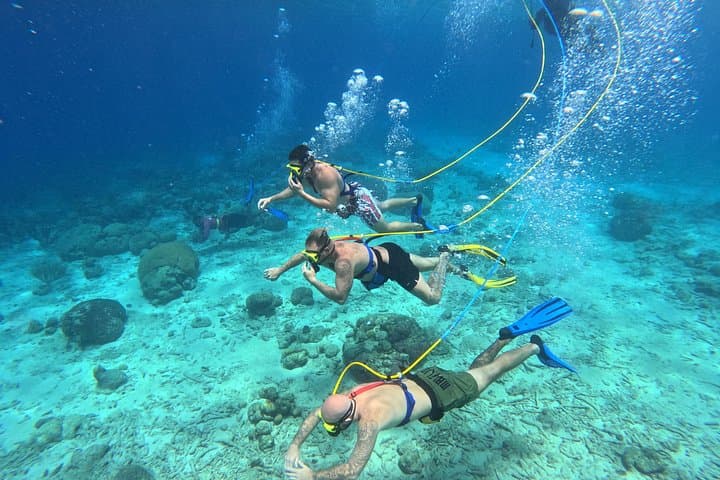
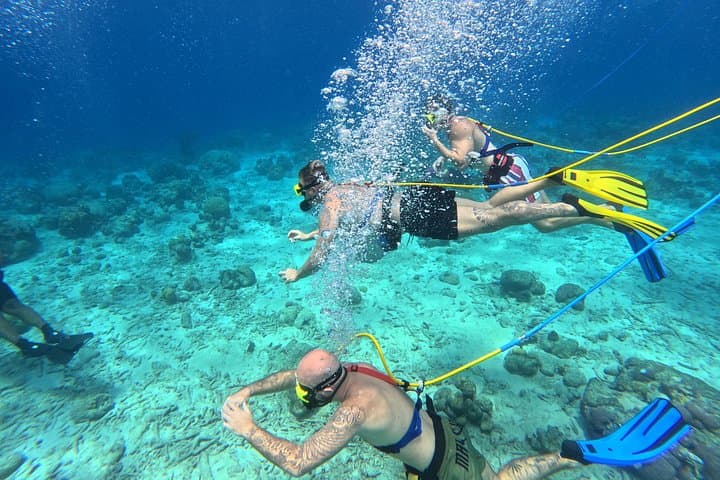
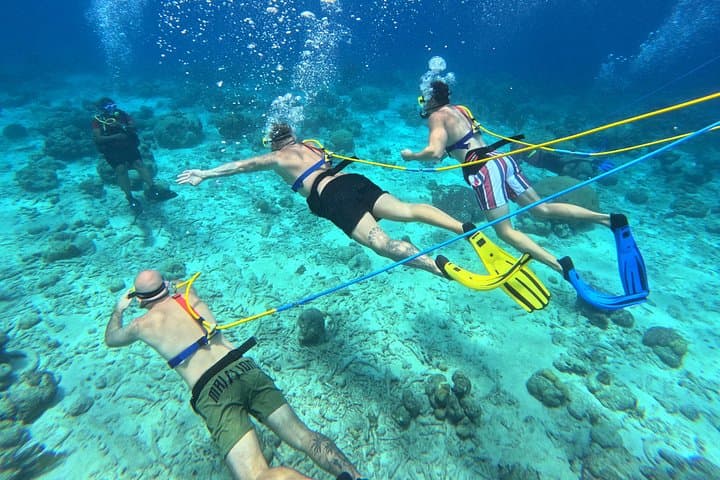
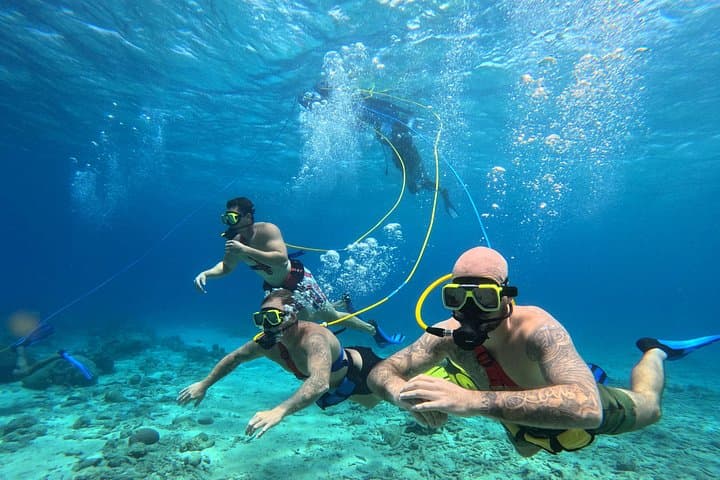
The raft bobs at the surface while a thin hose hums between you and an air supply overhead — the ocean invites you to glide downward without the weight of tanks or certification.
The raft bobs at the surface while a thin hose hums between you and an air supply overhead — the ocean invites you to glide downward without the weight of tanks or certification.
On Curaçao’s east coast a SNUBA session puts you in the water for a hands-on look at coral gardens that have weathered centuries of currents and sun. Geologically, Curaçao is a raised limestone platform with volcanic intrusions, which produces ledges, swim-throughs, and shallow reef terraces ideal for beginner sub-surface exploration. The island’s Dutch-Caribbean culture is visible at shore breaks and harbor towns; local guides often share short oral histories about fishing and reef stewardship as part of the briefing.
Expect 60–90 minutes in the water, a short orientation on the boat or beach, and a calm guided swim at depths typically between 6–10 meters. Marine life is approachable here: parrotfish, angelfish, and various reef rays commonly appear near coral heads, while currents push you gently along reef slopes.
Practical notes: you must be a confident swimmer, free of cardiovascular or pregnancy restrictions, and able to follow guide hand signals. Wear reef-safe sunscreen and a snug mask; avoid touching coral. Morning slots usually have the flattest seas and the best light for photography. Bring a towel, a light cover-up for the post-dive wind, and plan for lockers and restrooms at the launch.
SNUBA is an excellent step between snorkeling and scuba — it gives the thrill of breathing underwater and the freedom to focus on marine life without heavy gear or certification requirements.