THE ADVENTURE COLLECTIVE® · Independent discovery and booking for outdoor travel

Launch from the volcanic ridges above Las Canteras and float 200–500 meters over Las Palmas’ shoreline on steady trade winds. This brief tandem paragliding flight delivers sweeping coastal views, a professional briefing, and a controlled landing by the city auditorium.
Launch from the volcanic ridges above Las Canteras and float 200–500 meters over Las Palmas’ shoreline on steady trade winds. This brief tandem paragliding flight delivers sweeping coastal views, a professional briefing, and a controlled landing by the city auditorium.
Wind lifts you before you do anything—an Atlantic breath that smooths across volcanic cliffs and pushes you gently from a grassy ridge into open sky. From takeoff near Ladera Alta and Los Giles the coastline drops away: black lava rock, pale sand at Las Canteras, and the city’s auditorium shrinking under a silent canopy. For about 20 minutes you ride the trade winds between 200–500 meters, watching waves etch the shore while the city grid recedes into terraces of honey-colored buildings.
Verified experiences and guided adventures in the surrounding area.
Operated by FlyNow · Las Palmas de Gran Canaria, Gran Canaria
Wind lifts you before you do anything—an Atlantic breath that smooths across volcanic cliffs and pushes you gently from a grassy ridge into open sky. From takeoff near Ladera Alta and Los Giles the coastline drops away: black lava rock, pale sand at Las Canteras, and the city’s auditorium shrinking under a silent canopy. For about 20 minutes you ride the trade winds between 200–500 meters, watching waves etch the shore while the city grid recedes into terraces of honey-colored buildings.
Gran Canaria is a volcanic island shaped by eruptions and erosion; the cliffs and ravines you fly over are recent in geological terms. Las Palmas, founded in the 15th century, mixes maritime history with modern port life—fishermen, beachgoers, and the slow commerce of a city on the edge of the Atlantic. Local pilots know the microclimates here: steady northeast trade winds create long, laminar flights along the north coast, and the landing plaza by the auditorium is a practiced finish.
Practically, this is a guided tandem experience: a short vehicle transfer to the launch, a briefing on wind and body position, a running takeoff and a soft, assisted landing next to Las Canteras beach. Expect clear instructions, a weight limit (~99 kg), and flights flown only in safe conditions. Wear sturdy shoes and sun protection, secure loose items, and arrive hydrated. Morning slots often deliver calmer winds; afternoons can be stronger. The flight is brief but intense—an aerial perspective that reframes the island’s geology and coastline in a single, unforgettable arc.
Air time is typically around 15–25 minutes depending on wind conditions; the full experience including briefing and transfers lasts about 90 minutes.
Certified instructors operate under Canary Islands regulations with liability insurance; flights are only conducted in suitable wind conditions and after safety briefings.
Most people can participate, but there is a weight limit (~99 kg) and it’s not recommended for those with serious back, heart conditions, or pregnancy.
Landings are planned in a wide, unobstructed plaza by the Las Palmas auditorium next to Las Canteras beach; pilots manage approach to ensure a soft, assisted landing.
FlyNow operates guided outdoor trips and adventures with an emphasis on safety, stewardship, and memorable experiences.
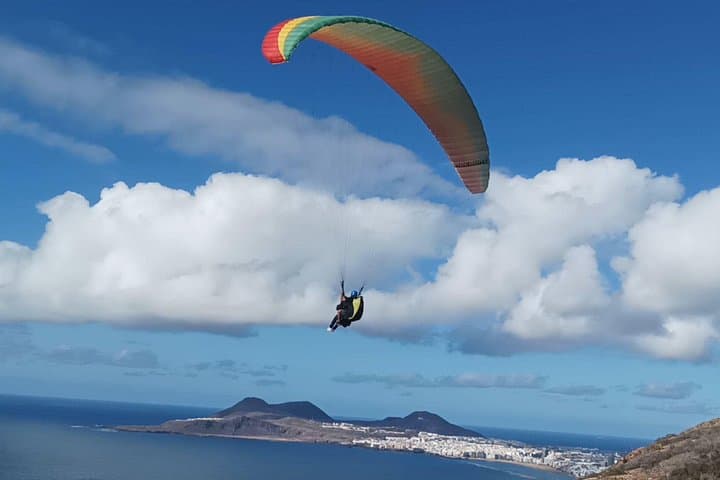
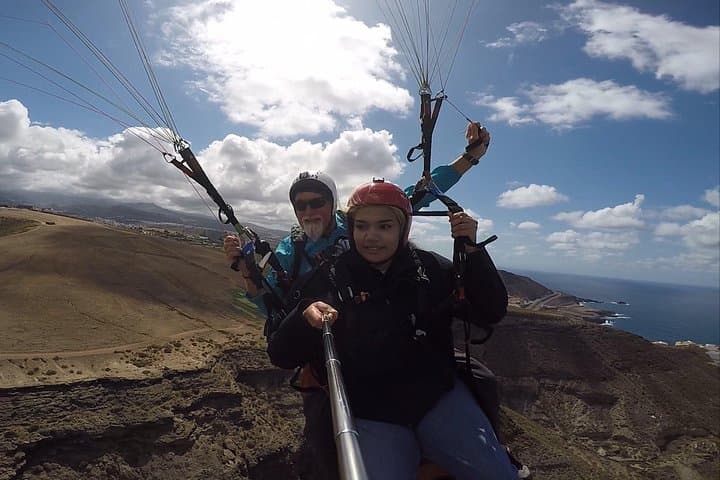

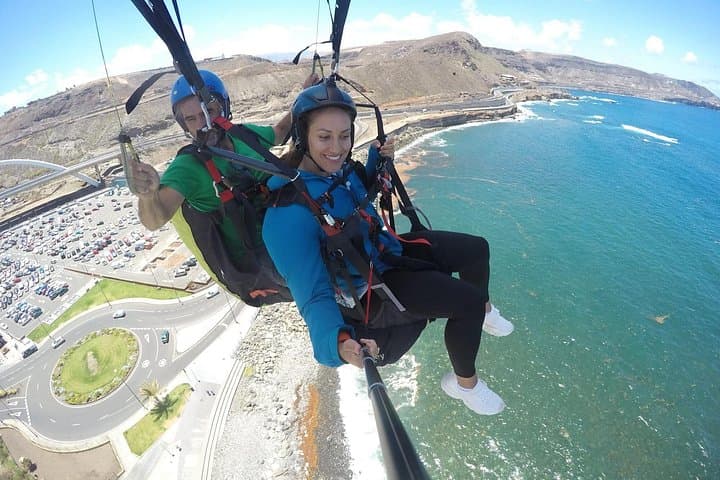
Wind lifts you before you do anything—an Atlantic breath that smooths across volcanic cliffs and pushes you gently from a grassy ridge into open sky. From takeoff near Ladera Alta and Los Giles the coastline drops away: black lava rock, pale sand at Las Canteras, and the city’s auditorium shrinking under a silent canopy. For about 20 minutes you ride the trade winds between 200–500 meters, watching waves etch the shore while the city grid recedes into terraces of honey-colored buildings.
Wind lifts you before you do anything—an Atlantic breath that smooths across volcanic cliffs and pushes you gently from a grassy ridge into open sky. From takeoff near Ladera Alta and Los Giles the coastline drops away: black lava rock, pale sand at Las Canteras, and the city’s auditorium shrinking under a silent canopy. For about 20 minutes you ride the trade winds between 200–500 meters, watching waves etch the shore while the city grid recedes into terraces of honey-colored buildings.
Gran Canaria is a volcanic island shaped by eruptions and erosion; the cliffs and ravines you fly over are recent in geological terms. Las Palmas, founded in the 15th century, mixes maritime history with modern port life—fishermen, beachgoers, and the slow commerce of a city on the edge of the Atlantic. Local pilots know the microclimates here: steady northeast trade winds create long, laminar flights along the north coast, and the landing plaza by the auditorium is a practiced finish.
Practically, this is a guided tandem experience: a short vehicle transfer to the launch, a briefing on wind and body position, a running takeoff and a soft, assisted landing next to Las Canteras beach. Expect clear instructions, a weight limit (~99 kg), and flights flown only in safe conditions. Wear sturdy shoes and sun protection, secure loose items, and arrive hydrated. Morning slots often deliver calmer winds; afternoons can be stronger. The flight is brief but intense—an aerial perspective that reframes the island’s geology and coastline in a single, unforgettable arc.